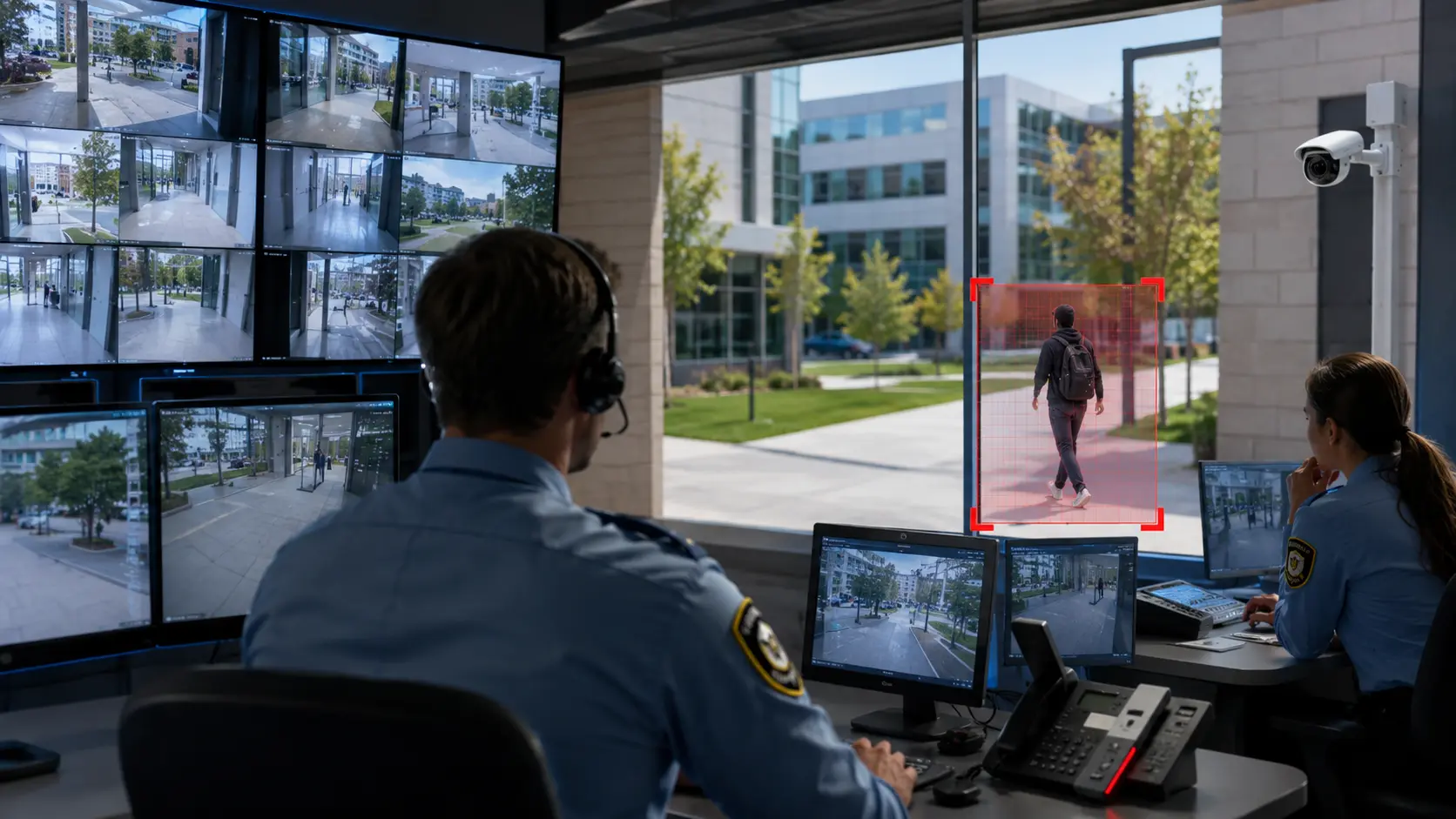
Security cameras are now a familiar part of keeping people, places, and property safe. But as organizations add more cameras, security camera monitoring becomes harder for teams to keep an eye on every feed and spot what really matters in the moment.
Newer monitoring tools can help security teams get more value from the camera systems they already rely on. They make it easier for everyone to see what’s really happening across a facility, cut down the overwhelming stream of alerts, and help teams jump into action faster and with better coordination when something needs attention.
In this article, we will explore why traditional camera monitoring has difficulty keeping up with today’s needs, the common problems security teams face, and how new technology can improve existing camera networks into smarter and more proactive safety tools.
Key Takeaways
- Traditional security camera monitoring often misses important incidents because no team can realistically watch every live feed, every hour of the day. Most videos are only checked after something has already happened.
- AI gun detection changes that dynamic by turning existing cameras into active safety tools that can spot visible weapons and trigger an immediate, verified response, often in just fractions of a second.
- The reasons behind this shift are pretty straightforward: too many cameras for any team to monitor well, constant alert fatigue, critical events slipping through during the pre-incident window, and slow manual escalation to police or internal security teams.
- Upgrading monitoring with AI is not a rip-and-replace project. It is an overlay that extends the value of current camera investments for schools, enterprises, hospitals, and public spaces.
Why Security Camera Monitoring Alone Isn’t Enough Anymore
Picture a corporate office complex: 300 cameras installed across lobbies, corridors, parking garages, and loading docks. In the security operations center, two operators sit in front of a wall of screens. They glance between feeds, answer radio calls, and process access badge exceptions. Somewhere on camera 214, a person steps out of a vehicle in the east parking lot carrying a long gun. No one notices.
This scenario shows how video surveillance works today. There are many CCTV cameras, IP cameras, NVRs, and cloud systems that continuously record footage from all angles of a facility. The technology to capture video is everywhere. The capacity to actually watch it in real time is not.
The industry must move past passive recording toward proactive, AI-augmented security camera monitoring that can automatically identify and escalate life-threatening events, like a visible firearm, before the first shot is fired.
Understanding Modern Security Camera Monitoring
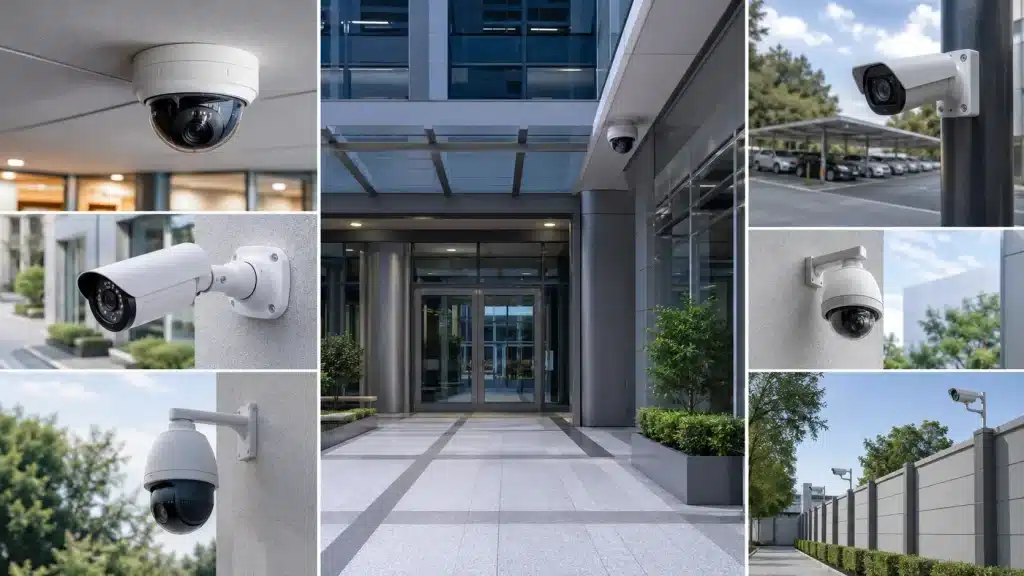
Camera setups can look very different from one organization to another, depending on the facility and its security needs. A smaller site might use just a few cameras to cover entrances, parking areas, and shared spaces. Larger campuses or businesses may have hundreds or even thousands of cameras spread throughout the property. In smart city security environments, that challenge can extend across public spaces, transportation systems, government facilities, and other critical infrastructure.
Most systems use a mix of familiar camera types.
- Fixed dome cameras, commonly used indoors
- Bullet cameras, often placed around outdoor areas
- Pan-tilt-zoom cameras, which can cover wide spaces
- Power over Ethernet cameras, good for large installations
These cameras usually connect to a video management system, network video recorder, or cloud platform, where the footage can be viewed, stored, and reviewed.
Today, modern cameras offer better resolution, improved low-light performance, smarter motion detection, and easier remote access. Even with these advances, camera networks still tend to be reactive. No security team can watch every feed in real time, which means critical activity often goes unnoticed until after it has already happened.
The Pain Points: Too Many Cameras, Missed Events, and Alert Fatigue
Enterprise and campus deployments in recent years often run 250 to 2,000 cameras across multiple buildings, far beyond what a small team can continuously track. A 2026 survey of 300 U.S. organizations found that while 93% of security leaders believed they could detect coordinated threats, only 19% consistently met their own response-time targets. One site was fielding 342 alarms per day, with roughly 32% being false.
The “wall of monitors” problem is well documented. Research using VR simulations shows something pretty intuitive: the more camera feeds an operator has to watch, the faster their focus drops. As the cognitive load climbs, detection accuracy falls. That means crucial moments, like someone drawing a weapon or leaving a suspicious bag behind, can slip by in just a few seconds.
Basic motion detection and generic analytics don’t help much either. They often send alerts for benign activities, like cleaning crews, wildlife, passing cars, or trees blowing in the wind. Over time, this “noise” can tire operators and make it harder for them to notice important events.
Visible cameras can discourage some bad behavior, but deterrence alone isn’t enough to stop someone who is determined to cause harm. Adding more human operators to monitor every feed can quickly increase costs and still cannot guarantee real-time awareness.
Why Passive Surveillance Fails in Active Shooter and Weapons Scenarios
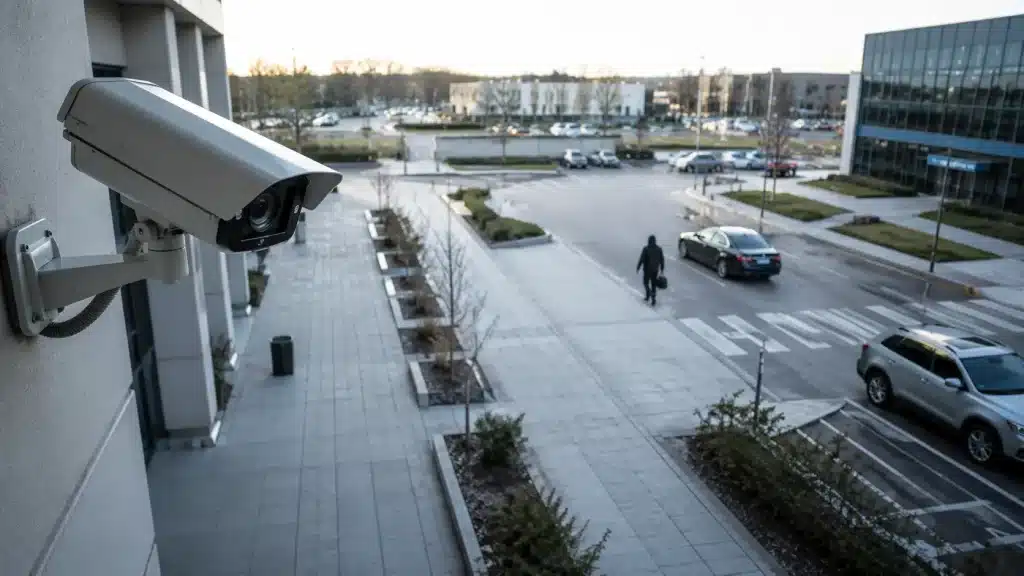
In a weapons-related emergency, the critical opportunity may occur before the first shot is fired, when a firearm becomes visible at an entrance, in a parking area, or inside a facility. Traditional camera systems may capture that moment, but without automated analysis, the warning sign may not be recognized until the footage is reviewed after the incident.
Standard analytics such as motion detection, line-crossing, or generic person detection do not distinguish between benign activity (a person walking with an umbrella or carrying a bag) and the specific threat of a handgun or long gun being brandished. A review of more than a hundred academic studies on AI-based weapon detection found a clear pattern: many models perform extremely well in controlled lab environments, often reporting accuracy above 99 percent. But once they’re exposed to real-world conditions like low lighting, crowded scenes, partial obstruction, or small weapons, their performance drops sharply.
Bridging that gap takes purpose-built AI gun detection layered onto existing security camera systems. This kind of technology can identify visible weapons in just fractions of a second and immediately kick off a response workflow, giving teams precious time to act.
From Cameras to Real-Time Safety Assets: How AI Gun Detection Works
AI gun detection is, at its core, computer vision that recognizes visible handguns and long guns in camera footage and triggers an automated safety workflow. This system uses machine-learning models that can identify firearms and distinguish them from everyday objects in various real-life situations.
Omnilert follows three key steps:
- Assess – The AI scans each video frame to identify people. This helps it understand what’s going on and who’s involved.
- Detect – AI looks at the objects around a person to spot potential threats, like a gun, and distinguish that from everyday items like phones or bags.
- Analyze – The AI tracks the detected object across multiple frames to confirm that it is indeed a weapon and is actively being brandished, and it’s not just responding to a quick, misleading visual match.
This process runs continuously on the live feed, typically producing detections in fractions of a second, well before a human viewer in a SOC might notice. Omnilert trains its system on carefully selected real-world imagery so it can recognize firearms in a wide range of conditions.
Critically, the system’s focus is on weapon shapes and context, not on face recognition. This helps organizations improve safety without expanding identity surveillance, a distinction that matters greatly for schools, hospitals, and public facilities. After the AI flags a potential threat, a trained reviewer verifies the detection before the organization’s defined response process begins.
Why a Data-Centric Approach Matters
Effective AI isn’t just about building a smart model; it’s about feeding that model the right information. Omnilert leans into a data‑centric philosophy, focusing on the quality, diversity, and real‑world relevance of the images used to train its system. That means using carefully chosen, expertly annotated photos that reflect the environments where firearms might actually appear: different lighting, angles, backgrounds, and levels of visibility.
By training the system on real‑world conditions instead of mostly staged or synthetic examples, it learns to recognize what it will actually encounter day-to-day. And when new, tough situations pop up, they’re folded back into the training process, helping the AI steadily sharpen its accuracy and adapt as the world changes.
Turning Existing Security Camera Monitoring into Proactive Gun Threat Detection
AI gun detection is designed to work with an organization’s current camera infrastructure, from CCTV and IP cameras to on-prem NVRs or cloud VMS, without requiring costly hardware replacement. The system operates as an overlay, allowing existing equipment and installed cameras to function as they always have.
Typically, the integration directs selected camera feeds to an AI processing layer that analyzes each frame for visible weapons. Organizations often focus on areas where firearms are likely to be first seen, such as parking lots, entrances, arrival areas, building perimeters, and access corridors.
When the AI identifies a potential weapon, a trained human operator reviews the event. Each alert provides the security team with key details for quickly assessing what was detected, including:
- The camera and its location
- The time of the detection
- Still images and a short video clip
- Type of firearm
This information helps security teams and first responders act quickly. After a threat is confirmed, the organization can begin its response plan, which may include public alerts, safety measures, and contacting law enforcement.
Why Connecting Detection to Emergency Communications Matters
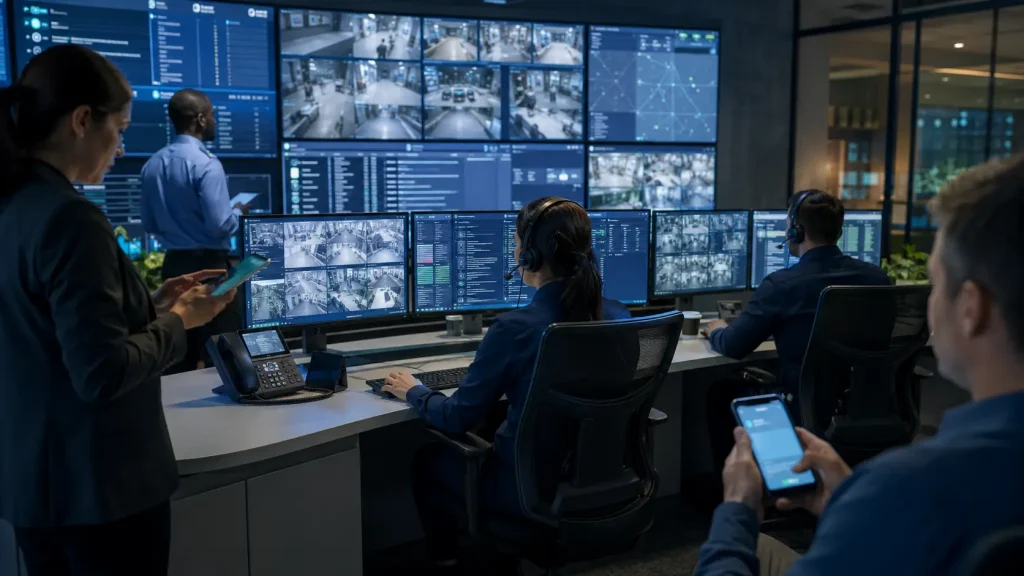
A verified detection has limited value if it remains isolated within a monitoring system. Security teams also need a reliable way to notify the appropriate people, communicate with employees or occupants, and initiate protective actions.
Omnilert AI gun detection can connect verified firearm detections with Omnilert’s emergency notification capabilities or integrate with an organization’s existing emergency notification system and security infrastructure. This kind of flexibility lets organizations strengthen gun detection without having to overhaul the tools, communication channels, or procedures they already rely on. It works with what’s in place, rather than forcing a brand-new system.
By tying detection, verification, notification, and response together, teams can cut down on manual handoffs and move toward a more coordinated, streamlined process when a confirmed threat needs action.
Reducing False Alarms While Responding in Seconds
Any AI system must balance sensitivity with specificity. A system that flags every umbrella or phone as a weapon will erode trust; one that misses a real firearm fails at its purpose. Continuously refining the model helps the system handle challenging conditions and reduce unnecessary alerts over time.
That’s why, at Omnilert, a human operator checks each potential detection before it is escalated, adding an important layer of human judgment to the process. This helps organizations avoid unnecessary emergency actions while still ensuring that confirmed threats move quickly into the right response process.
Use Cases: From Campuses and Hospitals to Corporate and Public Spaces
AI-powered gun detection can add an extra layer of protection in places where lots of people come and go, and cameras are already watching entrances, parking areas, and other busy spots. By adding real-time intelligence to those existing camera feeds, organizations can spot a visible firearm sooner and move faster from “something might be happening” to verifying the situation and responding.
K–12 schools and universities: Schools can use detection on cameras at entrances, parking lots, athletic fields, and common areas. This gives safety teams earlier awareness of a potential threat and more time to act.
Corporate campuses: Large workplaces with multiple buildings can monitor entrances, garages, reception areas, shared spaces, and loading zones, sending verified alerts directly to central or on-site security teams.
Healthcare facilities: Hospitals and medical campuses can boost awareness around emergency department entrances, visitor lobbies, parking areas, and other busy spots where stress and emotions can rise quickly.
Manufacturing and warehouse facilities: Gun detection can help teams monitor loading docks, employee entrances, parking lots, production floors, and perimeter areas. This is especially important for large or complex properties where it’s tough to have eyes everywhere at the same time.
Retail and mixed-use properties: Shopping centers and commercial developments can enhance safety by extending detection to entrances, common areas, parking structures, and outdoor gathering spaces, creating a more welcoming environment for visitors and staff.
Transportation hubs and large venues: Airports, transit stations, stadiums, and event venues can apply detection across high-traffic areas and multiple access points, giving security teams an extra set of eyes when monitoring every camera feed isn’t realistic.
Across all of these environments, the goal stays the same: spot a visible firearm sooner, verify the situation quickly, and give security teams more time to respond in the right way.
Planning an AI Gun Detection Deployment
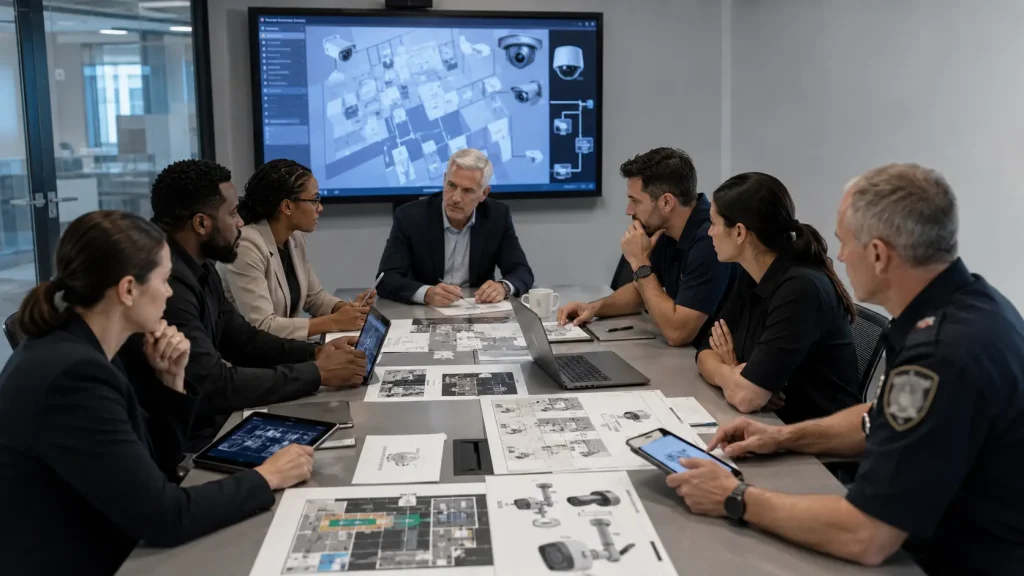
Adding AI gun detection to an existing security camera monitoring system requires more than just connecting software to video feeds. Organizations should determine where detection would be the most valuable, how to verify alerts, and create the steps to take after a potential threat is confirmed.
A typical deployment includes four key steps:
1. Evaluate existing camera coverage. Check camera placement, image quality, and visibility.
2. Connect selected camera feeds. Work with the technology provider to connect cameras to the detection platform.
3. Define verification and response workflows. Decide who will check potential detections, who should be notified, and what actions to take.
4. Test and refine the process. Train staff, run practice drills, and review how the process works.
Many organizations start by focusing on key areas and then expand coverage after reviewing performance, workflows, and operational needs.
Privacy, Compliance, and Ethical Considerations
Omnilert’s AI gun detection is designed to recognize when a weapon is present, not to track who a person is or perform broad facial recognition. This difference is important for schools, healthcare facilities, and community spaces where there are strong concerns about privacy.
Organizations benefit from having clear, easy-to-understand policies that spell out what the system detects, how long video clips and alert data are stored, and who is allowed to access them. Because the technology works on live video that’s already being captured for security, it typically fits within existing practices, though some updates to signage, notices, or data-retention guidelines may be needed.
It’s also important to follow the right data protection laws, school safety requirements and healthcare security standards. Looping in legal and risk teams helps ensure the technology is used responsibly.
Organizations should also be open with employees and other stakeholders about what the system does, how it works and the role of human oversight. Being transparent can ease privacy concerns and build trust.
Turning Security Camera Monitoring into Proactive Safety Tools
Security cameras remain essential to modern safety and security, but recording an event is not the same as recognizing and responding to it in real time. AI gun detection can help organizations strengthen security camera monitoring by adding real-time analytics to the camera networks they already use.
Omnilert AI Gun Detection can activate Omnilert’s emergency notification capabilities or integrate with an organization’s existing emergency communication and security systems. This flexibility helps security teams create a more connected process from detection and verification through notification and response.
Learn how Omnilert can help turn your existing camera network into a more proactive commercial security system.
Frequently Asked Questions (FAQs)
Does AI gun detection replace my existing security cameras or monitoring service?
No. AI gun detection works as an added layer on selected camera feeds and can integrate with an organization’s existing video, monitoring, and emergency communication systems.
Can AI gun detection work with outdoor cameras and challenging lighting?
Yes. Modern weapon-detection models are trained on a wide range of conditions, including daylight, dusk, night vision, color night vision, and mixed lighting common in parking lots and building exteriors. Cameras covering critical zones should meet minimum resolution and lighting standards so the AI can reliably distinguish a handgun or long gun from similar-looking objects at practical distances.
What happens after the AI thinks it sees a gun?
The potential detection is sent for human review. If a visible firearm is confirmed, the system initiates the organization’s defined notification and response procedures.
Will AI gun detection increase false alarms to law enforcement?
AI gun detection combines specialized firearm recognition with human review before escalation. This process can reduce false alerts and help teams feel more confident about when it’s time to take action.
How quickly can an organization deploy AI gun detection on its existing cameras?
Timeframes will vary depending on the number of cameras, site layout, network strength and the organization’s requirements. Many start with a few key areas and then expand once they see how it works.