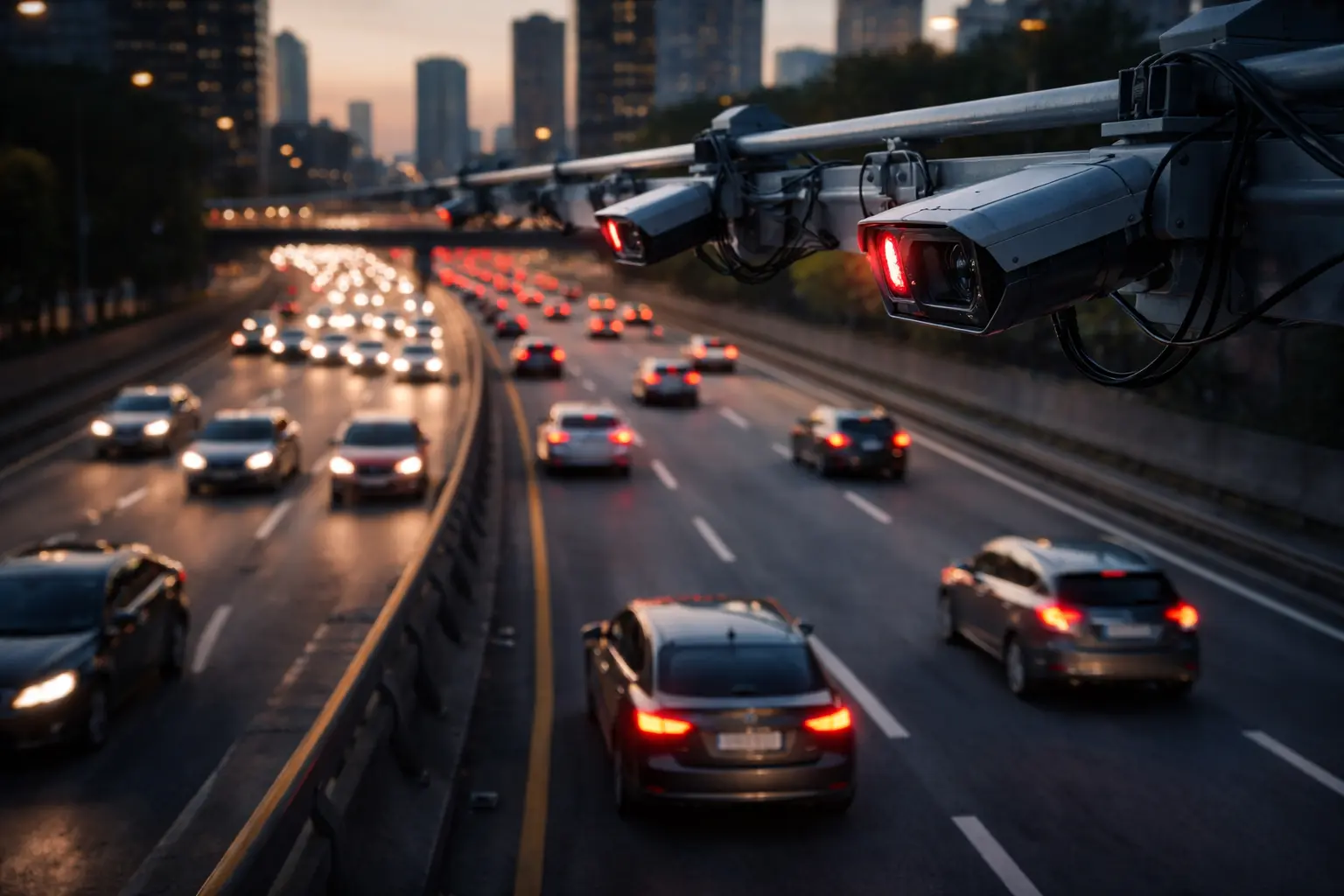
License plate readers have become a familiar part of everyday physical security and access control. What started as a specialized law-enforcement tool is now used on toll roads, in parking garages, at gated entrances, and throughout city infrastructure to quickly identify vehicles at scale.
As LPR technology shows up in more places, people are asking tougher questions about how accurate it is, who’s watching over it, and what it means for privacy. This article explains how these systems work, where they are commonly used, what data they collect, and why they are still important in ongoing legal and ethical discussions.
Key Takeaways
- License plate readers (LPRs) are fast cameras that take pictures of license plates, record the time, and note the GPS location of the reader, creating a timestamped location record of the vehicle
- Law enforcement uses LPRs to find stolen cars, locate people with outstanding warrants, and help with criminal investigations. Commercial operators use them for toll collection, parking management, and controlling access to areas.
- Collecting a lot of license plate data raises important privacy and civil rights concerns, especially when this data is kept for a long time or shared beyond where it was collected.
- LPR systems collect data on billions of vehicles, documenting the movements of individuals who are not connected to any criminal activity. This increases concerns about the surveillance capabilities these systems can provide.
- The actual accuracy of LPR systems is often lower than what vendors claim. Their performance can vary greatly depending on environmental factors and conditions.
What Is a License Plate Reader (LPR/LPR/ANPR)?
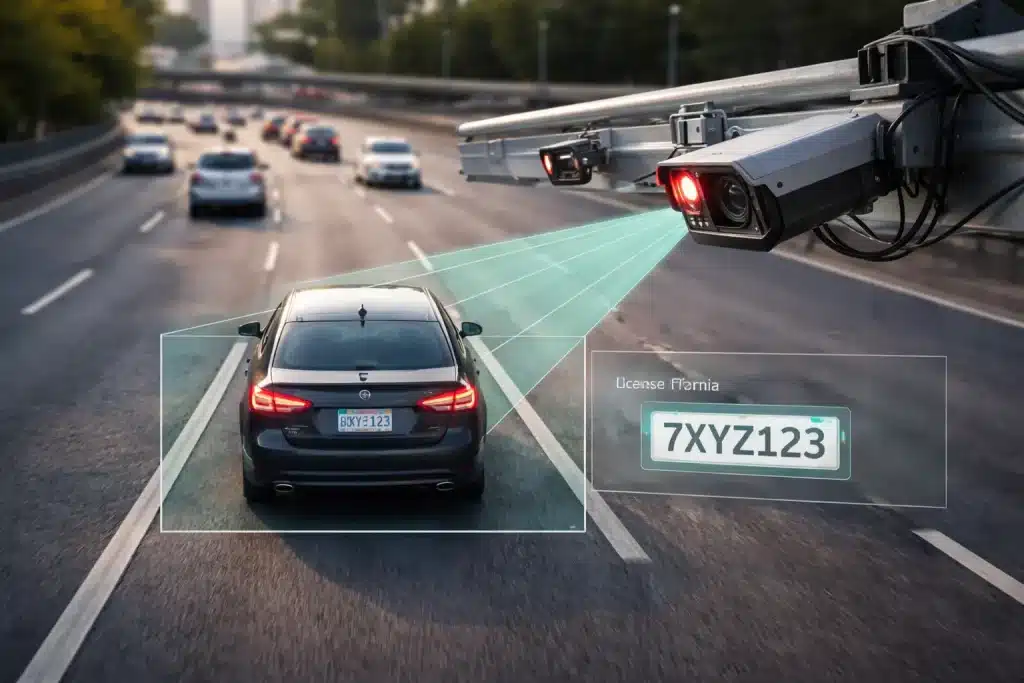
A license plate reader is a surveillance technology designed to automatically capture and interpret vehicle registration plates from images or video footage. These systems go by several names: LPR (License Plate Reader), LPR (Automated License Plate Reader or Automatic License Plate Reader), and ANPR (Automatic Number-Plate Recognition). Law enforcement agencies widely use these readers to track vehicle movements and improve security. While the names may differ based on region and vendor, the technology itself is the same.
They work by combining high-speed cameras, infrared lighting, and optical character recognition software to read plates on both moving and parked cars. In the U.S., where over 250 million registered vehicles are on the road, automated plate capture lets agencies check plates against databases in seconds, far faster than manual lookups could allow.
Rather than producing raw images alone, LPR systems convert vehicle imagery into searchable data, including the plate number, time, location, and sometimes additional vehicle attributes. That information can then be checked in real time or stored for later analysis.
How License Plate Reader Systems Work
The operational pipeline of a license plate reader follows a consistent sequence: image capture, plate detection, character recognition, and data storage. Each stage builds on the previous one to transform visual information into actionable data.
The process begins with specialized cameras equipped with optics capable of capturing clear plates from fast-moving vehicles. Some commercially available systems are rated for speeds up to 155 mph. Infrared (IR) lighting helps LPR cameras handle tough conditions like day-to-night changes, headlight glare, bad weather, and even dirty plates that might otherwise hide the numbers.
After taking a picture, the system isolates the license plate and uses optical character recognition (OCR) to read the characters, accounting for local plate variations, such as fonts, colors, and layouts.
Modern LPR systems use AI and machine learning to read license plates better, even at unusual angles or high speeds. Some advanced systems use real-time object detection algorithms to boost detection accuracy across a wide range of images.
A typical capture produces structured metadata tied to the plate image, including time, location, and camera information.
| Data Point | Description |
| Plate Number | The alphanumeric string on the license plate |
| Jurisdiction | Issuing state, province, or country |
| Timestamp | Date and time in UTC and local formats |
| GPS Coordinates | Precise location of the capture |
| Camera ID | Identifier for the specific camera |
| Lane/Direction | Travel direction and lane position |
| Vehicle Attributes | Make, model, body type, color (when available) |
Once captured, plate data is compared in real time against “hotlists”: databases of stolen vehicles, AMBER Alerts, people suspected of crimes, and vehicles with outstanding warrants. Data can also be archived for later investigative queries.
How AI Gun Detection Compares to LPR Camera Requirements
License plate recognition and AI gun detection are distinct applications, but their underlying camera requirements have a great deal in common. AI gun detection is a form of computer vision that analyzes live video feeds to identify visible firearms and assess whether a person may pose an active threat. Rather than reading alphanumeric characters on a license plate, the system evaluates visual patterns across video frames to detect a human figure, identify a possible handgun or long gun near that person, and then analyzes the sequence of frames to determine whether the weapon appears to be brandished in a threatening way.
Like license plate recognition, AI gun detection depends heavily on whether the camera captures enough usable detail at the distance where detection needs to happen. In both cases, camera performance is driven by practical image geometry: target size in frame, field of view, resolution, lighting, and whether the scene delivers a clear enough image at the point of interest. That is why the same camera design principles often apply across both technologies.
Practically speaking, that creates an important overlap for existing security deployments. Most camera systems already installed in parking lots, campuses, entrances, and roadways are not positioned or focused to capture the level of detail required for something like facial recognition. But those same cameras do provide enough detail for license plate recognition, and that’s often enough data for object-detection tasks such as identifying a visible firearm in a scene. When a camera is already qualified for LPR, it will often provide a strong starting point for gun detection as well, assuming the angle, distance, and image quality allow a weapon and person to be clearly visible.
Types of License Plate Reader Deployments
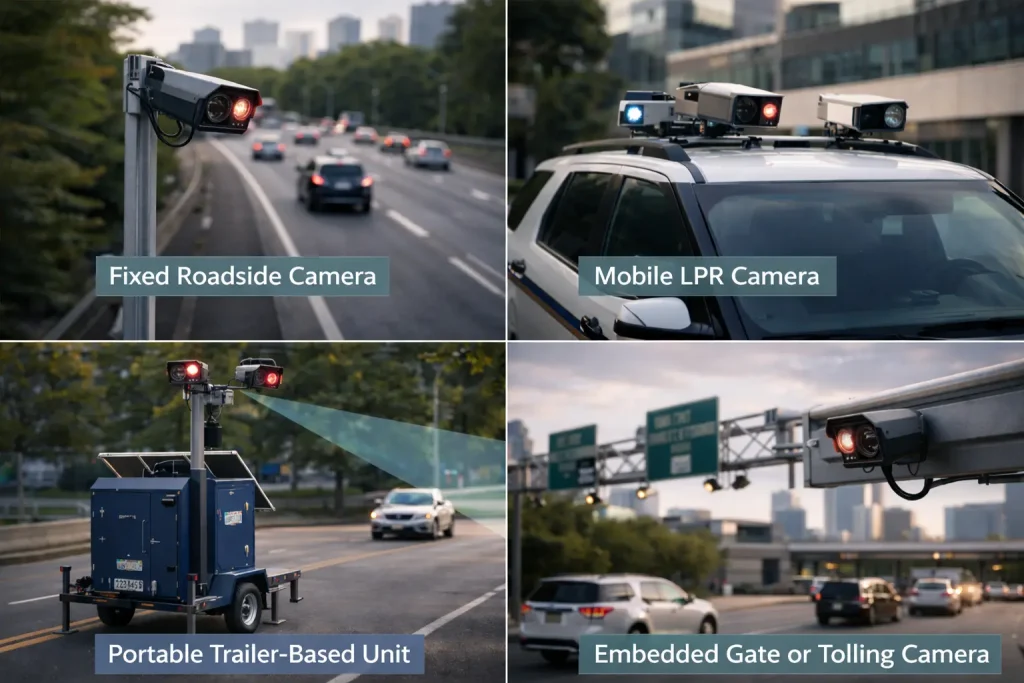
LPR technology adapts to different operational needs through various deployment configurations, each offering distinct advantages for specific use cases.
Fixed installations are mounted on poles, traffic lights, highway overpasses, gantries, and facility entrances. These units continuously scan all passing traffic in defined zones or multiple lanes, making them ideal for persistent monitoring in urban hotspots, highway corridors, and secure perimeters. Their stationary nature allows for optimized camera angles and consistent data collection.
Mobile units are integrated into police cruisers, parking enforcement vehicles, and tow trucks. With cameras facing forward, backward, and to both sides, they can scan moving traffic and parked cars as the vehicle drives through an area.
Portable or trailer-based units add flexibility for temporary needs. Agencies use them for checkpoints, special events, construction zones, or short-term surveillance when permanent infrastructure isn’t practical.
Embedded LPRs support commercial operations like toll lanes, gated communities, parking garages, and access-controlled facilities. In these settings, a plate scan can automatically open a gate, process a payment, or flag a vehicle on a watchlist.
Law Enforcement and Public Safety Uses
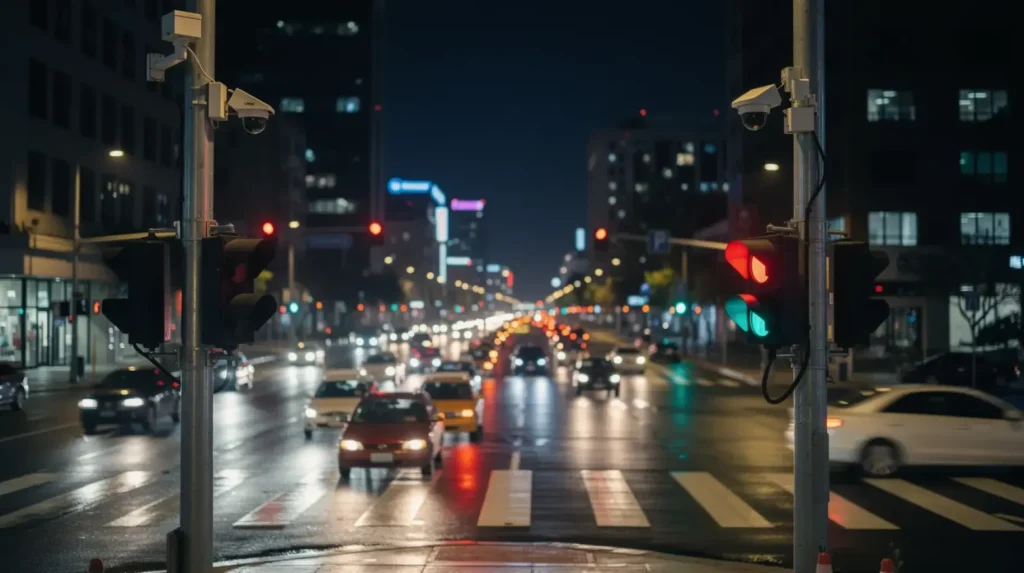
Police departments began adopting license plate readers in the early 2000s, and usage grew quickly through the 2010s as camera quality, OCR software, and machine-learning tools improved.
Real-time alerts are the most visible use. Officers get instant notifications when a scanned plate matches a hotlist. As previously mentioned, this can include stolen cars, felony warrants, AMBER or Silver Alerts, gang-associated vehicles, or plates tied to recent crimes. This lets them respond quickly without manually checking plates during routine patrols.
Historical searches support longer investigations. Detectives can look back through LPR data to see whether a vehicle was near a crime scene, trace its movements before and after an incident, or spot patterns across multiple cases. This is especially helpful when a crime is reported after the fact.
The volume of data these systems collect often surprises people. In many places, fewer than 1% of scans produce an immediate investigative hit, meaning the vast majority of data comes from ordinary drivers. Companies like DNR Data report holding billions of scans, with billions added each month.
Regional sharing networks expand both the reach and the privacy stakes. Federal, state, and local agencies often tap into shared platforms or private databases, giving them access to years of plate reads across wide geographic areas.
Agencies point to clear operational benefits: faster identification of suspect vehicles, less manual work for understaffed departments, quicker response times, and improved officer safety thanks to early warnings about potentially dangerous individuals.
Other Government and Municipal Applications
LPRs have moved well beyond traditional law enforcement. Today, transportation departments use the data to keep cities moving, tracking congestion, estimating how long trips will take, and spotting incidents quickly. With that information, they can tweak traffic lights, warn drivers about backups, and get emergency crews where they’re needed faster.
Border security, ports, and critical infrastructure facilities log all vehicle entries and exits using LPR technology. This creates compliance records, supports security screening, and enables rapid lockdown procedures when threats are identified. Immigration enforcement applications have generated particular controversy in some jurisdictions.
Commercial and Private-Sector Uses of LPR
Private companies have become major adopters of LPR technology, deploying systems for security, convenience, and data analytics across diverse industries.
Parking management is one of the biggest commercial uses of LPR technology. Garages and lots use it for automatic entry and exit, plate‑based payments, and enforcing unpaid stays. Tickets can be issued electronically or mailed to the vehicle owner without anyone on site.
Security and perimeter monitoring applications serve casinos, hospitals, corporate campuses, and stadiums. These systems log visitors, recognize VIPs to enhance their service, and keep blacklists of banned individuals or former employees of concern.
Repossession and recovery services equip vehicles with license plate recognition (LPR) cameras to scan parked cars in neighborhoods. This helps find vehicles that are flagged for repossession or fraud investigations, making recovery operations much more efficient.
Gated communities and homeowners’ associations install LPR cameras at entrances to monitor visitors, spot unauthorized vehicles, and share information with local police. However, this use of LPR technology has raised concerns about surveillance in residential areas.
Notably, commercial vendors often collect and resell plate data, offering nationwide databases that combine reads from multiple customers. This means a single scan at a mall parking lot might eventually appear in databases accessible to law enforcement, insurance companies, and private investigators.
LPR in Electronic Tolling and Access Control
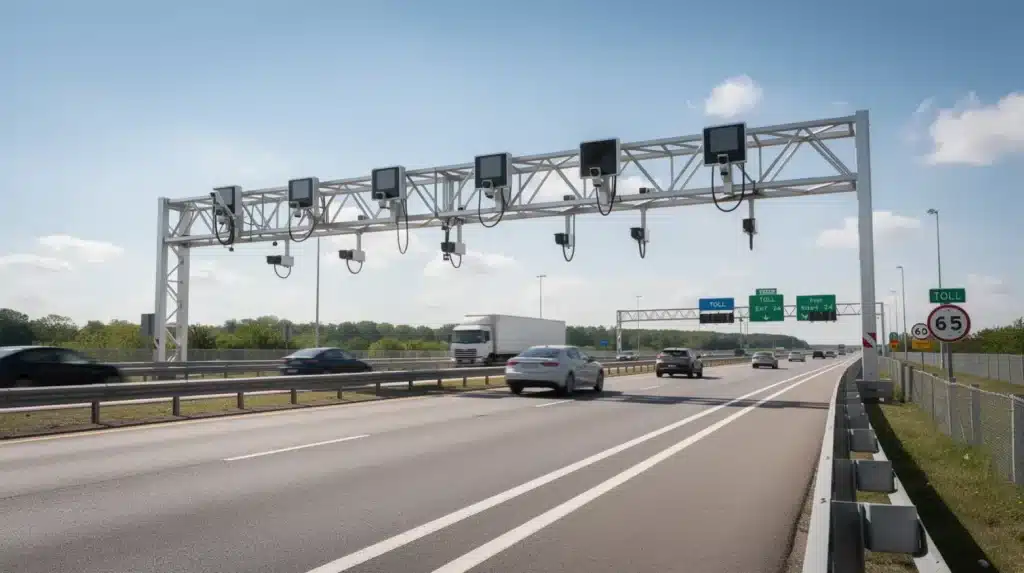
Modern toll roads and city access schemes increasingly rely on LPRs instead of, or alongside, RFID transponders, creating seamless but surveillance-rich infrastructure.
In the United States, many toll roads use all-electronic tolling or toll-by-plate systems that photograph license plates at highway speed without toll booths. When no transponder is detected, the toll operator uses plate data and motor-vehicle registration records to bill the registered owner, and unpaid tolls can lead to fees or enforcement action.
Similar plate-based systems are also used in public-sector access and enforcement settings, including congestion pricing, parking operations, and controlled-entry facilities.
Average-Speed Cameras: How LPR Powers Speed Enforcement
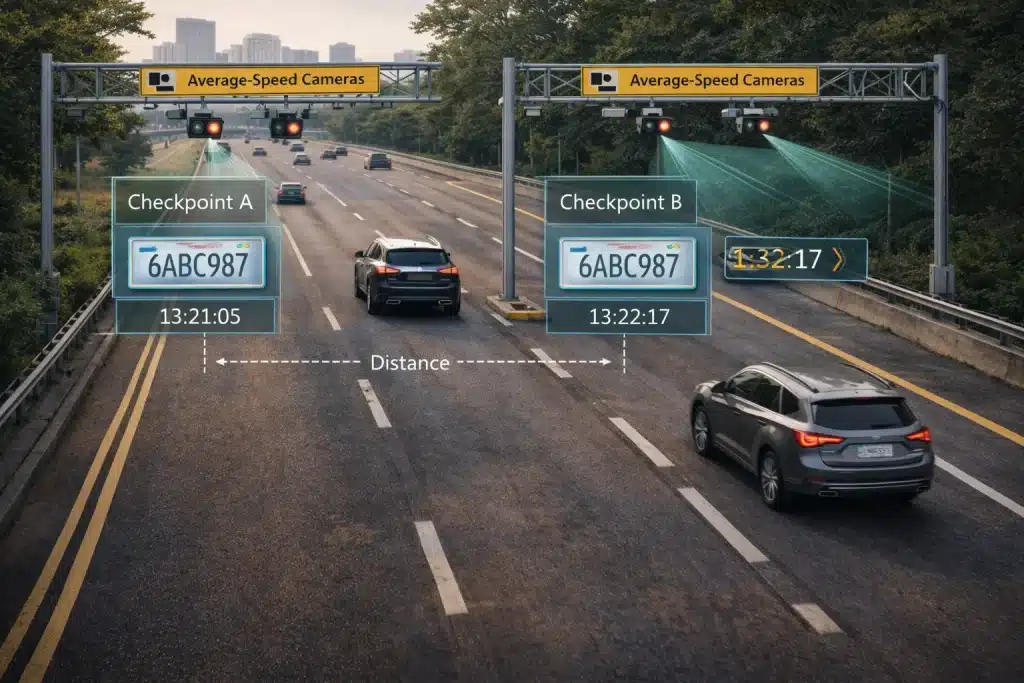
Average-speed cameras, or section control systems, are a great example of how LPRs are transforming road safety and traffic enforcement. A network of cameras is placed at fixed points along a stretch of road to monitor vehicles traveling between them. They capture license plate numbers and exact timestamps at each location, then calculate the average speed of each vehicle.
As vehicles pass each checkpoint, the system records the plate number and timestamp, then compares those reads across multiple camera points to calculate average speed over the monitored stretch of road.
When a car’s average speed comes in above the limit, the system flags it and stores the plate information. From there, police can issue a ticket or follow up as needed. Automating this work means fewer roadside speed traps, fewer mistakes, and more time for officers to focus on serious issues.
Average-speed cameras also tend to change how people drive. Instead of slowing down only when they spot a patrol car, drivers are more likely to keep a steady, legal speed over the whole stretch of road. That leads to smoother traffic and fewer crashes—something countries like the UK have seen firsthand.
The data collected along the way can also help cities understand how people move through their roads. Patterns in speed and location can point to problem spots, guide safety campaigns, or support smarter road design.
But there’s another side to it. Because these systems log every passing vehicle, not just speeders, they raise understandable concerns about mass location tracking. Critics worry the data could be used for things unrelated to traffic safety. That’s why strong privacy rules, short retention periods, and clear limits on how the information is used are so important.
As with other LPR uses, average-speed enforcement can make roads safer, but it also brings up big questions about oversight and privacy.
Vendors, Market Landscape, and Technology Options
Well-known LPR vendors provide both the hardware (specialized cameras with infrared lighting) and the cloud platforms that handle recognition and analytics. Agencies and businesses can choose from fully on-premise setups, hybrid models that mix local processing with cloud tools, or cloud-only systems that offer easy scaling and lower infrastructure costs.
Vendors tend to differ in a few key areas: how accurately they read plates across different states or countries, how well they perform at night or in bad weather, how easily they integrate with existing VMS, parking, or tolling systems, and what kinds of data-governance features they offer, such as retention controls, encryption, and audit logs.
There are open-source and research-grade LPR engines available, but they usually require significant engineering work before they’re reliable enough for nonstop, real-world use.
Performance, Accuracy, and Limitations
Vendors often advertise 90%+ plate-read accuracy under controlled conditions, but real-world results vary widely depending on environmental and operational factors.
Understanding accuracy requires distinguishing between two metrics:
- Plate Detection: Successfully identifying that a plate exists in the image.
Impact: Failure means no read attempt.
- Character Recognition: Correctly reading all characters.
Impact: Errors can cause false matches.
Environmental challenges significantly affect both metrics. Glare, rain, snow, dirty or damaged plates, and non-standard fonts all reduce accuracy. Motorcycles and vehicles with unconventional plate mounting present particular difficulties.
Jurisdictional variability adds complexity. Different states and countries use their own plate designs—different fonts, colors, layouts, and even custom vanity plates—which can trip up systems that haven’t been trained on those formats.
Independent tests and academic studies show that accuracy drops in tougher conditions, especially when vehicles are moving fast (over 60 mph or 100 km/h) or when the camera is covering several lanes at once. In these situations, systems are more likely to produce false positives—incorrectly matching a plate to a watchlist—or false negatives, where a real match is missed. Both create operational and legal risks, so agencies need strong verification procedures in place.
Privacy, Civil Liberties, and Policy Debates
While LPRs serve real public-safety and convenience purposes, they also make it possible to track the everyday movements of ordinary people. That capability has sparked major debate, with critics arguing that LPRs function as a form of mass surveillance that threatens individual privacy.
When vehicle locations are logged continuously over months or years, the data can reveal highly sensitive details about someone’s life. Patterns in the scans can show visits to medical clinics, religious services, political events, union meetings, or other places people reasonably expect to keep private.
Common civil liberties concerns include:
- Mass surveillance of innocent motorists alongside legitimate targets
- Fear of being monitored while engaging in lawful activities.
- Demographic targeting or monitoring of activists and journalists.
- Use beyond the originally intended purpose.
- Data breaches exposing movement histories of millions.
- Wrongful stops and misidentification of innocent individuals.
- Targeting of immigrant communities and people seeking or providing reproductive health services.
There have been real cases where LPR systems were misused, leading to investigations, lawsuits, and new policies. Some officers have accessed plate databases for personal reasons—stalking an ex, checking up on neighbors, or tracking someone they shouldn’t. Incidents like these have pushed agencies to put stricter controls in place.
Privacy advocates say the bigger issue is the lack of consistent oversight. Different places follow different rules about how LPR data is collected, how long it’s kept, and who it can be shared with. A few states and cities have added guardrails, such as shorter retention periods, audit logs, and limits on sharing, but the protections vary greatly. That patchwork leaves people unsure about how their location data is handled or how long it sticks around.
Best Practices for Responsible LPR Use
Organizations deploying LPR systems should establish clear policies and safeguards to balance legitimate uses against privacy risks.
Strong policy frameworks should spell out exactly how LPR data can be used. That includes defining the approved purposes for collecting and searching data, setting clear retention limits (often 30–90 days for non-hit data), restricting when information can be shared with other agencies or private groups, and banning uses like tracking individuals who aren’t tied to an active case.
Technical safeguards help make those rules real. Encryption protects data in transit and at rest, role-based access ensures only the right people can run searches, and detailed audit logs record who looked up which plates and why.
Transparency also matters for public trust. Agencies can publish regular reports on scan volumes, hit rates, and retention practices, share examples of how LPR data supported public safety, and post clear signage where LPRs are in use.
Oversight keeps everything on track. Independent audits can verify that policies are being followed, systems can flag potential misuse, and operators should receive training on both the technical side and the legal and ethical responsibilities that come with using LPR data.
Future Trends in License Plate Reader Technology
LPR technology continues evolving rapidly, with several trends shaping development through 2026 and beyond.
Edge AI processing is increasingly built into camera firmware, performing recognition locally rather than streaming video to central servers. This reduces bandwidth requirements, enables real-time analytics, and supports operation even when network connectivity is unavailable.
Improved recognition capabilities address current limitations. Larger, more diverse training datasets are enhancing accuracy for motorcycles, non-standard plates, damaged plates, and mixed jurisdictions. Systems are becoming more robust against the different symptoms of poor conditions like glare, weather, and motion blur.
Smart-city projects are starting to tie LPR data together with traffic sensors, CCTV cameras, and other connected tech. When all of that information works together, cities can spot incidents faster, predict traffic jams before they happen, and coordinate emergency responses more smoothly.
Because of growing privacy concerns, some vendors are adding features like automatic anonymization for plates that aren’t tied to an alert, stricter access controls, and tools that limit how much data gets stored in the first place.
The rules around all of this are still taking shape. Ongoing court cases and new laws in the U.S. and EU will determine how LPRs can be deployed, what data agencies can keep, and when they have to delete or share records. Anyone using these systems needs to keep a close eye on the evolving legal landscape.
Final Thoughts on License Plate Reader Technology
License plate readers are no longer niche tools. They are now part of everyday infrastructure across policing, transportation, parking, and access control. Their value is clear, but so are the questions they raise about data retention, system oversight, and how vehicle-location data should be governed.
As LPR technology becomes more accurate, more connected, and more deeply integrated into broader video analytics ecosystems, organizations will need clear policies to ensure that efficiency does not come at the expense of accountability or public trust.
Frequently Asked Questions
What is a License Plate Reader (LPR)?
A License Plate Reader (LPR), also known as Automatic License Plate Recognition (ALPR), is a system that uses cameras and optical character recognition (OCR) technology to automatically capture and read vehicle license plates. It converts plate images into searchable, analyzable data that can be matched against databases for security, access control, and traffic management.
Do LPRs collect driver identities?
LPR technology is designed to capture license plates and vehicle characteristics, not to identify individuals. While images may occasionally include partial views of occupants, personal identity is typically determined later through vehicle registration records. The ability to combine LPR data with facial recognition varies by jurisdiction and agency policy.
What are typical data retention periods?
Retention practices differ widely. Some agencies purge non-hit data after a short period, while others retain it for extended durations, sometimes months or years, when not restricted by law.
Can I find out if my vehicle has been scanned by an LPR system?
Sometimes. In some jurisdictions, you may be able to file a public records or freedom-of-information request to see whether your plate appears in a government LPR database, though agencies vary in how much they disclose. Commercial LPR databases used by private companies are generally not available to the public.
Are license plate readers legal in my area?
LPR systems are generally legal in most places, but the rules governing their use, retention, and data sharing differ by state, city, and country. Some jurisdictions impose limits on how police or other agencies can use them, so the answer depends on local law, court rulings, and agency policy.
Can I opt out of having my license plate scanned?
In most public roadways and commercial settings, there is currently no practical way to opt out of LPR scanning because cameras capture all vehicles within view automatically. Some private properties may offer alternative access methods, but meaningful opt-out rights are uncommon and depend on the specific facility or jurisdiction.