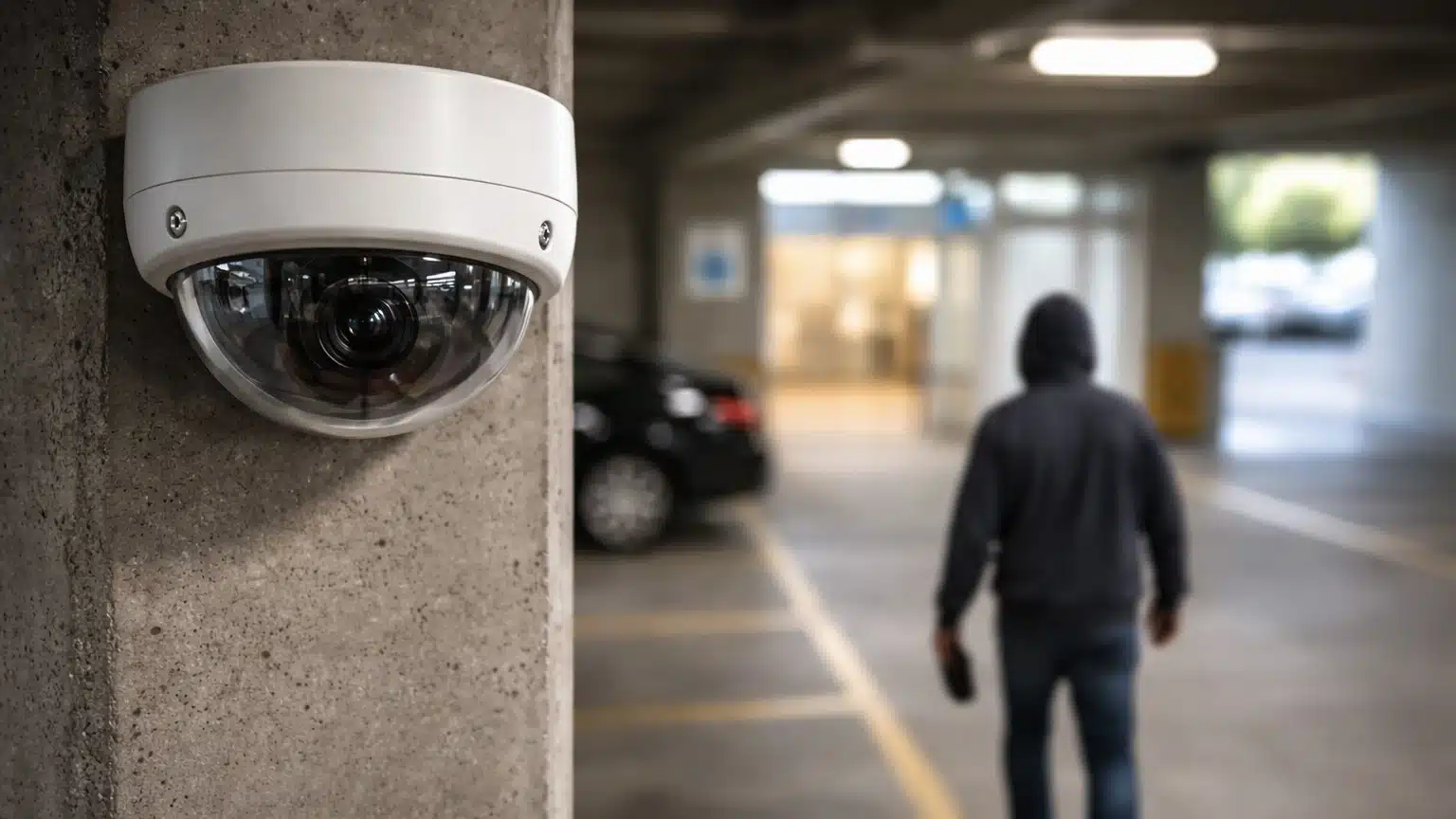
Violence in healthcare settings has escalated steadily over the past decade, and the data tells a stark story. According to U.S. Bureau of Labor Statistics figures from 2018, healthcare and social assistance workers face approximately five times the rate of workplace violence injuries compared to workers in other industries. The COVID-19 pandemic intensified this trend, and rates of assaults, homicides, and firearm incidents have not returned to pre-pandemic levels in parts of the country.
Hospitals now use a layered approach to security that includes physical security, risk assessments, and working with other security measures to keep patients, staff, and visitors safe from threats like gunfire and workplace violence.
Weapons detection systems for hospitals have emerged as a direct response to firearm and knife incidents at hospitals, with adoption accelerating after several widely publicized hospital shootings. Hospitals and clinics can make their facilities safer with modern, AI-assisted detection without turning entrances into airport-style checkpoints. This preserves the calm, patient-centered environment that is so important to healthcare.
Key Takeaways
- Healthcare workers face workplace violence rates approximately five times higher than those in other industries, with hospitals bearing an estimated $18.27 billion in related costs annually.
- Modern weapons detection systems can be used to identify firearms and knives at entrances and throughout campuses without creating bottlenecks or intimidating checkpoints.
- Successful implementation requires risk assessments, strategic placement, staff training, and integration with broader security infrastructure—from large hospital systems to community clinics.
Why Hospital Security Needs to Evolve

Hospitals are more vulnerable to violence than many other workplaces. They operate 24/7 with open-door policies for walk-in care and family visits. Their emergency departments often handle behavioral health crises and police drop-offs. They’re also prone to emotionally charged situations, from family disputes over patient outcomes to terminal diagnoses to post-incident tensions, that create opportunities for concealed firearms or knives to enter clinical areas. The American Hospital Association estimated the total financial cost of violence to hospitals at $18.27 billion in 2023 alone.
Security has always been the response to this, working to mitigate tensions and manage threats. Traditional hospital security has relied on guards, CCTV cameras, and occasional metal detectors at high-risk entrances. This method worked well when violence was less common and less serious. But today, healthcare environments face more weapon threats, higher aggression levels, and crowded emergency departments that legacy systems cannot adequately protect.
The Rise of Violence in Healthcare Settings
Hospitals and psychiatric facilities rank among the top locations for workplace violence. The IAHSS 2023 Healthcare Crime Survey found that 83% of reported aggravated assaults were type 2 violence directed at employees by non-employees. Violent crime rates reached 1.9 incidents per 100 beds overall, rising to 2.5 per 100 beds in facilities with psychiatric or behavioral units. A National Nurses United’s 2023 survey found 81.6% of nurses experienced at least one workplace violence incident in the past year, with 45.5% reporting increases in their units.
Many violent incidents involve visitors or patients bringing concealed firearms or large knives into EDs, waiting rooms, or parking structures. In early 2025, a Pennsylvania case demonstrated the consequences of missed weapons: a visitor upset over his wife’s terminal care returned armed after prior removal by security, killing a police officer and wounding five others in a hostage situation. One missed weapon can lead to lockdowns, delayed surgeries, trauma, and damage to your reputation that lasts.
Unique Security Challenges in Hospitals
Healthcare institutions inherently grapple with a conflict between an open-door culture that facilitates public access, familial support, and urgent care, and the necessity for regulated entry screening. Hospitals can’t just close doors or limit access hours like office buildings or event spaces can.
Emergency departments present elevated risks: they host high volumes of patients, manage frequent police drop-offs, work with behavioral health patients, and have to de-escalate family disputes, making them priority sites for detection systems. Yet loud alarms, highly visible guards, or intimidating hardware can increase patient anxiety—particularly in pediatric, oncology, or behavioral health contexts.
Hospitals must have coordinated policies and technology, such as weapons detection systems, in use at entry points, including the main visitor lobby, emergency department entrances, ambulance bays, staff-only entrances, behavioral health and maternity unit doors, and any loading docks or service entrances.
What Are Healthcare Weapons Detection Systems?
Healthcare weapons detection systems are integrated technologies and workflows designed to identify firearms, large knives, and other contraband before they enter clinical areas. Unlike stadium or airport versions, hospital systems must accommodate medical devices like pacemakers and implants, mobility aids, and patient privacy expectations.
These systems represent one protective part of a complete security strategy, alongside visitor management, de-escalation training, and video surveillance.
Definition and Purpose
Weapons detection systems combine things like sensors, software (often AI-powered), and human procedures to automatically detect likely weapons as people enter a facility.
Primary purposes include:
- Preventing armed individuals from reaching patient-care areas
- Giving security teams early warning before incidents escalate
- Supporting faster, more precise coordinated response when potential threats appear
- Minimizing false alarms from phones, keys, and personal belongings
Detection is typically deployed at emergency department entrances, main visitor lobbies, and sometimes staff entrances, depending on risk assessments.
Types of Weapons Detection Systems for Hospitals
There are three main categories of weapons detection that technologies fall under: concealed, visual, and audible. The systems most commonly used in healthcare settings are:
- Walk-through metal detectors (concealed): Legacy archway units at key entrances with high sensitivity to metals. They often create queues and frequent alarms on belts, implants, or tools—less ideal for high-volume, patient-friendly flows.
- Smart detection portals/sensor bollards (concealed): Newer multi-sensor AI systems resembling architectural elements, enabling free-flow, contactless screening with real-time pattern matching. These systems use advanced sensors that can sense and interpret threat signatures, allowing them to distinguish weapons from harmless items.
- Handheld wands (concealed): Used for secondary screening after a portal alert, rather than primary screening in high-traffic environments.
- AI-powered video analytics (visual): Software analyzing live camera feeds for visible firearms, integrated with existing IP cameras throughout the hospital.
The Shift Away from Traditional Screening Methods
Metal detectors (both wands and walk-throughs) are the most common type of weapons detectors used in hospitals. They have been around for decades. While they have been the standard for many years, their drawbacks are real: they’ve got high false positive rates, are operationally burdensome, and are usually exclusive to main entrances.
Newer, more advanced weapons detection systems, like weapons scanners or visual AI gun detection, are designed to search for weapons only and are less likely to alarm for harmless items such as phones and keys, facilitating swift pedestrian traffic flow.
How Weapons Detection Systems Work in Hospitals

On a typical day at a mid-size urban hospital, visitors arrive at the main lobby, ED traffic fluctuates with emergencies, and staff change shifts every eight to twelve hours. Real-world deployments of weapons detection systems rely on thoughtful placement, clear signage, trained staff, and tuned alert thresholds to preserve throughput and patient experience.
Concealed weapons detection technologies (like metal detectors/wands or weapons scanners) are typically only used at key entrances, preventing weapons from entering the facility. However, beyond these designated checkpoints, they have no capacity to prevent weapons from entering through employee entrances or side doors. In contrast, AI-enhanced visual detection can be deployed throughout healthcare campuses, both inside and outside, on existing CCTV cameras.
This section considers how different technologies can be applied throughout hospitals.
Concealed Weapons Detection: Entry Point Screening and Visitor Flow
Concealed weapons detection technology can be used to screen entrances and manage visitor flow in hospitals. When entering the facility, people can go through controlled points with walk-through detectors that scan for metallic signatures, magnetic anomalies, or suspicious object shapes. When a flag is raised, trained security officers can investigate further and manage the situation.
Hospitals can prioritize entrances based on risk. For example, ED doors and main lobbies typically receive detection systems first, with maternity or behavioral health entrances following based on incident history.
Practical things to consider when implementing concealed weapons detection tech include:
- Free-flow designs allowing side-by-side passage (unlike single-file event lanes)
- Clear signage explaining that unobtrusive screening is in use
- Separate paths for badged staff versus visitors
- Secondary screening rooms for resolving alerts discreetly
- Accessibility accommodations for wheelchairs and stretchers
Because concealed weapons detection systems can have a greater impact on flow, they need to be carefully deployed to prevent any delays in care. Initial objections usually stem from concerns that screening portals will negatively impact the patient experience; in high-risk hospitals, many medical staff members counter this, arguing that they’d rather prioritize safety over convenience.
Visual Weapons Detection: AI Video Analytics and Gun Detection
Many hospitals today use CCTV cameras to watch for incidents and help in investigations. Unfortunately, the staffing requirements for monitoring feeds can be high, and fatigue can quickly set in. Visual gun detection systems automate feed scanning, proactively searching for weapons across all cameras at all times and limiting any impact on visitor flow.
AI-enhanced models analyze video frames in real time, comparing patterns to known weapon signatures while filtering out harmless items. When a genuine threat is detected, the system sends an alert (often with an image or video clip) to configured security staff phones, a command center, or nearby officers within seconds to confirm whether a true threat exists.
The standard workflow is this:
- Scan: Live CCTV feed is scanned for firearms
- Analyze: AI processes signatures against weapon databases
- Alert: Notifications are sent to security operators with location and imagery
- Verification: The detection is verified or dismissed by a trained operator
- Respond: Security engages according to established procedures
Visual AI gun detection can help reduce reliance on security staff constantly monitoring screens, providing simultaneous coverage of multiple entrances and corridors. Visual AI gun detection can be installed almost anywhere there are cameras, from parking garages to lobbies and side entrances to stairwells and hallways. In hospitals, where patient and staff privacy is of the highest level of importance, placement must be strategic to protect that privacy. This means staying away from patient exam rooms, locker rooms, offices, and restrooms… areas where there is a reasonable expectation of privacy.
Integration with Existing Security Infrastructure
Modern weapons detection platforms often integrate with access control badge systems, visitor management kiosks, nurse call platforms, mass notification systems, and video management systems (VMS).
When weapons detection technology is integrated with other parts of a security system, including access control, alarms, cameras, notification systems, emergency protocols, and trained staff, responses can be quicker and more coordinated. For example, if a gun is pulled out in a stairwell, is detected by an AI-enhanced camera, and is verified, automated procedures can be initiated (door locking, law enforcement notification, security team response, ENS, etc.).
Many platforms offer APIs and cloud-based management for monitoring devices across multiple locations, operating on segmented networks to reduce cybersecurity risk to clinical systems.
Layering Systems
Though not always feasible, higher-risk hospitals may choose to use multiple weapons detection systems together. For instance, they might put weapons scanners at the main entrances and use visual AI gun detection on cameras all over the building. This makes sure that you get the most coverage possible, both inside and outside.
Main Advantages of Weapons Detection Systems in Hospitals
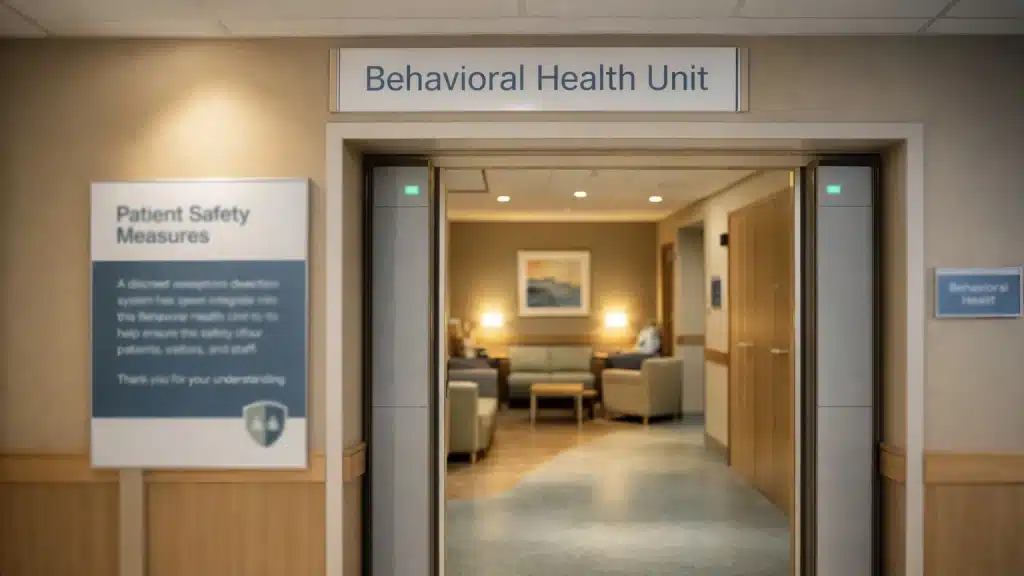
Administrators invest in weapons detection for staff safety, regulatory expectations, liability reduction, and public safety reassurance. Benefits translate to fewer violent escalations reaching treatment areas, shorter lockdowns, and less time spent on nuisance alarms.
Early Threat Detection and Faster Response
Detecting a potential firearm at the door can potentially buy minutes that can be used to isolate the individual, involve local law enforcement, or divert patients away from danger. Modern systems aim to send alerts within seconds of detection.
This speed enables quicker activation of emergency codes, more accurate information for responding officers, and reduced confusion during critical first moments.
Improved Safety for Staff, Patients, and Visitors
Fewer weapons entering the building can reduce the likelihood of severe injuries, hostage situations, and traumatic events. This matters greatly for nurses, ED physicians, and behavioral health staff who routinely face aggressive behavior.
Research on the effects of harassment at work found that 85% of healthcare workers have anxiety, 60% have depression, and 81% have burnout. Visible but not intrusive security measures can help staff feel safe and secure, which is important to leadership.
Operational Efficiency
AI-based detection cuts down on the time spent checking bags by hand and doing extra screenings because legacy metal detectors are too sensitive. Security staff can focus on real events, patrols, and proactive de-escalation when there are fewer false positives.
Higher throughput at entrances reduces bottlenecks, late arrivals to appointments, and ED crowding at registration, supporting overall operational efficiency.
Enhanced Patient and Visitor Confidence
Visible security measures, when implemented thoughtfully, may increase perceived safety among patients and visitors. Hospitals can communicate clearly about non-invasive, privacy-respecting screening to reduce apprehension.
Seamless Integration Without Disruption
Many newer concealed weapons detection systems install quickly in existing entrances, using discreet portals or columns that blend with lobby architecture. Advanced systems let you bring in common items like phones, keys, and belts while also finding weapons.
With visual AI gun detection, screening remains contactless and largely invisible to patients, maintaining the hospitality-focused feel essential to healthcare environments.
Things to Consider When Choosing a System
Weapons detection is not a cure-all. Success requires investment, change management, and clear policies developed with input from nursing, ED leaders, facilities, IT, and legal teams.
Balancing Security with Patient Experience
Creating a highly visible checkpoint feel can heighten anxiety, especially for pediatric, oncology, and behavioral health patients. It’s important to find ways to alleviate these feelings so that hospitals can continue to feel like welcoming, comforting places.
Mitigation strategies include:
- Discreet hardware designs
- Clear, compassionate signage
- Staff trained to explain the process reassuringly
- Trauma-informed approaches for vulnerable populations
- Patient experience teams involved in design decisions
Cost and Resource Allocation
Typical cost components include hardware (portals, sensors, cameras, etc.), software licenses or subscriptions, installation, training, and ongoing maintenance. Choosing systems like AI gun detection can help reduce hardware and staffing costs, as they can be installed directly on many existing cameras and have a very low staffing burden. The total cost over 3–5 years should factor in potential savings from reduced incidents, liability, and staffing efficiencies.
Many hospitals pilot systems at the ED first, then expand based on outcomes and budget cycles. Capital vs. operating budgets, grants, and public-private partnerships may all help fund deployments.
Effectiveness and Limitations
While weapons detection reduces armed individuals entering buildings, it cannot eliminate all violence or non-weapon assaults.
Concealed weapons detection systems may help to prevent weapons from getting inside, but weapons with low metal content, creative concealment, and crowded entryways can reduce detection accuracy. Visual detection is effective for large-area deployment across healthcare campuses, covering both indoor and outdoor spaces, but it cannot detect firearms until they’ve become visible.
With any system, detection works best combined with vigilant behavioral threat assessment teams, de-escalation training, and clear policies for verbally aggressive or intoxicated individuals.
False Positives and Workflow Disruption
Overly sensitive systems can trigger frequent alarms on other items like orthopedic hardware, large keyrings, or work tools—slowing entry and frustrating staff.
Managing false alarms requires:
- Fine-tuning and local testing
- Human-in-the-loop verification before escalation
- Secondary screening locations with trained officers
- Procedures for safely handling discovered personal firearms
- Regular KPI reviews (false alarm rate, average resolution time)
Ultimately, people trained to understand, interpret, and address detections are central to the efficiency of any weapons detection system.
Best Practices for Implementing Weapons Detection in Hospitals

Successful programs follow a structured path: risk assessment, solution selection, pilot deployment, training, and continuous improvement. Collaboration across security, facilities, clinical leadership, IT, and legal/compliance must start in the earliest planning stages.
Conducting Risk Assessments
Risk assessments are the first step to understanding what kind of weapons detection systems are needed and where. Security teams should map all entrances and high-risk departments, reviewing past incident reports from EDs, behavioral health units, and visitor conflicts. Community-specific risks (like gang activity or domestic violence spillover) should be analyzed to help guide decision-making, and local law enforcement and regional threat assessment experts can be involved. Any findings should be documented to justify the investment to the boards.
Strategic Placement of Detection Systems
Place portals or sensors at natural choke points near entrances but before reception desks to catch security threats early. Because of ambulance traffic and access outside of business hours, ED entrances may need to be set up differently than main lobbies. Design for accessibility: ensure screening accommodates wheelchairs, stretchers, pregnant women, and assistive devices. Before the final installation, do practice walk-throughs with the clinical staff.
Visual AI gun detection can be deployed on cameras throughout the campus. Pilot programs may start with a focus on parking lots/garages, key entrances, and any other areas identified during the risk assessment.
Staff Training and Collaboration
Staff training is essential. Security officers need to know about operating systems, interpreting alerts, respectful secondary screening, and de-escalation. Clinical staff should be trained for awareness of what happens when certain alerts trigger.
Regular drills integrating detection alerts into emergency codes can help everyone understand their roles and responsibilities in different situations, and interdepartmental feedback loops post-deployment ensure best performance.
Integration with Broader Security Strategies
Weapons screening should be embedded within visitor management, ID badging, CCTV coverage, and alarm systems. Incidents detected at entrances need to feed into reporting platforms and after-action reviews.
Alignment with business continuity plans ensures clear procedures for handling discovered weapons, coordinating with law enforcement, and communicating with staff.
Following Industry Guidelines
The International Association for Healthcare Security and Safety (IAHSS) publishes recommendations on screening, security staffing ratios, and entrance design. Regulations on firearm policies, security signage requirements, and data handling vary from state to state, so always ensure appropriate compliance.
Set realistic goals for throughput, staffing, and coverage by comparing your hospital to other healthcare facilities of the same size and risk level.
Extending Weapons Detection Beyond Hospitals (Clinics & Smaller Facilities)

Violence is not confined to large hospitals. Urgent care centers, reproductive and specialty clinics, dialysis facilities, and behavioral health clinics face similar risks—often with fewer security officers and limited budgets.
Why Smaller Healthcare Facilities Need Security Too
Solo staff, late-night urgent care hours, pain management practices, and behavioral health sites create environments where emotions can escalate quickly. Healthcare professionals at outpatient sites across the country have experienced assaults and weapons incidents, causing lockdowns or injuries.
Patients move between hospitals and clinics, so a consistent safety posture across the continuum of care builds trust and supports comprehensive healthcare safety.
Scalable Weapons Detection Solutions
Options suitable for clinics include:
- AI-enabled camera analytics/gun detection leveraging existing CCTV
- Smaller sensor portals for single-door suites
- Portable screening units for temporary high-risk periods
Many clinics start with video analytics and policies for when to engage law enforcement, adding physical sensors only at the highest-risk locations.
Key Use Cases for Clinics
- Urgent care centers: Have high evening and weekend volumes, walk-in patients with injuries, and occasional spillover of disputes.
- Behavioral health clinics: Elevated risk of agitation requiring non-stigmatizing safety measures.
- Specialty practices: Oncology and pain management visits may involve emotional family dynamics, and reproductive clinics may be at a higher risk for targeted violence.
Having discreet screening, trained staff, and established incident protocols can all lower the risk for violence in each setting.
Benefits for Smaller Facilities
There are significant benefits for using weapons detection systems (particularly visual detectors) in smaller healthcare facilities, including reduced staff fear, improved retention, and fewer disruptions to small care teams. Even modest detection capabilities may deter weapons when combined with posted policies and awareness.
Maintaining a welcoming, community-clinic atmosphere while subtly enhancing security is achievable with thoughtful implementation.
The Next Generation of Healthcare Security
In the absence of strong security protocols, many healthcare workers feel that they are taking on another role, handling conflict de-escalation and threats that should have been managed before they can enter practice areas. This puts them at risk for violence and fosters a preventable feeling of fear in their workplace.
Thoughtfully deployed weapons detection systems operated by trained security personnel can significantly strengthen safety without sacrificing accessibility and compassion. Tools like weapons scanners and visual AI-enhanced gun detection work best when integrated with training, clear procedures, and a culture that prioritizes a safe environment… not deployed in isolation.
From large academic medical centers to community clinics, scalable weapons detection is becoming essential infrastructure for modern healthcare security and workforce protection. Always start with a clear risk assessment, engage stakeholders early, and pilot solutions at your highest-risk entrances before scaling. The ability to make informed decisions now will shape the safety of healthcare settings for years to come.
Deploying the best weapons detection systems is part of a journey toward resilient, data-informed security programs that protect healthcare workers and patients alike. Designed with HIPAA compliance in mind, Omnilert is proud to work with hospitals and other healthcare facilities as they strive to build a safer care environment. To learn more about how, Omnilert Gun Detect can be used in hospitals, click here.
Frequently Asked Questions
What weapons detection systems do hospitals use today?
Many modern healthcare facilities use concealed and/or visual weapons detection systems, like weapons scanners or visual AI gun detection installed on security cameras. Metal detectors have been used in hospitals for a long time, but newer detection technology is often more accurate, easier to operate, and more affordable to staff.
Will detection systems create long lines at hospital entrances?
Unlike traditional metal detectors, modern free-flow systems allow multiple people to pass simultaneously without stopping. AI filtering reduces false alarms that would otherwise require manual secondary screening, keeping entrance delays minimal even during high-volume periods.
What happens when a weapon is detected?
With concealed weapons detectors stationed at the main doors, on-duty security personnel can approach the individual calmly, explain the need for secondary screening, and resolve the situation in a designated secure area, typically without disrupting clinical operations. With visual AI gun detection, the system sends an immediate alert with location and imagery to security staff for verification. Because this technology searches for visible guns (not concealed-carrying individuals or holstered police firearms), the response usually involves taking immediate action, like locking all doors, initiating alarms, and contacting law enforcement.
Are these systems effective against all types of weapons?
Detection systems excel at identifying firearms and large knives… Some systems focus on one, and others focus on both. However, weapons with minimal metal content or creative concealment methods may reduce effectiveness. This is why detection works best as part of a comprehensive approach that includes de-escalation training and behavioral threat assessments.
How much do hospital weapons detection systems cost?
The cost varies a lot depending on the type of technology, the number of entrances, and the size of the facility. Hospitals should look at the total cost of ownership over three to five years. This includes hardware, software subscriptions, training, and maintenance, as well as any savings that might come from fewer incidents and less liability.