Security teams today have access to more technology than ever before, from cameras and access control systems to emergency notification platforms and dispatch tools. While these solutions improve security, they also bring more dashboards, more alerts, and more workflows to manage.
During an incident, that added complexity slows response. Security personnel shouldn’t have to switch between multiple apps or manually coordinate disconnected systems while managing an emergency. That’s where automated security workflows come in.
When done right, AI gun detection can be the trigger that connects your existing security technologies and automatically initiates pre-defined response actions. Instead of adding another tool to monitor, it reduces manual work, improves coordination and accelerates response while keeping security professionals in control.
In this article, we’ll look at how AI gun detection can bridge the gap between detection and response through workflow automation and what to look for when evaluating integrated physical security solutions.
Key Takeaways
- AI gun detection is most effective when it’s integrated into existing security operations. Detection should trigger coordinated workflows rather than create another manual process.
- Automated workflows can reduce repetitive tasks by helping initiate notifications, share information, coordinate responders, and support predefined emergency procedures.
- Security automation is designed to support, not replace, security professionals. By handling routine administrative tasks, it allows responders to focus on decision-making and protecting people.
- Organizations should prioritize solutions that extend the value of existing security investments by integrating with cameras, emergency notification systems, access control, and other physical security technologies.
The Challenges of Mixing Modern Security and Manual Security Workflows
More Systems, More Alerts, More Workflows
Recent decades have seen an increase in the types and amounts of threats facing organizations. In an effort to rise to the modern challenges they face, many security teams have turned to technology.
Whether protecting a school district, hospital, corporate campus, or critical infrastructure, most security personnel today are already working with a range of systems, often from different vendors:
- Video management systems
- Weapons detection systems
- Access control platforms
- Emergency notification software
- Visitor management systems
- Dispatch tools
- Incident reporting applications
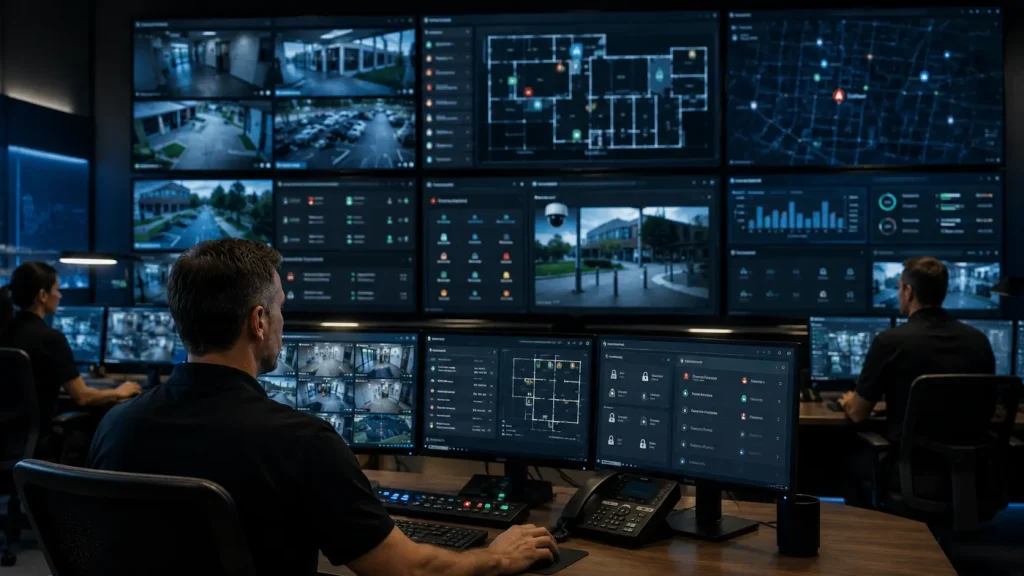
Every new security technology comes with the hope of greater visibility, faster detection, and better protection. Yet for many organizations, each new solution also introduces another dashboard to monitor, with new streams of alerts to investigate and more workflows that someone will have to manage.
Because of all of these systems, SOC teams today are facing unmanageable volumes of alerts. Research shows enterprises receive approximately 960 alerts per day on average. Larger organizations can see over 3,000 a day. Roughly 40% of these alerts go uninvestigated because there simply isn’t the time or resources to do so.
This can be attributed to a number of factors; prominently, as their technological toolhouse has expanded, their operations and procedures have stayed the same for years. This gap translates to missed threats, slower incident responses, and higher breach costs. That’s becoming one of the biggest challenges facing modern security teams.
Why Another Dashboard Is the Wrong Answer
Security professionals usually aren’t looking for more software; in many situations, they’re already overwhelmed with the new technologies they have. They’re looking for less manual work.
Unfortunately, many security technologies still operate in isolation, often with entirely separate platforms that require constant attention. Every standalone tool adds complexity, with multiple logins, duplicate alerts, manual data entry, phone calls between departments, and delayed communication… all of which contribute to a greater opportunity for human error.
In an emergency, each of those standalone workflows can slow response when every second counts. The goal of security operations teams should be making existing systems work together.
As organizations evaluate new security technologies, they’re increasingly looking beyond detection accuracy alone. They’re asking whether a new solution will simplify operations and fit into existing workflows, or add yet another interface, alert stream, and set of manual tasks for already stretched-thin security personnel.
In the case of AI gun detection, organizations evaluating the technology are asking an important question: Will this actually make our jobs easier? Or will it become just another system someone has to watch?
Acting After Detection
AI gun detection technology uses artificial intelligence to scan live security camera feeds for visible firearms so you can identify threats faster.
When compared to traditional detection methods, which, in some cases, means waiting for a bystander to see and say something (hopefully before shots are fired), the technology’s ability to detect a visible firearm in seconds is potentially life-saving. But detection alone doesn’t stop an incident. In many organizations, the real work starts after the alert appears. During a crisis, a number of things need to happen (and fast):
- Verify the event
- Determine the location
- Notify administrators
- Call law enforcement
- Activate emergency notifications
- Lock down areas
- Share live video with responders
- Coordinate communications
- Document the incident
If each of those tasks requires manual intervention, seconds are lost while security personnel juggle multiple systems in an already stressful situation.
Automated Security Workflows Filling the Gap Between Detection and Response
AI should help reduce those repetitive tasks, not create more of them. The most effective AI gun detection solutions don’t just identify firearms. They trigger automated security workflows that connect existing security technologies, reduce manual work, and help organizations respond faster without complicating things.
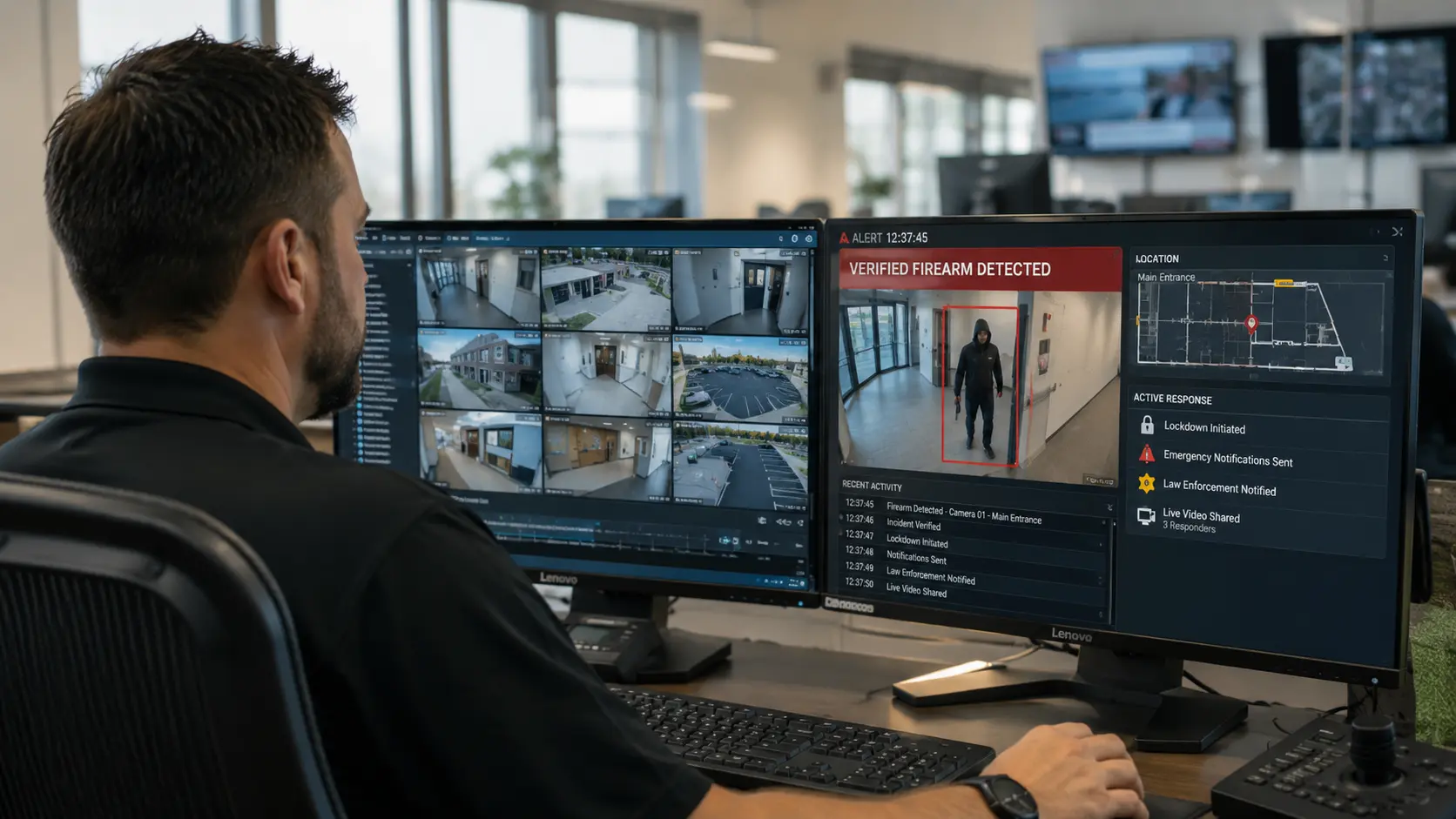
In systems that offer integrated security automation, instead of generating another alert that someone has to decide what to do with, the system allows you to predefine coordinated actions that can start immediately after a verified detection.
For example, a verification on an integrated system can trigger emergency notifications and public announcements being sent out, live camera feed sharing, law enforcement and security dispatch, lockdowns for designated areas, public announcements, and incident record creation.
Having automation handle some of the response tasks allows operators to focus on decision-making and life safety, not having to coordinate each response manually.
Automated Security Workflows Need to Reduce Work, Not Create It
One of the concerns organizations sometimes have about security automation is if it will replace the people working hard to keep facilities safe. In reality, the goal is the opposite. At Omnilert, workflow automation integration is designed to eliminate the repetitive, time-consuming tasks that pull teams away from making critical decisions during an incident.
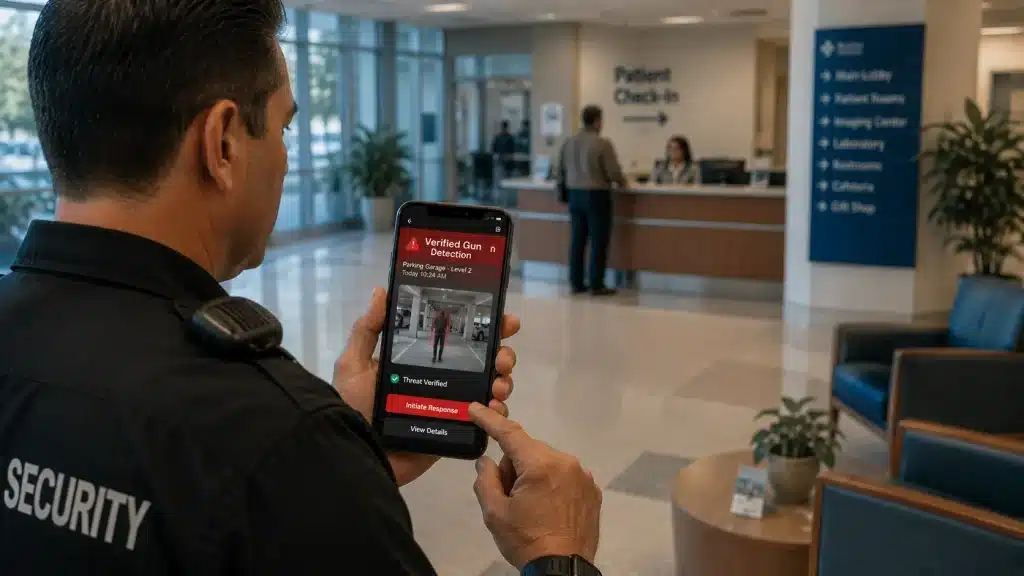
Instead of asking operators to monitor another dashboard or manually coordinate every step of a response, automated workflows are intended to help existing security systems work together. When a verified threat is detected, predefined actions can begin immediately while security personnel remain in control of the response.
Modern automated workflows can help organizations by:
- Reducing Alert Fatigue: Instead of having operators continuously monitor camera feeds or investigate every alert manually, integrated AI gun detection systems bring verified, actionable events to the forefront with the context responders need to act quickly. This helps teams focus their attention on higher-priority incidents, so they don’t have to sort through unnecessary notifications.
- Eliminating Manual Coordination: During an emergency, every phone call, text message, or manual system update costs valuable time. Automated workflows can send out pre-scripted notifications to administrators, security personnel, and first responders simultaneously through established communication channels and share relevant information across connected systems (like PA systems or screens) to alert the public.
- Standardizing Response: Stress affects decision-making, especially in high-pressure situations. Integrating AI gun detection with automated workflows helps ensure every incident follows organizations’ predefined emergency procedures, creating a more consistent and reliable response regardless of who’s on duty.
- Accelerating Response: When routine tasks happen automatically, responders can start assessing and managing the situation right away instead of spending valuable time navigating multiple applications. This helps security teams gain situational awareness faster while administrative tasks continue in the background.
The result of all this is a simpler, more coordinated security operation that allows everyone to focus on protecting people rather than managing software.
Extending Your Existing Security Ecosystem with AI Gun Detection
Organizations have already invested significant time and resources in security cameras, access control systems, emergency communications, and established response procedures. Deploying AI gun detection shouldn’t require replacing those investments or creating entirely new workflows. Instead, the technology should build on what already exists.
Omnilert’s AI gun detection technology is designed to integrate flexibly with existing camera infrastructure and connect with emergency notification platforms, access control systems, video management systems, and other security technologies. This way, AI becomes an additional layer of intelligence within the workflows teams already use every day.
Security technology keeps evolving, but organizations are realizing success is less about adding new tools and more about connecting the ones they already have. When detection is integrated in the broader security ecosystem, organizations can strengthen protection without adding more operational complexity.
Best Practices for Security Workflow Automation With AI Gun Detection
Organizations looking at AI gun detection should look for solutions that add to, not complicate, their existing security operations.
Things to consider include:
- Build Around Existing Workflows: Technology should complement existing emergency response procedures rather than force new ones.
- Prioritize Integration: Look for solutions that work with existing cameras, emergency notification systems, access control, and security platforms.
- Automate Response Tasks: Pre-written notifications, video routing, documentation, and stakeholder communication should happen automatically whenever possible.
- Keep People in Control: Automation accelerates response, but security professionals should still be in charge of judgment, coordination, and incident leadership.
Conclusion
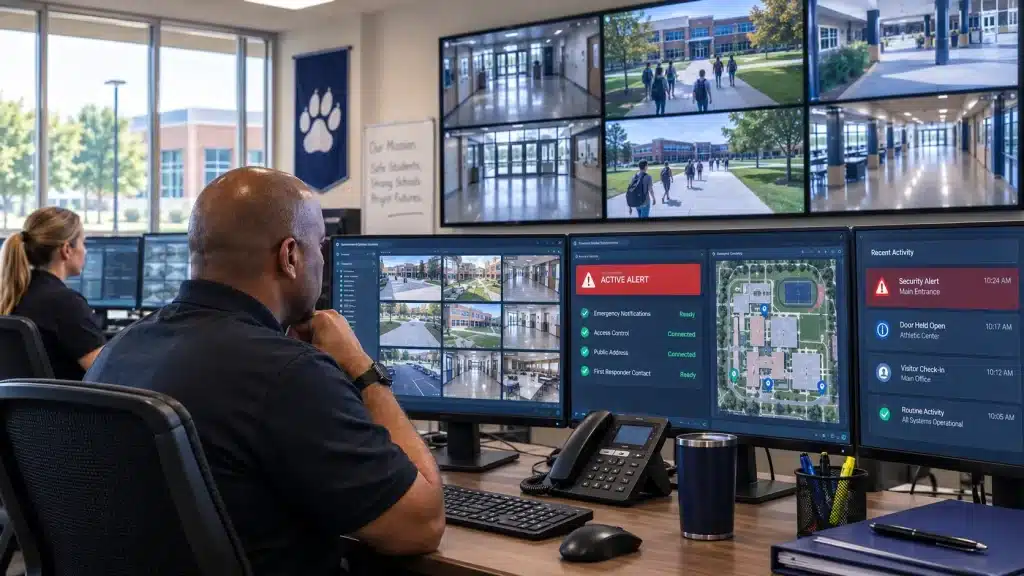
AI security technology should bring both faster detection capabilities and less complexity. Security teams don’t need another dashboard to compete for their attention. They need technology that will actually work behind the scenes, tying together their existing systems and automating the mundane so people can focus on people when it matters most.
As organizations continue to modernize their security operations, integrated workflows will be just as important as AI itself.
Platforms like Omnilert show how AI gun detection can be the intelligent trigger for those workflows using existing cameras, emergency communications, and access control systems to help you respond faster without adding more work. When detection, communications, and response are a connected workflow, AI becomes more than another security tool. It becomes part of a simpler, more effective way to protect people and facilities.
Read more about Omnilert’s workflow automation capabilities here.
Frequently Asked Questions (FAQs)
Will automated security workflows replace security personnel?
No. Automating workflows is intended to reduce administrative tasks, not replace human decision-making. Security professionals are still responsible for verifying incidents, assessing the situation, coordinating with responders and making critical decisions. Automation just helps streamline some of the emergency response processes so teams can focus on managing the incident.
Why is integration important when evaluating AI gun detection?
Detection is only the first part of the response. If AI gun detection is a standalone system, security personnel may still need to manually notify responders, switch between apps and coordinate multiple technologies. Integrating AI gun detection with existing security systems can reduce manual work and improve response coordination.
How do I reduce alert fatigue when adding new security technology?
One of the best ways to reduce alert fatigue is to choose technologies that integrate with existing operations rather than creating separate workflows. Solutions that automate repetitive tasks, provide contextual information, and help prioritize actionable events can reduce the number of manual steps security teams do during an incident.
What actions can automated workflows trigger after a verified detection?
Depending on your organization’s policies and system integrations, automated workflows can trigger actions like sending emergency notifications, sharing live video with responders, notifying security personnel, triggering public address announcements, activating access control actions, documenting the incident, and providing situational awareness to key stakeholders.