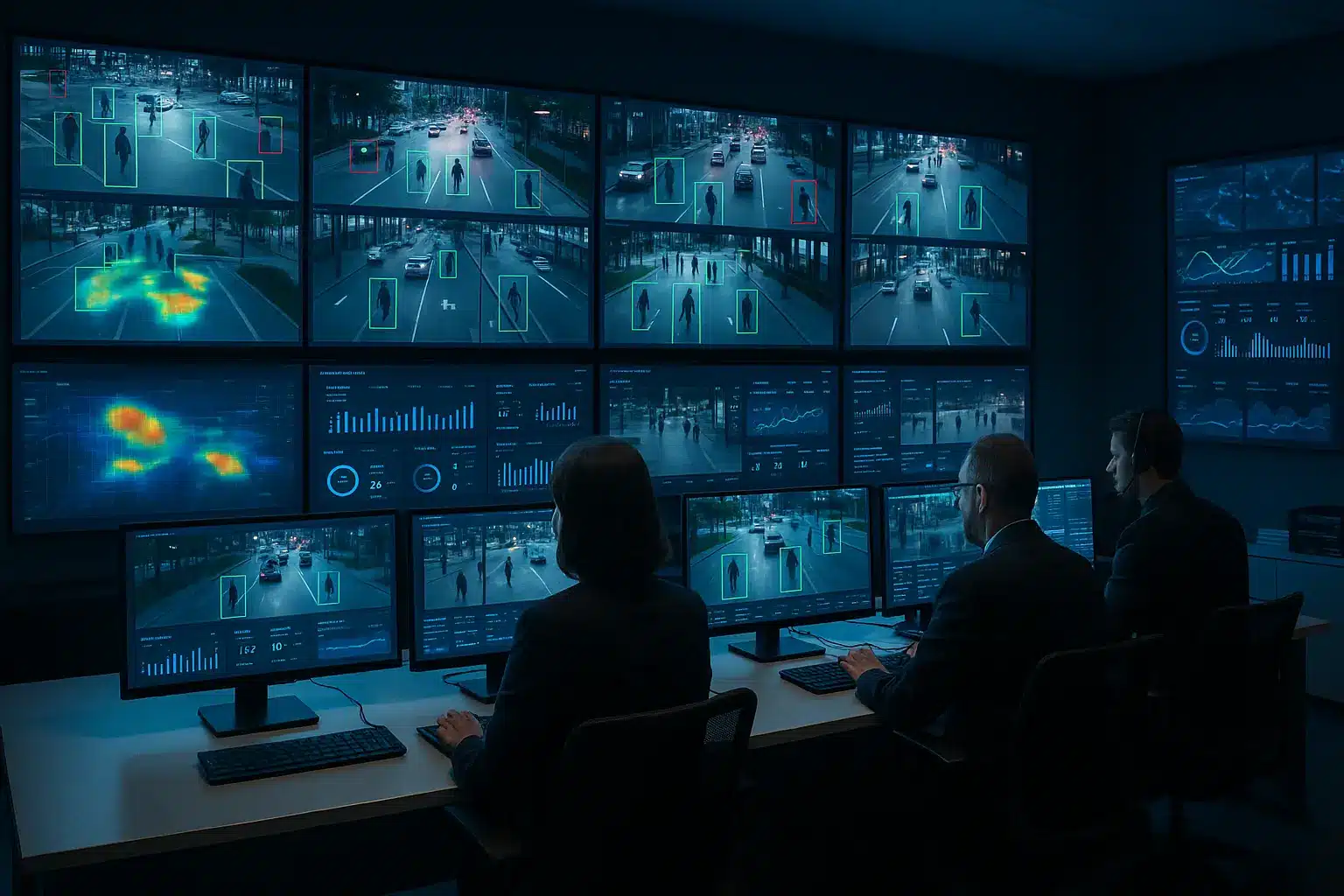
As video becomes an increasingly central part of how organizations monitor, protect, and understand their environments, the need to extract meaningful information from that footage has never been greater. That’s where video analytics comes in. Video analytics uses AI to get real-time insights from video data, transforming security and operations across industries. Many platforms can even connect to your existing cameras, allowing you to leverage your current infrastructure for advanced analytics.
As more security applications depend on those existing camera feeds, organizations also need greater confidence that the underlying video infrastructure can support them. That’s creating a growing need for an assurance layer in modern physical security.
This technology helps businesses make better decisions, improve security, and boost efficiency. In this article, we’ll break down what video analytics is, how it works, and the many ways it can be used as more organizations adopt AI and video analytics technology in 2026.
Key Takeaways
- Video analytics uses AI and machine learning to automate video data analysis, security and operational efficiency across industries.
- Video analytics can analyze footage from multiple cameras at once, improving monitoring and investigation efficiency.
- Key features of video analytics include real-time incident alerts, object detection and customer behavior analysis to help with decision making and service delivery.
- Advanced technologies like edge analytics and hybrid cloud systems make video analytics solutions more efficient and scalable.
Understanding Video Analytics
Video analytics is the use of technology to automate processes and get valuable insights from video data. It’s used in security and operational systems to make better decisions and actionable improvements across domains. Video analytics can also be used to analyze historical data to mine insights for a deeper understanding of trends and patterns over time. Intelligent video analysis is an advanced application of video analytics that enables automated content analysis for better safety and operational efficiency.
Traditional video surveillance systems have evolved with the addition of AI-powered video analytics and traditional video analytics, which has enabled advanced real-time video analysis, plus pattern and anomaly detection using CCTV cameras and a surveillance system.
What is Video Analytics Technology?
Video analytics software is a sophisticated technology that uses intelligent algorithms to analyze video content. Video analytics works by using advanced algorithms to process and interpret video streams to extract actionable insights from footage for real-time alerting or post-event analysis. Using artificial intelligence (AI) and machine learning, this technology gathers important insights from video footage to enhance business operations. It does this by monitoring in real-time, detecting objects, and using video analytics tools. The analysis includes attributes, movement patterns and behavior.
Also known as video content analysis or intelligent video analytics, this capability helps businesses optimize security, production, parking management and customer experience.
How Video Analytics Works
Video analytics systems use machine learning algorithms, a subset of artificial intelligence, to analyze video streams and video data. These algorithms improve object detection by recognizing small differences between objects in the video. Processing video feeds helps algorithms identify specific stimuli in the images they capture. It allows them to find insights into unusual differences and to tell apart regular activities from irregular ones.
Such advanced analysis enables proactive decision-making and real-time monitoring.
Video Analytics Features
Video analytics automatically analyzes video footage for insights to improve security decisions through real-time incident alerts. Features include facial recognition, alerting authorities about known offenders and unauthorized individuals, and algorithms that recognize customer attributes like gender and age. Facial recognition is used to detect human faces in video content and compare them to stored databases to further enhance security.
These capabilities make video analytics essential for operational efficiency and security across industries.
Core Technologies in Video Analytics
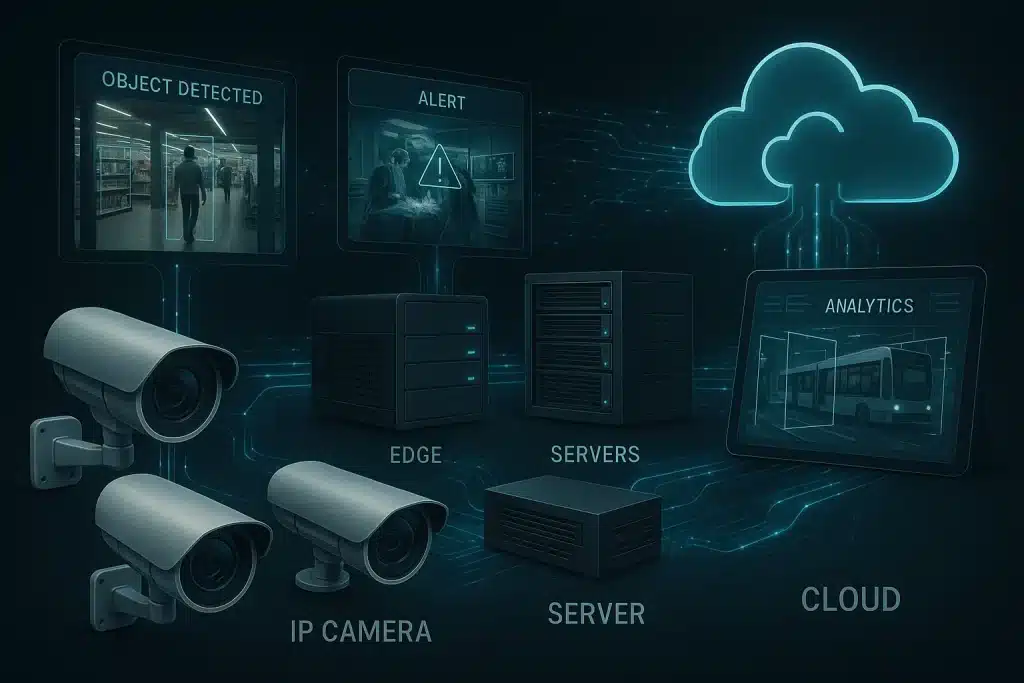
Core technologies in video analytics combine AI and machine learning to transform monitoring and improve response to potential threats. These technologies include deep learning algorithms, edge analytics and hybrid cloud systems, each playing a key role in video analytics.
Deep Learning Algorithms
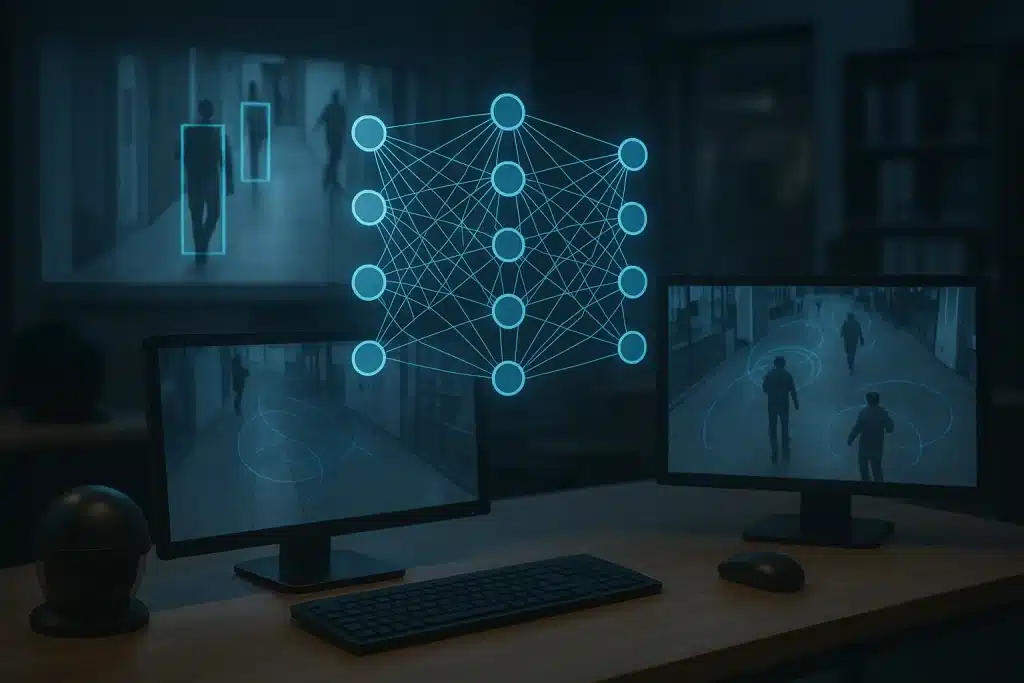
Deep learning revolutionizes video analysis systems by mimicking human behavior and enabling complex automated analysis based on models rather than programmatic logic. These algorithms improve object detection and action recognition by recognizing complex patterns to enhance real-time video analysis. Deep learning is a subset of machine learning that uses neural networks to learn from data.
Deep learning models and machine learning models classify actions in different contexts, making video analytics more accurate and effective.
Edge Analytics
Edge analytics processes video closer to where data is generated, to optimize efficiency and reduce latency. Processing video data on-device, edge analytics reduces the amount of data that needs to be transmitted over the network, resulting in faster response times and better real-time analysis capabilities.
This approach also improves privacy and security by reducing data transmission and network traffic.
Hybrid Cloud Systems
Hybrid cloud systems in video analytics allow organizations to balance local processing and cloud storage to manage resources. They use edge processing for simple on-device object recognition and upload only relevant footage to the cloud for deeper analysis.
This approach offers advanced AI capabilities, ease of management and scalability to enable efficient video management systems and detailed analysis.
Video Analytics Across Industries
Video analytics transforms industries such as manufacturing, security, retail, healthcare and transportation. Automating the detection of specific events in real-time, video analytics improves decision-making and operational efficiency across these sectors.
Video analytics can be applied to live and recorded videos, so organizations can extract insights from past events as well as real-time monitoring.
Edge computing with video analytics further enhances service delivery and innovation opportunities.
Security and Surveillance
Intelligent technologies enable surveillance systems to:
- Automatically detect security threats to enhance situational awareness with real-time insights into monitored environments.
- Use AI-enabled security cameras to send proactive alerts to security teams about potential threats and enable faster response to incidents.
- Reduce false alarms.
Integrating video analytics with existing perimeter security infrastructure enables a comprehensive and proactive AI surveillance approach to provide better security. However, video analytics systems can be complex to implement and integrate with existing infrastructure, so it requires careful planning and expertise.
Retail
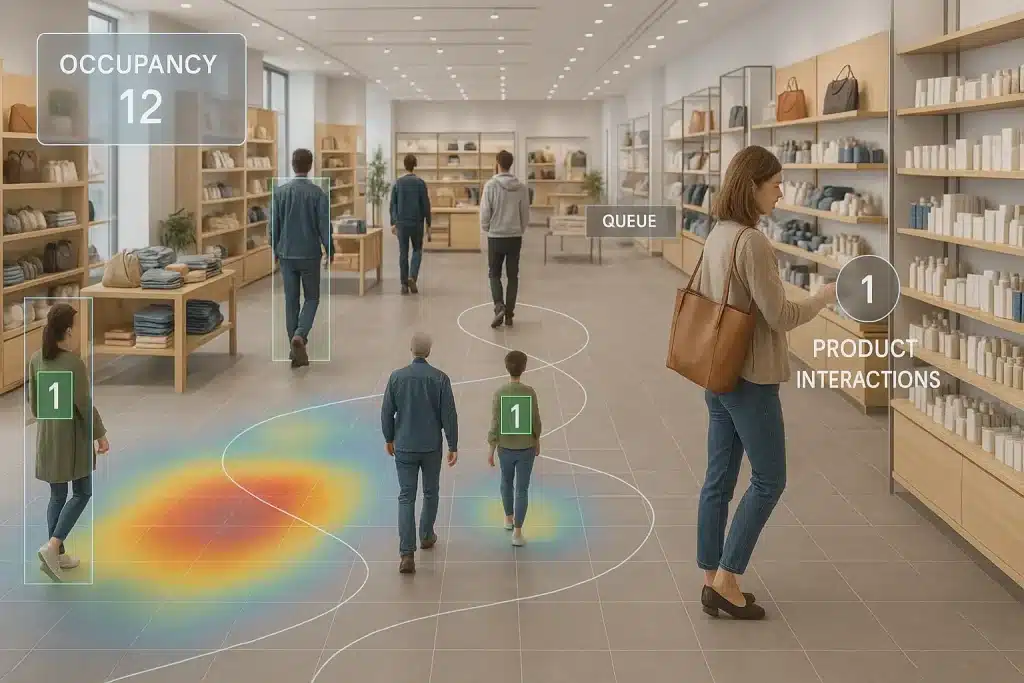
Video analytics enables retailers to:
- Analyze customer interactions
- Optimize product placement based on observed behaviors
- Understand peak shopping times and customer walking patterns
- Count people to provide operational insights and improve customer experience in retail
- Monitor occupancy levels in retail spaces to ensure safety and optimize operations
These operational insights help retailers to improve customer service and marketing effectiveness.
Video analytics helps with queue management and provides insights to improve checkout policies to improve the overall customer experience. Video analytics also optimizes staffing by providing data on peak hours and customer traffic.
Healthcare
In healthcare, video analytics helps professionals monitor patient movements and detect anomalies. Integrating video analytics with personal medical devices enhances real-time patient monitoring. Video analytics is particularly effective in monitoring elderly patients and detecting falls in real-time for quick intervention and care. Video analytics also helps with mental health analysis by using facial emotion analysis to help clinicians evaluate patients.
This technology provides safe environments in healthcare settings by identifying problematic individuals and sending instant alerts for medical events. Such a system provides real-time alerts and clinical insights to support multiple healthcare needs.
Transportation
Video analytics provides quantitative insights into traffic conditions, including vehicle numbers and traffic patterns, to support traffic management. Automatic License Plate Recognition (ALPR) systems using video analytics and OCR can read and analyze license plates without human intervention. They are used for traffic monitoring and law enforcement efforts. This technology helps to enforce traffic laws and identify vehicles associated with infractions. AI-powered video analytics can also scan license plates to count vehicles and inform traffic management decisions. ALPR is a common application of video analytics for traffic and security.
Real-time alerts from video analytics help city officials respond quickly to traffic analysis issues, to improve safety and operational efficiency. Video analytics can also detect vehicles going the wrong way to prevent accidents and improve road safety.
Smart Cities
Video analytics technology supports real-time monitoring and management of urban infrastructure in smart cities. Implementing video analytics in smart cities enhances public safety and makes resource allocation more efficient. Crowd detection analytics are programmed to detect humans and measure the density of crowds in a camera’s field of view, to create safer and more efficient urban environments.
Advanced AI Video Analytics Techniques
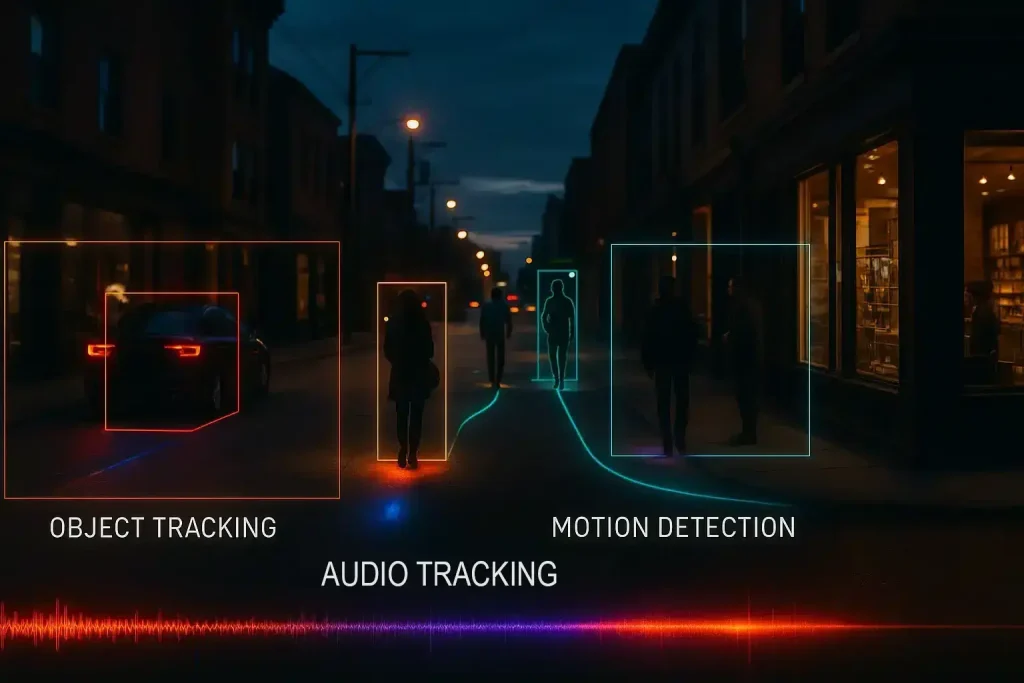
As AI video analytics technology evolves, it can do a lot more than just perform basic detection. Modern systems can now provide a better understanding of what’s happening in a scene, including interpreting behavior and potential risks.
Advanced techniques like object tracking, motion detection and audio analytics play key roles in improving video analytics solutions.
Object Tracking
Object tracking is for monitoring the presence, movement and behavior of specific items over time – whether it’s packages moving through a warehouse, people moving through a store or vehicles approaching an intersection. By following objects across frames, tracking gives you context that detection alone can’t. Things like direction, speed or unusual activity.
Modern systems use advanced tracking features like re-identification (ReID) powered by appearance embeddings to maintain consistent identification even when objects leave and re-enter the frame or appear under different lighting conditions. This improves long-term tracking accuracy and reliability.
To speed up development, many video analytics solutions use pre-trained models such as YOLOv7, which provide high-performance object detection out of the box. These models are a great foundation that can be fine-tuned for your environment or tasked to reduce development time and improve overall accuracy.
Motion Detection
Motion detection algorithms look at sequences of video frames to detect changes and movement patterns, so systems can tell the difference between normal activity and potential threats. Beyond just detecting motion, modern analytics can see what is moving and how, so you can identify events like traffic violations, perimeter breaches or early warnings of danger like flames or smoke.
By automatically detecting both spatial and temporal events, video analytics gives you real-time visibility to make faster decisions. This strengthens security and helps streamline operations, reduce false alarms and understand activity trends across your environment.
Audio Analytics
Smart audio analytics takes situational awareness beyond what the camera can see by interpreting sounds in the environment. These systems can detect indicators of distress or danger – like raised voices, breaking glass, gunshots or specific keywords – and trigger alerts without compromising individual privacy.
By identifying threatening or unusual sounds in real-time, audio analytics makes your security systems more effective. This means faster response times, more proactive incident management and better overall safety across campuses, retail spaces and public venues.
Video Analytics Solutions
Implementing AI video analytics solutions requires the consideration of factors like custom vs off-the-shelf solutions. The right video analytics platform reduces the time and resources needed to analyze security data for faster responses and improved operational efficiency. While the upfront cost of developing video analytics systems can be high, it often results in long-term cost savings by streamlining operations and reducing manual intervention.
Choosing the Right Video Analytics Platform
Ease of use and integration with existing systems are key factors when selecting a video analytics platform. Companies often develop custom computer vision systems to meet business requirements for integration, flexibility, performance and cost-efficiency.
A user-friendly platform gives immediate benefits and smoother implementation.
Custom vs Off-the-Shelf Solutions
Off-the-shelf solutions are designed for common applications but may have limited customization and require additional adaptation to fit specific needs. Custom video analytics solutions can be tailored to meet unique business requirements to improve operational efficiency and provide specific insights that standard solutions can’t.
Using existing libraries for video analytics can help create custom solutions to add features like object tracking or pose tracking.
Omnilert with Video Analytics
Omnilert takes traditional video analytics to the next level by adding a highly specialized layer of AI designed for life-safety. Built on computer vision and deep learning, Omnilert’s AI Gun Detection continuously analyzes video streams to detect firearms with high accuracy. Unlike other analytics tools, Omnilert detects threats before shots are fired. It’s proactive protection instead of a reactive response.
One of Omnilert’s biggest advantages is its broad compatibility: it works with any IP camera so you can add safety without replacing your infrastructure. Whether cameras are legacy, cloud-based or part of a multi-vendor environment, Omnilert integrates into your existing video ecosystem – video management systems (VMS), access control platforms and broader security workflows.
When a weapon is detected, Omnilert’s automated system kicks in. The platform sends detections to trained human specialists for rapid verification and then triggers customizable responses, such as locking doors, sending alerts, activating mass notification systems or dispatching first responders. This closed-loop approach bridges the gap between analytics and action and turns your camera network into an intelligent early warning system.
By combining AI analytics with flexible camera compatibility and automated incident response, Omnilert adds value to traditional video analytics and a faster, more coordinated threat mitigation strategy.
Ethical Considerations
Ethical considerations ensure video analytics applications respect individual rights and privacy. Identity protection is key, choosing solutions that don’t collect personally identifiable information when monitoring surveillance feeds.
AI systems automate policy enforcement and generate audit trails to help institutions comply with privacy regulations like FERPA without manual intervention.
Future of Video Analytics
The future of video analytics is bright, with AI and machine learning advancements set to improve decision-making across industries. Future trends include AI and video analytics integration, real-time data processing and IoT devices.
AI and Machine Learning
AI technology will significantly improve situational awareness and operational efficiency in video analytics software. The outlook is even better with AI and machine learning leading to smarter, more adaptive and proactive video analytics.
A large percentage of businesses have already adopted AI-enabled tools, illustrating the growing importance of these technologies.
IoT Devices
Future video analytics will use data from connected IoT devices for better situational awareness. The growth of IoT devices will increase the amount of data available for video analytics and allow for more autonomous adjustments to physical infrastructure based on data insights.
Simplified User Interfaces
Future video analytics user interfaces will focus on making things easy to use. The latest trends will emphasize simplicity and accessibility to help users interact better and work more efficiently. A good user experience is essential in video analytics design to ensure smooth operation.
Summary
Video analytics is a game-changing technology that shifts how organizations manage and interpret video data across industries. By using AI and machine learning, video analytics provides real-time insights, better security and operational efficiency. Core technologies like deep learning algorithms, edge analytics and hybrid cloud are key to video analytics success. Video analytics applications span security and surveillance, retail, healthcare, transportation and smart cities, showing their versatility and impact. Advanced techniques like object tracking, motion detection and audio analytics add to its capabilities.
Looking ahead, AI, IoT devices and user interfaces will continue to enhance video analytics. Embracing these technologies promises a future of smarter, safer and more efficient operations.
Frequently Asked Questions (FAQs)
What skills do you need to be a video analyst?
To be a good video analyst, you need strong observational skills, attention to detail and technical knowledge in areas like data analytics or media production. Proficiency in video editing software and analytical tools, combined with a collaborative mindset, is essential for team development and performance insights.
What technology does AI video analytics use to process video surveillance footage?
AI video analytics uses advanced machine learning algorithms to process video surveillance footage and enhance monitoring and analysis.
What are some use cases for AI video analytics?
AI video analytics can be used in business security and surveillance, retail and healthcare environments, and more to improve safety and operations.
What’s the key ethical consideration in AI video analytics?
Identity protection is key in AI video analytics, as you need to choose systems that don’t collect personally identifiable information during surveillance. This protects individuals’ privacy and upholds ethical standards.
How does AI video analytics help with campus safety?
AI video analytics helps with campus safety by detecting unusual movements and alerting administrators to potential threats before situations escalate.