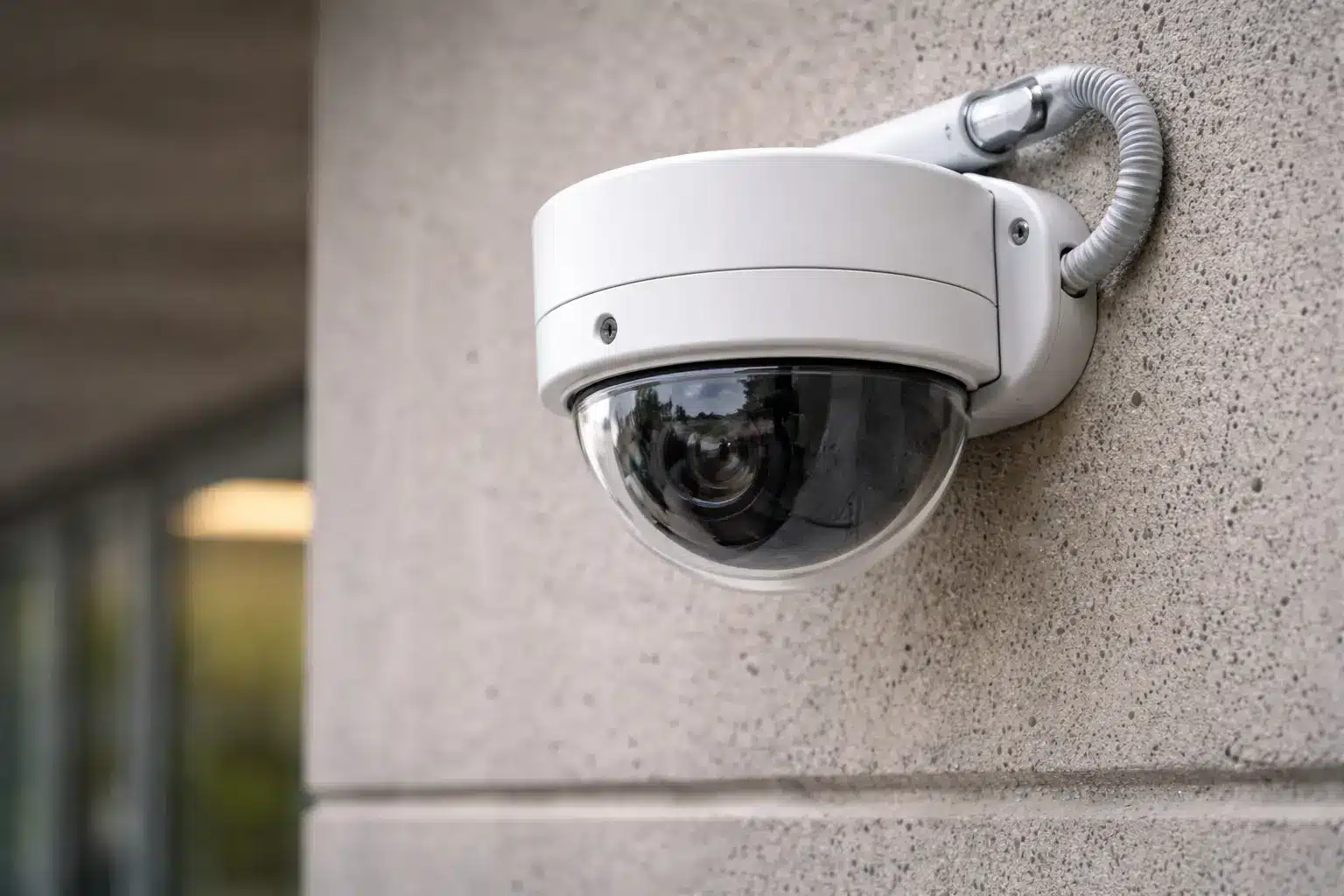
New threat response technologies, like Omnilert Gun Detect, have changed how organizations think about their camera infrastructure. Traditional surveillance systems were often installed with the intent of active monitoring. Over time, as camera counts increased and environments scaled, continuous human monitoring became impractical. As a result, many surveillance systems shifted from real-time oversight tools to forensic review systems, used primarily after an incident occurs or for loss prevention purposes.
Omnilert Gun Detect allows those same cameras to function as active sensors again. AI can continuously analyze video in real time, without fatigue or the need to prioritize just a handful of the cameras in your fleet. Because the technology can operate across every camera simultaneously, deployment is no longer limited by the constraints of human bandwidth. The conversation shifts from “Which cameras are compatible?” to “Where should detection run to provide the greatest protective value?”
An effective deployment is a design decision, not a simple checklist. It balances coverage with practical realities like camera quality, budget, and phased rollout strategies. When approached correctly, Gun Detect can scale from targeted high-value zones to comprehensive protection across an entire environment.
Practical Deployment Models
AI gun detection is not a one-size-fits-all solution, and there is no single deployment model that fits every organization. Variables such as environment size, camera quality, and budget cycles all influence how detection is enabled across a location. Regardless of deployment strategy, it should be intentional. Whether an organization activates detection across every camera immediately or scales over time, the model should align with both areas of greatest risk and long-term objectives.
Most organizations take one of three deployment approaches. Each model offers a different balance of scope, speed, and scalability, while preserving the core objective of proactive detection.
Model 1: Full Coverage
In a full coverage model, detection runs on every camera across the environment. This provides a comprehensive monitoring footprint, fully leveraging an organization’s existing camera infrastructure. Full coverage eliminates prioritization decisions, removes blind spots created by a selective choice of cameras, and simplifies operations. Rather than picking and choosing which cameras are included or excluded, detection becomes a consistent layer across the entire network.
Model 2: Priority-Based Coverage
In a priority-based implementation, detection is enabled on selected cameras. Detection is typically first focused on exterior pathways, doors, entryways, corridors and stairwells. This concentrates gun detection on higher-risk, early detection zones, delivering strong early-warning value while limiting the initial deployment scope. Priority-based coverage is often used when the infrastructure or project budget constraints require selectivity, but organizations still want meaningful protective impact.
Phased expansion carries on that priority-based rollout, and gradually increases coverage over time. Organizations may start with exterior perimeter cameras and entry points and then expand into corridors and stairwells, as budgets and infrastructure allow. This expansion can align with camera refresh cycles, expanding coverage along with updated camera deployment. Or, it can align with capital planning schedules or multi-site scaling efforts. This provides a structured roadmap toward broader coverage, without requiring immediate full-network activation.
The Power of Full Coverage
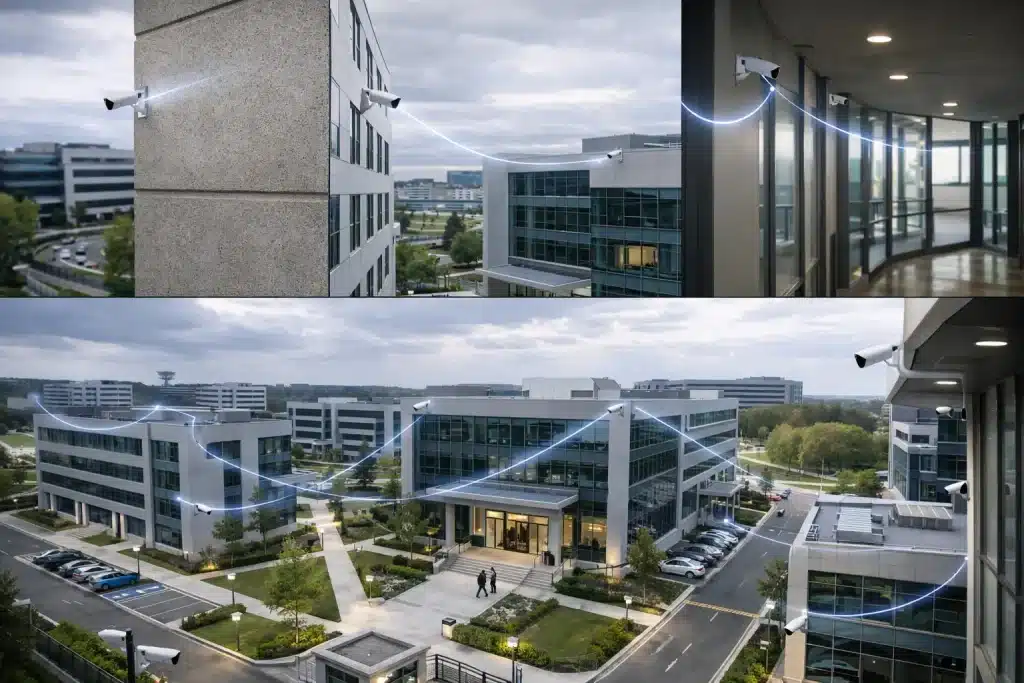
One of the defining advantages of AI gun detection technology is its ability to operate across every camera in an environment simultaneously. AI doesn’t fatigue, lose focus, or prioritize one camera view over another. It evaluates every frame from every enabled camera, continuously and consistently. Running gun detection across all cameras changes the security model.
Removes ‘assumption-based’ security design
When monitoring or detection is limited to selected cameras, an organization makes a strategic prediction about where an incident is most likely to occur. Perimeter doors may be prioritized, main corridors selected, and/or high-traffic areas flagged as higher risk. While these decisions are logical, they are still assumptions.
Full coverage removes the need to ‘predict’ where a threat will appear. It doesn’t require security teams to determine which door is “most important” or which building is “highest risk.” Instead of designing protection around probability, full deployment ensures that every camera has equal detection capability and creates maximum visibility across the entire property.
Addresses blind spots created by camera prioritization
Selective deployment creates covered zones and uncovered zones. In this model, some areas benefit from real-time detection while others revert to traditional forensic review. If an incident originates in an uncovered, non-priority area, detection may occur later in the timeline, or not at all. The gap isn’t caused by technology limitations, but by scope decisions.
Full coverage eliminates this issue by establishing the broadest possible protection footprint. There are no secondary buildings, low-traffic hallways, or overlooked access points from a detection standpoint. Every enabled camera contributes to the same level of proactive monitoring, reducing exposure created by assumptions about where an incident may occur.
Protects against unknown threat vectors
Real-world incidents rarely follow perfectly anticipated paths. Individuals may enter through secondary doors or move through underutilized corridors, and an event may begin in an area that’s not historically considered high risk. Designing detection around “most likely” pathways can leave exposure to the unexpected.
Full coverage provides resilience against these unpredictable and unknowable patterns. It ensures that detection capability does not depend on accurately forecasting behavior. Whether a threat enters through a primary entrance, a side door, or an unconventional access point, detection remains consistent. Full deployment supports a more resilient protection strategy.
Beyond risk modeling, full coverage simplifies operational policy. It removes the need to document which cameras are included and which are excluded. It avoids periodic reassessment of priority lists. It creates a clear and defensible deployment posture: detection runs across the camera network continuously. Full coverage represents the most comprehensive approach. It leverages the full potential of the existing camera infrastructure and aligns with the goal of continuous, proactive protection across the entire environment.
When Prioritization Is Required

Full coverage provides the most comprehensive protection, but many organizations are forced to make tradeoffs for a variety of real-world reasons. In large or complex environments, a phased rollout is a practical necessity. This is especially common in multi-building campuses, environments with a large number of cameras, or situations where portions of the camera fleet are not technologically capable of utilizing advanced analytics. Camera choice and prioritization are typically driven by operational realities rather than strategic preference. These may include:
- Budget constraints
- Infrastructure limitations
- Inconsistent camera quality across sites
- Bandwidth or compute considerations
- Multi-site scaling and deployment logistics
In these cases, the objective is not to reduce protection, but to sequence it intelligently. A phased approach allows organizations to begin utilizing gun detection while planning for expansion over time. This deployment should be prioritized strategically, focusing first on the locations that provide the strongest early detection opportunity, while creating a clear roadmap toward broader enablement.
Design Around Movement
When prioritization is required, deployment decisions shouldn’t be based solely on floor plans and room labels. They should be based on movement. In most real-world incidents, individuals move through environments in stages. The pattern is consistent:
- Arrival at the property (parking lot / exterior area)
- Approach to a building
- Perimeter entry points
- Movement through corridors
- Vertical transition through stairwells
- ‘High-Value Target’ destination areas
Detection is most valuable earlier in the timeline. The sooner a visible firearm is identified, the more time there is to verify, notify, mobilize, and activate response protocols. Deployment strategy should reflect how people and threats actually move through a space. Rather than thinking in terms of “rooms to protect,” organizations should evaluate the pathways that connect those rooms. Transitional areas often provide more predictable movement patterns, clearer sightlines, and stronger detection opportunities than private or static spaces.
Prioritization should concentrate on high-value target areas and the routes leading to them. Incidents unfold along the pathways that connect arrival points to interior environments. Which cameras observe pedestrian approaches to buildings? Which views capture individuals moving laterally through hallways rather than directly toward or away from the lens? Where do people slow down, funnel, or transition between floors? These locations often provide stronger detection geometry and clearer visual data than some large, open areas, which may require multiple cameras to cover adequately.
Designing around movement also reduces reliance on assumptions about where an event might occur.
Instead of isolating protection to specific rooms or designated “high-risk” spaces, organizations focus on the connective tissue of the environment. Identifying and deploying at these transitional zones can position detection earlier in the event timeline, where response time has the greatest impact. This detection deployment strategy increases the likelihood of identifying a threat before it reaches a high-value area.
High-Value Deployment Zones
By designing around how people actually move through a space, instead of guarding specific isolated locations, organizations create a more resilient, layered detection strategy. When phased deployment is necessary, prioritization should follow movement patterns and risk concentration. The following zones consistently provide strong detection value across various organizations and environment types, including education, healthcare, commercial, and corporate implementations.
Parking Lot Approaches
Parking lots provide visibility into what is often referred to as the ‘pre-attack window’. Individuals frequently arrive, prepare, and begin movement toward a building in exterior spaces. However, parking lots require careful configuration. Extremely wide fields of view and high mounting heights can reduce the effective object detection range. Blanketing an entire parking lot is possible, but it may require significant time, effort, and a budget to get it right. In a phased rollout, prioritization should focus on pedestrian pathways, entrance approaches, and natural funnels leading to perimeter doors.
Perimeter Doors
Perimeter doors are typically the highest-priority deployment locations for AI gun detection. They are high-probability points of entry and provide a predictable flow of traffic. Individuals approach from a distance, slow near the entrance, and move directly across the camera’s field of view. This geometry supports reliable detection. Enabling detection pointing outward from perimeter doors creates an opportunity for early identification before entry, which can significantly extend response time.
Interior Corridors
Corridors serve as interior transition zones. After entry, movement almost always continues through hallways that connect wings, departments, and common spaces. These environments often offer controlled lighting, narrower fields of view, and more consistent mounting angles. As a result, corridors frequently provide very reliable detection performance. They also represent a critical second layer of visibility if a priority-based detection point is missed or bypassed.
Stairwells
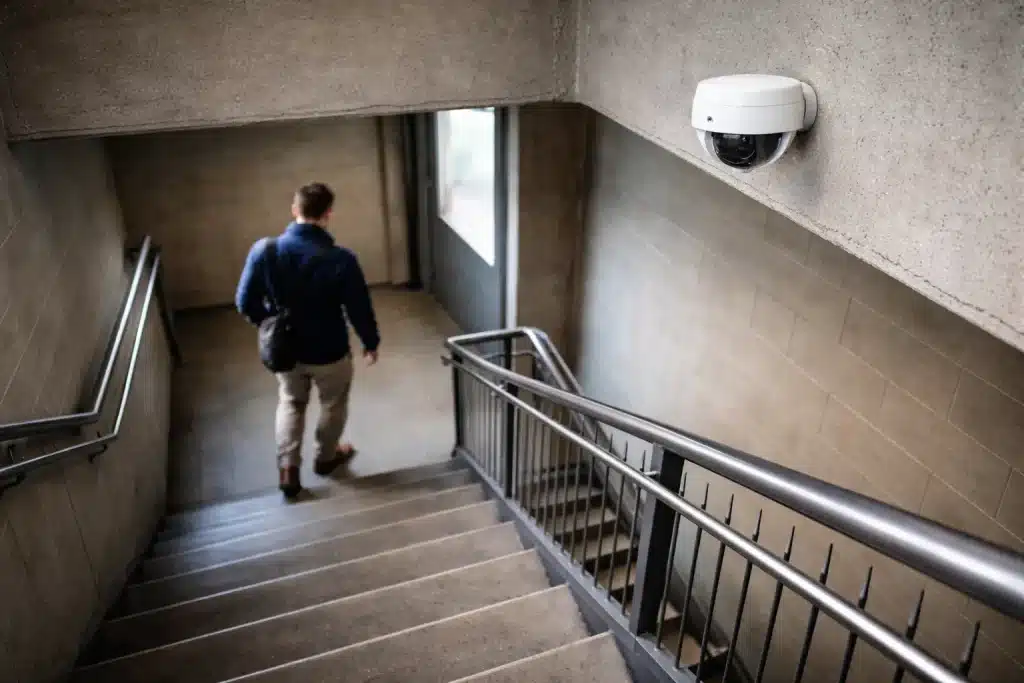
Stairwells act as vertical connectors between floors and concentrate movement into defined channels. They are high-traffic transition points but are often under-covered compared to corridors. Even limited coverage in stairwells can strengthen an interior detection strategy. They represent natural choke points where movement slows and sightlines improve. This creates meaningful detection opportunities between floors and provides actionable intelligence to First Responders and Security Teams about an assailant’s movement through a facility
High-Occupancy Common Areas
Cafeterias, auditoriums, and similar gathering spaces concentrate occupants together. These areas may warrant deployment when expanding beyond transitional zones. Detection in these spaces does not necessarily provide an earlier timeline advantage, but it does protect high-density environments where rapid situational awareness is critical.
Classrooms and Private Workspaces
Classrooms and private offices are typically lower deployment priorities for AI gun detection, particularly in education and healthcare environments where privacy considerations are significant. In many phased strategies, these areas are addressed later, if at all. Transitional pathways often provide stronger early detection value than isolated rooms. In most scenarios, movement toward a classroom or office requires passing through several higher-value detection zones first, creating earlier opportunities for identification and response.
These deployment zones reflect how individuals move through facilities and where early identification can have the greatest operational impact. By concentrating AI gun detection along approach paths and transition spaces, organizations increase the likelihood of identifying a threat earlier in the timeline. In phased deployments, this approach ensures that each enabled camera contributes meaningful protective value.
Core Camera Performance Principles
Regardless of deployment scope, detection performance largely depends on proper camera configuration. Enabling detection without evaluating image quality can limit the system’s effectiveness. In many cases, performance improvements can come from simply tuning existing cameras for the detection use case, rather than replacing them outright.
Several core principles consistently influence detection reliability:
Adequate Pixel Density
Pixel density, often measured in pixels per foot (PPF), determines how much visual detail is available at a given distance. Detection algorithms rely on the ability to discriminate small visual features that distinguish a firearm from common objects. As the object has more pixels on target, the detection range decreases. Evaluating PPF along likely movement paths is often more important than increasing total camera count.
Appropriate Field of View
Extremely wide fields of view, panoramic cameras, and fisheye lenses maximize observable coverage but reduce pixel density across the scene. While potentially valuable for surveillance, these configurations can limit detection range. Narrowing the field of view to focus on locations of interest, like pedestrian pathways, door approaches, or corridor movement, often improves detection performance without sacrificing meaningful visibility.
Proper Mounting Height and Angle
Mounting height affects both image clarity and subject profile. Cameras mounted excessively high may create steep angles that reduce the visible detail of objects held in hand. Typical surveillance mounting heights often work well for detection when angles are standard and unobstructed. Avoiding extreme top-down perspectives improves analytic reliability.
Consistent Lighting Conditions
Lighting quality directly impacts AI gun detection. Full-color low-light performance can provide stronger discrimination than infrared-only scenes at longer distances. Backlighting, glare, and inconsistent illumination can reduce clarity. Where possible, ensuring consistent and balanced lighting along key movement paths strengthens overall performance.
Sufficient Frame Rate & Bit Rate
Frame rate influences how quickly motion is captured and analyzed. While ultra-high frame rates are not required, maintaining consistent and adequate frames per second supports reliable real-time detection.
Bitrate should be commensurate with the camera’s resolution and frame rate. Insufficient bitrate can introduce compression artifacts and pixelation, reducing image clarity. Ensuring proper encoding settings preserves the visual clarity necessary to discriminate firearms from common objects in real time.
Optimization of existing cameras can deliver meaningful performance improvements over out-of-the-box camera settings. In many environments, adjusting the field of view, validating pixel density, or tuning lighting conditions can extend detection range and consistency without significant hardware investment. Effective deployment is not only about where detection runs, but how well the underlying camera infrastructure supports it.
AI visual gun detection is a unique advancement in the safety space. Unlike traditional surveillance, it’s not constrained by the limitations of human monitoring. Detection operates continuously, evaluating every enabled camera feed in real time, without fatigue. This can fundamentally change how an organization thinks about its surveillance infrastructure.
Deployment strategies vary based on environment and scale. Full coverage provides the broadest protection footprint. It removes guesswork from design decisions and ensures detection capability is not limited to select zones. When full coverage is not immediately feasible, strategic prioritization allows organizations to begin generating meaningful detection value while building towards comprehensive enablement.
An effective deployment of Gun Detect is not simply about choosing whether detection should be on or off. Implementation involves deliberate design decisions that balance infrastructure realities and long-term security objectives. When approached intentionally, Gun Detect transforms passive camera systems into a resilient, proactive layer of protection across an environment.