Key Takeaways
- National Preparedness Month, observed every September, is an opportunity to stress-test your emergency communication strategy, not just review a plan on paper.
- An effective strategy goes beyond owning an emergency notification system or mass notification system; it should support fast, targeted, multi-channel alerts designed to reach people wherever they are.
- Connecting ENS/MNS with systems such as access control, video management, PA, and digital signage can reduce manual steps and support more coordinated emergency response workflows.
- Preparedness should account for a range of hazards, with predefined messages, workflows, and responsibilities based on the incidents most relevant to an organization and its locations.
- Regular end-to-end testing, camera health checks, updated contact information, and clearly assigned responsibilities can help identify gaps before an emergency occurs.
Introduction: Use National Preparedness Month to Test Your Emergency Communication Strategy

Every September, National Preparedness Month reminds the entire nation that readiness can directly impact outcomes during incidents. Following the devastation of 9/11, in 2003, the Ad Council and FEMA’s “Ready” campaign was developed to promote emergency readiness across the country. National Preparedness Month began in 2004, further supporting preparedness, and today it continues to expand its reach.
In 2026, the National Preparedness Month theme is “Americans Stand Ready,” reinforcing that preparedness is not a passive concept but an active and everyday commitment.
The goal of the campaign is to educate and empower people to prepare for emergencies and disasters so they can stay aware and keep their households, schools, and workplaces safe. Preparedness initiatives come in a range of formats, from pamphlets and video resources to community engagement and hosting workshops. Emergency preparedness is vital for minimizing risk, injury, and economic impact, and that applies to organizations just as much as families and communities.
Many businesses, schools, and institutions believe they are prepared because they have an emergency notification system or mass notification system in place. But how many have actually tested whether that system can perform under real-world pressure?
In alignment with September being National Preparedness Month, this article walks through 9 practical preparedness questions that cover the entire emergency response chain: from recognizing an incident and initiating alerts to reaching the right audiences, coordinating with security technologies, and supporting response and recovery. While Omnilert maintains a focus on gun violence prevention and emergency response, these steps towards preparedness can be applied for a range of threats, including natural and human ones.
1. How Quickly Can You Send the First Emergency Message?
The first moments after identifying an incident are critical. Whether it’s a tornado warning, an active shooter, a chemical spill, or a campus power outage, the speed at which actionable information reaches affected people directly impacts outcomes.
Yet many organizations still lose precious time to avoidable delays:
- Staff manually drafting messages under stress
- Debating wording or severity levels before sending
- Deciding which recipient groups should receive the alert
- Choosing communication channels one by one
According to the BCI’s Emergency & Crisis Communications Report 2023, only about 3% of organizations activate their emergency plan automatically through rule-based triggers. Around 24% activate in under five minutes, while the largest share, 46%, take between five and thirty minutes. That gap can potentially be the difference between safety and harm.
An emergency communication strategy built around predefined scenarios and message templates in an ENS/MNS can help reduce the time from “incident recognized” to “message sent.” Organizations should have pre-approved workflows and templates for severe weather, building fire, medical emergencies, evacuation, shelter-in-place, active shooter, and facility closure scenarios.
The goal is simple: speed and clarity. Every second spent deciding what to say is a second someone else doesn’t know what to do.
2. Can You Reach People Wherever They Are?
Emergencies do not respect office hours or building walls. Employees may be working remotely, students might be off campus, visitors may be in a lobby with no access to email, and contractors may not be on your internal systems at all.
An effective emergency plan requires multi-channel communication:
- SMS and voice calls for reaching people off-site or away from desks
- Email for detailed follow-up and documentation
- Mobile app push notifications for real-time alerts on personal devices, and users should sign up for alerting tools so they receive those updates in real time
- Desktop pop-ups for employees working at computers
- Digital signage for lobbies, cafeterias, and common areas
- Overhead public-address systems for on-site shelter or evacuation instructions
Groups to account for include full-time and part-time staff, contractors, vendors, visitors, students, patients, remote workers, and people with disabilities who need accessible formats. Additionally, relying on a single channel, such as email only, risks missing critical audiences during a natural disaster, security threat, or utility failure.
3. What Happens if Your Primary Communication Channel Fails?
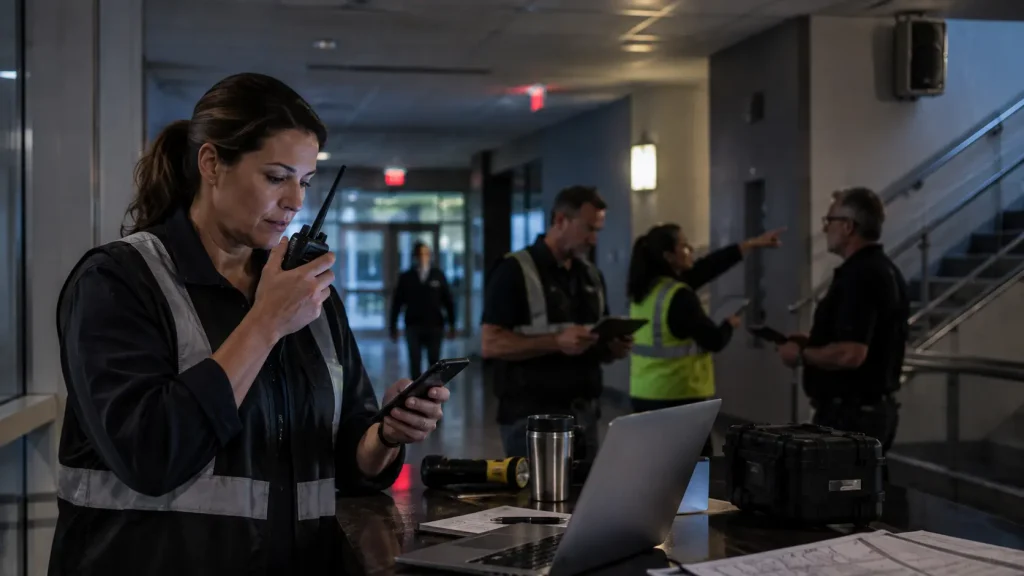
Redundancy is a key principle of preparedness, allowing communications to continue if the primary path fails, and it applies to organizational communications.
When evaluating an organization’s ENS or MNS, think about these scenarios:
- Internet outage at headquarters during a severe weather event
- Cellular network congestion after an earthquake
- Power failure disables desktop alerts during a security incident
- Email service interruption during a cyber attack
An emergency notification system or mass notification system should use multiple channels at the same time and have alternative ways to communicate when one path fails. If SMS is down, voice calls or other channels may still be available. If network-based communications are down entirely, PA announcements, radio, or established manual procedures can provide additional options.
Organizations should include these backup procedures in the emergency plan and test them regularly instead of waiting for a real emergency to expose the gaps.
4. Can You Send the Right Information to the Right People?
Not every emergency requires an organization-wide message. What building occupants need to know during a lab chemical spill differs significantly from what the safety team, executives, or first responders need.
Effective segmentation criteria include:
- Location, building, floor, or zone
- Department or job role (incident commanders vs. general staff)
- Shift or time of day
- Response responsibility level
- Visitor or contractor status
For example, during a hazardous material incident in one building, only that building’s occupants receive evacuation instructions while the safety team and external responders get detailed hazard information. This avoids alert fatigue and keeps messages actionable. Self-reliance during crises helps free up emergency services for those in immediate danger, and targeted communications support that principle by ensuring people know exactly what to do without overwhelming unaffected populations.
5. Are Your Emergency Messages and Scenarios Prepared Before You Need Them?
Preparedness month is the right time to build or refresh message templates and emergency scenarios. An emergency is the worst possible moment to decide how to communicate.
Every template should define:
- A clear subject line
- Short body text in plain language with specific protective actions (evacuate, shelter in place, avoid area)
- Targeted recipient groups
- Channels to be used
- Escalation rules if the situation worsens or initial messages go unacknowledged
Create template sets for different incident types (natural disasters, active shooter, medical emergencies, hazardous material spills, IT outages, and facility closures), and map each template to your organization’s formal emergency plan.
Individuals are encouraged to know local hazards and how to respond to them, and organizations should apply the same principle at the institutional level. Review templates each September to verify that contact data, location information, leadership titles, and instructions remain accurate.
6. Are Your Emergency Communications Connected to the Systems That Detect and Manage an Incident?
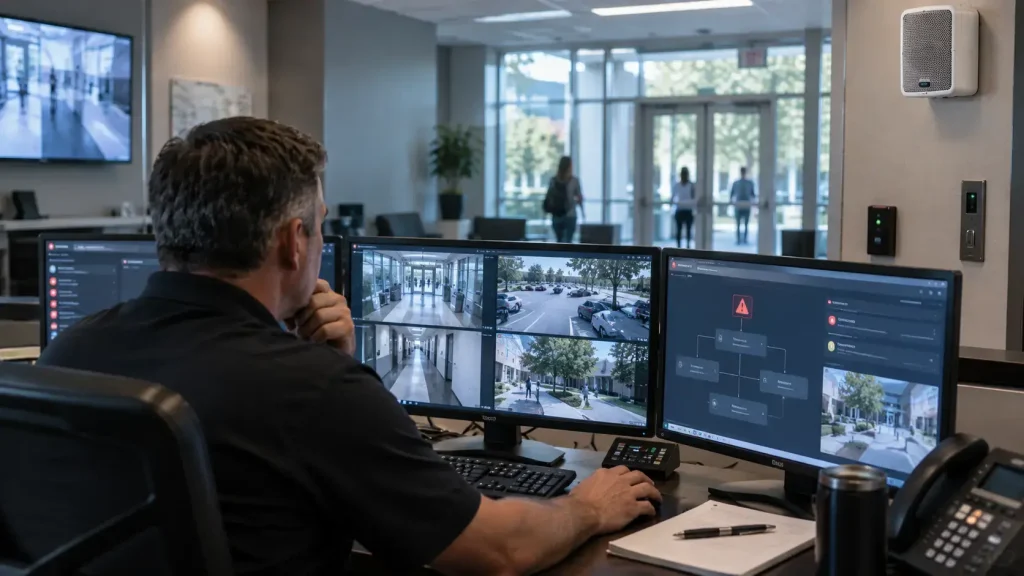
Emergency communication is shifting from standalone alerting toward integrated incident management, where security systems and communications work together.
Systems that should be able to integrate with ENS/MNS include:
- Access control for automated lockdowns
- Video management for situational awareness
- Intrusion detection and fire panels for automated triggers
- Public-address and digital signage for on-site instructions
- Security operations platforms for centralized coordination
AI gun detection is a concrete example of this. At Omnilert, when the system identifies a potential visible firearm on compatible camera feeds and the event is verified by a human, predefined workflows can initiate configured actions, such as sending notifications, sharing information with responders, or integrating with access-control systems.
Automation reduces manual steps and speeds coordination, but human involvement and verification remain essential, especially for high-stakes scenarios.
Active shooter and armed intruder incidents are often top of mind for modern emergency preparedness in schools, businesses, hospitals, and public venues. Preparedness helps reduce the burden on first responders during emergencies, and a connected plan is how organizations contribute to that.
Consider how that could work in a predefined active shooter response workflow:
- Detection: AI gun detection, acoustic sensors, or human observation identifies a potential threat
- Verification: Trained personnel or 24/7 monitoring team confirms the threat before full activation
- Notification: Predefined templates push targeted messages to occupants, security, leadership, and first responders through multiple channels
- Protective action: Occupants execute trained responses (lockdown, evacuate, shelter)
- Responder communication: Coordination with law enforcement using shared situational data
Data from sources like the FBI and the NIH shows that active shooter events tend to happen fairly quickly, often within 10-20 minutes, but sometimes even under 2 or 3 minutes. That leaves just a few moments for internal systems to act. AI gun detection integrated with automated security workflows can help bring detection and notification earlier, while ENS/MNS tools can handle audience segmentation and tailored instructions.
The same preparedness principle applies to other threats. Organizations should identify the hazards most relevant to their locations, from severe weather and natural disasters to power outages and security incidents, and establish clear triggers for action and communication. Predefined workflows, documented responsibilities, and established relationships with local responders can help teams act more consistently when an emergency occurs.
7. Can Your Security Team Actually See What Is Happening During an Emergency?
Camera health is a preparedness issue, not just a maintenance issue. A camera that’s online and streaming is not necessarily a camera that provides useful video when it matters.
Common camera health problems include:
- Blurred or dirty lenses
- Posters, decorations, or vegetation blocking the view
- Night scenes without enough light
- Cameras pointed away from critical entrances or assembly areas
- Low resolution or frame rate that prevents AI video analytics from working
During emergencies, usable real-time video can support situational awareness, remote verification, and responder coordination. Camera coverage gaps or image-quality problems can limit that visibility, and systems that rely on video analytics may also perform less effectively when the underlying image is compromised.
To combat this and support greater camera reliability in the case of an emergency, organizations should include camera health checks and image quality assessments in their preparedness activities, testing visibility along with connectivity. Omnilert’s AI Camera Health Monitoring can assist with this, routinely checking cameras and notifying security teams when an issue has been flagged.
Standing ready means knowing that a plan works before it is needed. National Preparedness Month gives organizations a natural opportunity to test the entire communication workflow, rather than simply confirming that an alert can be sent.
8. When Was the Last Time You Tested the Entire Communication Workflow?
Many organizations only test the beginning of a workflow: checking to see if a test message can be sent. National Preparedness Month is the time to exercise the entire end-to-end workflow. A full test should include:
- Recognizing or simulating an incident trigger
- Escalation to the right decision-makers
- Initiating a predefined scenario in the ENS/MNS
- Selecting target audiences and verifying contact accuracy
- Sending multi-channel alerts and confirming delivery and acknowledgement
- Activating integrated systems (lockdowns, signage, PA)
Emergency response drills at the community and organizational level are a great way to get people involved so they can build practical response skills while adopting that discipline internally. Types of exercises to consider include:
- Tabletop sessions to walk through decision points
- Scheduled drills to practice physical responses
- Silent technical tests to verify system integrations without disruption
- Degraded-condition tests simulating after-hours incidents, remote campuses or network outages
Document lessons learned after each exercise, and use those insights to update templates, contact lists, and procedures. Treat this as part of an ongoing preparedness cycle instead of a one‑time task.
9. Does Everyone Know Who Is Responsible for What?
Even the best technology cannot overcome confusion about who is authorized to act during an emergency.
Key roles that need clear ownership include:
- Who verifies incidents and determines severity
- Who is authorized to send emergency safety alerts
- Who activates specific predefined scenarios
- Who coordinates with public safety and law enforcement
- Who maintains contact databases, templates, and equipment
- Who reviews performance after drills or real events
- Who updates procedures when staff turnover or organizational changes occur
These roles should be documented in an emergency response plan, reinforced through regular training, and revisited during National Preparedness Month to account for changes. Clear responsibilities support faster decision-making, reduce hesitation, and make automated workflows more reliable because the right people are monitoring and approving actions.
Conclusion: Turn National Preparedness Month into a Readiness Check
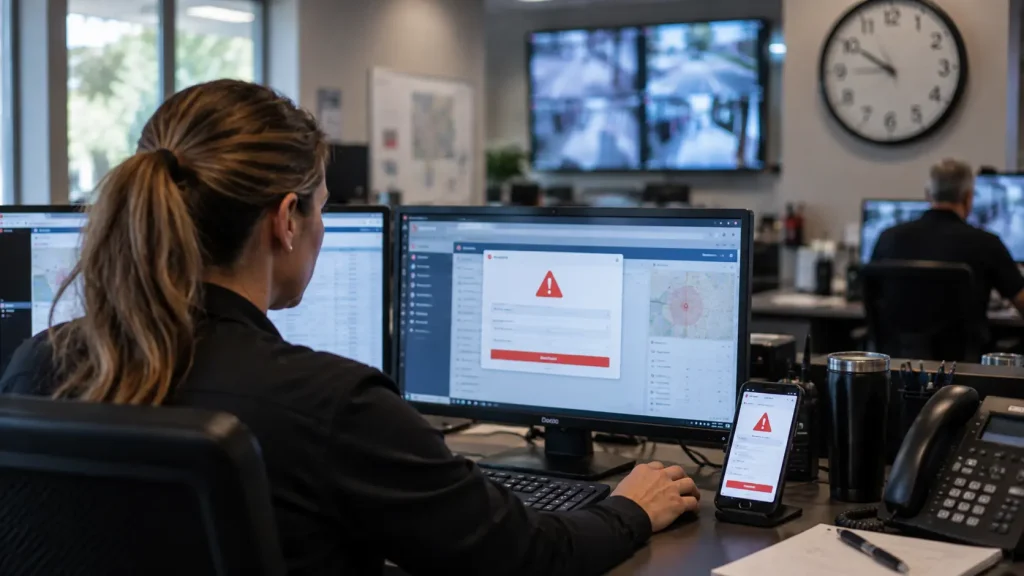
National Preparedness Month should be used as an annual readiness check, rather than a symbolic observance. It promotes collaboration among government, nonprofits, and communities, and organizations of all sizes benefit from that sense of shared responsibility. People who have been trained and feel confident in how to act before an incident happens can save lives during disasters, and so can prepared organizations. Taking proactive steps can potentially reduce the impact of disasters and enhance recovery efforts across families, businesses, and the communities they serve.
Use this September to update your emergency plan and communication strategy. Ask yourself and your team: Is your organization ready for natural disasters, security threats, and other incidents?
Omnilert connects emergency notification, AI gun detection, and automated security workflows so predefined scenarios can move critical resources and information to the right people and systems faster when an emergency occurs. Schedule a preparedness review or demo to see where your emergency response strategy stands today and what it takes to close the gaps.
Frequently Asked Questions (FAQs)
How does National Preparedness Month relate to everyday business operations?
National Preparedness Month provides a recurring calendar anchor each September for reviewing emergency procedures, training staff, and testing systems. Rather than treating preparedness as a one-off project, organizations can use this annual cycle to embed readiness into normal operations: updating contact lists, refreshing templates, running drills, and verifying that integrations between security and communication systems still work. It’s a great time to schedule the reviews that otherwise get postponed.
What types of emergencies should our communication strategy cover beyond natural disasters?
Beyond severe weather, earthquakes, and floods, organizations should prepare templates and workflows for active shooter or armed intruder events, workplace violence, hazardous material spills, IT and cyber incidents, power outages, public health emergencies, and potential terrorist attacks. Each scenario involves different protective actions, recipient groups, and coordination requirements, so a one-size-fits-all message won’t work.
How often should we update our emergency contact lists and templates?
Organizations should establish a regular schedule for verifying contact data and reviewing message templates, with additional updates after significant staffing, leadership, facility, or organizational changes.
What is the difference between an emergency notification system and a mass notification system?
The terms are often used interchangeably. Many practitioners use “emergency notification system” for life-safety scenarios and “mass notification system” more broadly for any large-scale messaging, including non-emergency communications. The label matters less than the capability: multi-channel, fast, targeted communication with redundancy and integration support.
Do small organizations really need integrated systems like AI gun detection and camera health monitoring?
The appropriate technology depends on an organization’s risk profile, facilities, existing infrastructure, emergency plans, and available resources. Organizations of any size can begin with fundamentals such as communication procedures, tested templates, current contact information, and regular camera checks. More advanced integrations can then be evaluated based on identified risks and operational needs. Planning for future integrations now, even if deployment comes later, keeps your organization on a path toward stronger, more connected security and preparedness.