The FBI’s newly released 2025 Active Shooter Report gives us a closer look at where active shooter incidents happened last year. From retail stores and restaurants to government buildings, schools and public spaces, the findings show how targeted violence can affect a wide range of environments, each with its own security challenges.
Commercial locations stood out in the report, accounting for more than 40% of active shooter incidents in 2025. The numbers highlight the security challenges facing businesses and other public-facing organizations, where high foot traffic, open access and large areas can make threats particularly difficult to identify and respond to.
Every organization today should have an active shooter preparedness plan. But having a plan is only part of the equation. When a threat emerges, how quickly can your security team identify what’s happening, communicate with the people at risk and put that plan into action?
The FBI’s report is a reminder that in a rapidly unfolding emergency, speed matters.
What the FBI Report Tells Us About Active Shootings
In 2025, the FBI identified 34 active shooter incidents across both public and private settings. Commerce sites accounted for 14 of those incidents, or just over 40%.
Open spaces, including roadways and other outdoor public areas, accounted for another seven incidents (21%). Six occurred at government properties (18%), with the remaining incidents taking place at educational facilities and houses of worship.
The distribution matters because each type of environment presents a different response problem. A retail store, highway, government office and university campus don’t have the same access points, populations, communication systems, or security resources.
But location wasn’t the only important thing to note. The report found that nearly 68% of the incidents in 2025 were intentionally planned by the shooter, up from 58% in 2024. It emphasized the importance of recognizing and reporting concerning behaviors before they get the chance to escalate into something more dangerous.
Where Active Shootings Happened in 2025
Commerce Sites Accounted for the Largest Share of Incidents
Of the 34 active shooter incidents documented in 2025, 14 occurred at commerce sites, including retail stores, restaurants, warehouses, offices, casinos and manufacturing facilities. These incidents represented more than 40% of the year’s total and nearly 60% of active shooting fatalities. Six were classified as mass killings, more than in any other location category.
Commercial properties can also be difficult environments to secure. A busy store or restaurant may have multiple entrances, steady foot traffic, employees coming and going throughout the day, and large areas that security personnel need to monitor.
The FBI data points to another complication. Half of the shooters in the commerce category had a known connection to either the location or a victim. Half did not.
For security teams, that distinction matters. Measures designed primarily around employees, known individuals, or controlled entry points won’t necessarily identify an external threat before it reaches the property.
Open-Space Incidents Create a Different Communication Challenge
There were seven active shooter incidents in open spaces in 2025, accounting for 21% of all incidents. Many involved multiple locations or mobile subjects and took place along roadways, which made it harder to know where the threat was headed and who was at risk.
These incidents reinforce the need for rapid communication. Outdoor environments can be difficult to secure, lacking controlled access points and those involved in incidents can be scattered. When physical security measures may not be possible to prevent armed conflict, the next best solution might be to support a response that helps the most people and leads to the least amount of harm. Multi-channel emergency notifications (ENS) can guide people away from danger and provide updated instructions as the incident unfolds.
Coordination Challenges in Government Contexts
Even though they tend to have more visible security, government facilities can be the target of violence. The year 2025 saw six active shooter incidents in this location category, including attacks at federal offices, military installations, a public library and a sheriff’s office.
While the extent of coverage depends on the specific risks a facility may have (for example, a public library vs. a law enforcement campus), government facilities often have very unique security requirements. When an incident does end up happening, there can be challenges with coordination, as facility staff, security teams, law enforcement and other agencies may be involved.
Integrated security systems can help streamline responses by sharing alerts, video and other critical information with the teams that need it.
Schools Must Balance Security With Normalcy
The FBI identified four active shooter incidents that took place at high schools and universities in 2025. Across these incidents, there were 25 casualties. Even as shootings in education are rarer than in other places, they bear a heavy weight, especially as they often impact youth.
Schools have to balance safety while still being open and inviting places for learning and campus life. A layered approach, linking early threat detection, emergency communication and existing response protocols, can help schools react quickly without disrupting everyday life.
Moving Towards Earlier Action with AI Gun Detection
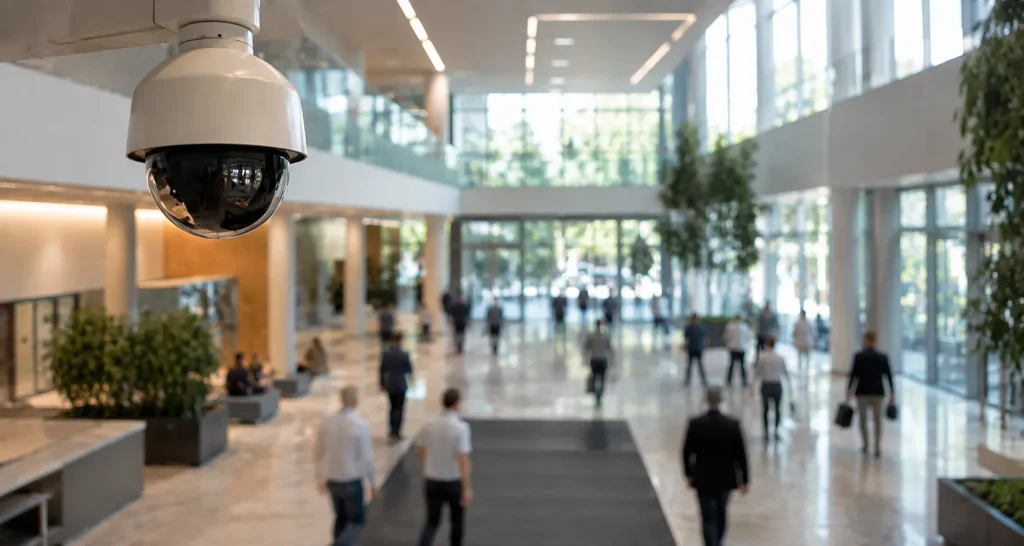
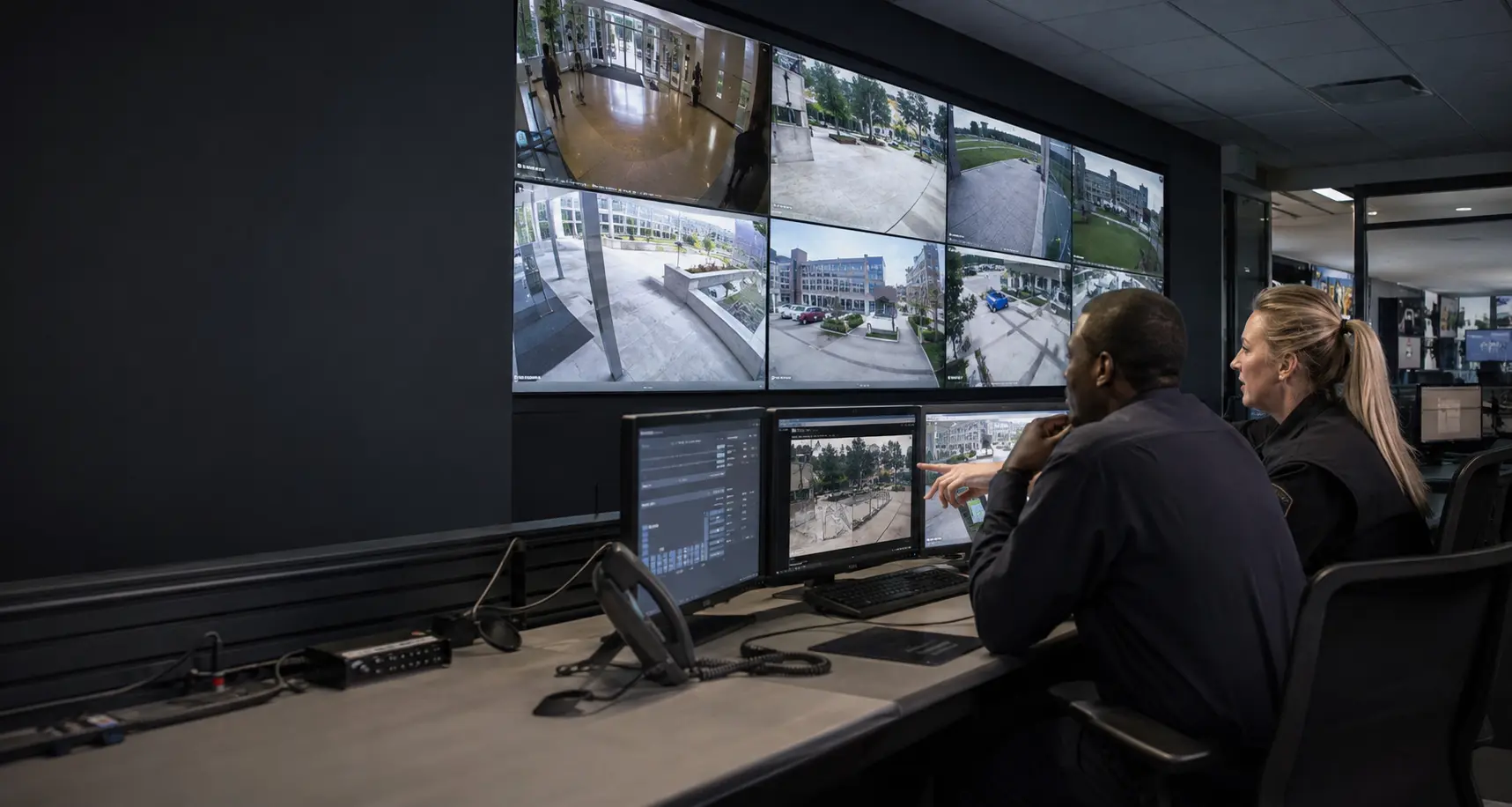
Regardless of the industry or location type, getting to a threat as fast as possible is key. Traditional video surveillance provides great visibility but often relies on security personnel actively monitoring camera feeds.
AI gun detection systems can continuously monitor existing security cameras for visible firearms and alert security teams when a potential weapon is identified. When a potential firearm is detected, security teams get relevant images and video to verify the threat and where it’s happening. This gives teams more time to assess the situation and respond.
This is especially valuable in areas with large spaces to monitor, multiple entrances, high foot traffic, or limited security personnel. But detection is just the first step. The value of AI gun detection increases when it’s connected to the communication tools, security systems and response procedures that determine what happens next.
Layering Security For Maximum Protection
The 2025 report is a reminder that, although statistically rare, active shooter incidents can happen almost anywhere. Every environment has its own challenges, but they all share the need to quickly spot threats, communicate and coordinate a rapid response. But there’s not one technology that does it all.
Many organizations today are choosing a layered security approach, integrating AI gun detection, ENS, video surveillance, access control and automated security workflows into one response framework. Each element is important on its own, but they all do different things: detection, communication, awareness and reaction.
When these systems work together, security teams can go from reacting to an incident to responding faster and more coordinated. Early threat detection can trigger immediate notifications, automated response actions and real-time situational awareness for security personnel and first responders. By reducing manual processes in the first few minutes of an emergency, organizations can improve communication, speed up decision-making, and protect people better.
Conclusion
The FBI’s 2025 Active Shooter Report reminds us all that active shooter incidents can happen anywhere. While commercial locations had the most attacks in 2025, the report also indicates that we need to be prepared in schools, government facilities, houses of worship and public spaces. All organizations today need to be able to recognize threats fast, communicate clearly and coordinate a response.
As organizations review their physical security strategies, the focus is moving from standalone technologies to integrated solutions that reduce response times. AI gun detection, ENS and automated security workflows each do their own thing, but together they create a more connected and coordinated response that allows security teams to act faster and provide occupants with critical information when it matters most.
No technology can eliminate the risk of an active shooter incident, but investing in a layered security approach can help organizations be more prepared, respond better and protect people every day.
Register for our upcoming webinar, Detection is Not the Outcome: Why Automated Security Workflows Matter, to learn how integrated physical security can help protect your facility and improve responses after a gun threat has been detected.