The Transit Security Grant Program remains one of the most important federal funding sources available to help public transportation systems protect critical surface transportation infrastructure and the traveling public from terrorism. With FY 2025 now serving as the most recent completed grant cycle and FY 2026 funding appropriated, transit agencies should be preparing now for the next application window.
For FY 2026, TSGP funding has increased to $88.4 million. While FEMA’s official FY 2026 Notice of Funding Opportunity (NOFO) will confirm final requirements and deadlines, agencies should begin identifying priority projects, updating security documentation, and gathering cost estimates now.
This guide explains what transit agencies need to know about FY 2026 TSGP planning, what can be learned from the FY 2025 cycle, which projects are typically eligible, and how technologies such as AI-powered gun detection and emergency notification can be positioned within a competitive grant strategy.
Key Takeaways
- FY 2026 TSGP funding has been appropriated at $88.4 million, up from $83.7 million in FY 2025.
- Transit agencies should monitor FEMA and Grants.gov for the official FY 2026 NOFO, which will confirm application deadlines, eligibility details, and final program requirements.
- Because recent TSGP application windows have been short, agencies should begin preparing early.
- TSGP can support planning, equipment, capital improvements, training, exercises, technology, communications, and other security projects tied to documented risk.
- AI gun detection, emergency notification, and response automation technologies can be strong candidates for funding when tied to documented vulnerabilities and measurable security outcomes.
- Omnilert’s grant assistance program can help agencies identify opportunities, prepare Investment Justifications, and position AI-powered gun detection projects for TSGP and related homeland security grants.
Why Transit Security and TSGP Matter in Fiscal Year 2026
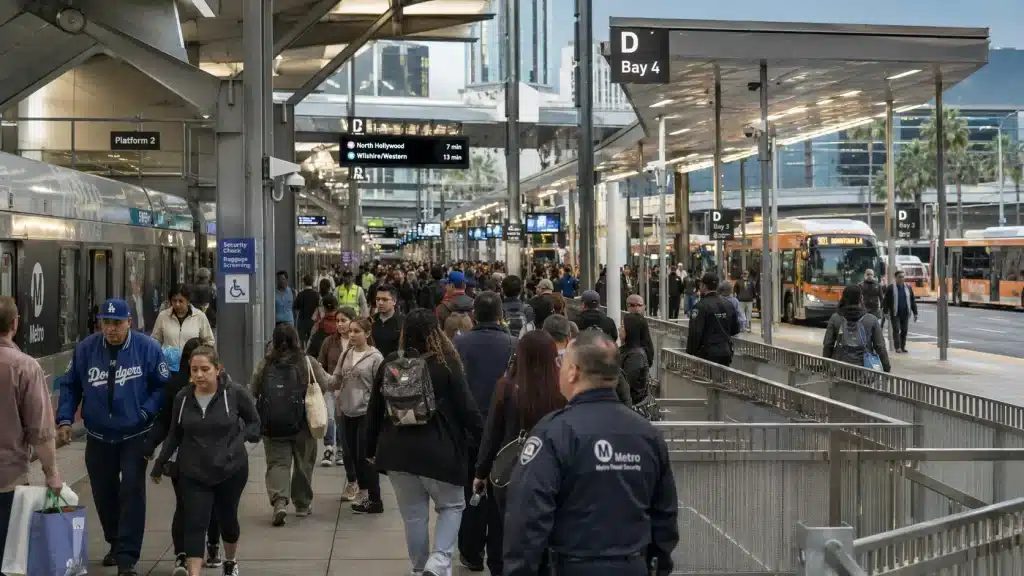
Public transit systems are high-density, open-access environments. Rail stations, bus terminals, ferry facilities, maintenance yards, depots, and transfer hubs serve large numbers of people every day, often with limited ability to control entry the way airports or private facilities can. That openness is essential to transit operations, but it also creates persistent security challenges.
In 2026, those challenges remain especially important. Major public events, international sporting events, political gatherings, concerts, and regional festivals can drive ridership surges and place added pressure on transit police, operations teams, and local first responders. At the same time, transit agencies must prepare for a wider range of threats, including terrorism, targeted violence, suspicious activity, cyber incidents, and attacks on soft targets and crowded places.
The Transit Security Grant Program is one of FEMA’s core preparedness grant programs focused specifically on transportation security. It supports sustainable, risk-based investments that help public transit systems prevent, protect against, respond to, and recover from acts of terrorism. For agencies planning security upgrades in 2026, TSGP should be part of a broader funding strategy that may also include state homeland security funding, urban area grants, nonprofit security funding, port security grants, intercity bus programs, and local capital improvement budgets.
Transit Security Grant Program Overview – Fiscal Year 2026
The Transit Security Grant Program is a competitive federal grant program administered by the Department of Homeland Security through FEMA. Its purpose is to help eligible public transportation systems protect critical surface transportation infrastructure and improve the safety of riders, employees, and surrounding communities.
For FY 2026, Congress has appropriated $88.4 million for TSGP. Agencies should use this as the current planning figure while waiting for FEMA to release the official FY 2026 NOFO, which will confirm the final application deadline, eligible applicants, cost-share requirements, required forms, and scoring priorities.
Recent TSGP cycles have used FEMA Grants Outcomes, commonly known as FEMA GO, for application submission. Agencies should expect FEMA GO to remain central to the process and should confirm that their organization’s roles, permissions, SAM.gov registration, and Unique Entity Identifier are active well before the application window opens.
Agencies should treat FY 2026 planning as an active process now.
What FY 2025 Tells Us About FY 2026 Planning
Until FEMA releases the FY 2026 NOFO, the FY 2025 cycle offers the clearest preview of likely application expectations. The FY 2025 opportunity, DHS-25-GPD-075-00-99, made $83.7 million available through FEMA GO and required applications by August 15, 2025.
That short application window reinforced a practical lesson: agencies that wait for the NOFO to begin planning are already behind. Competitive applicants need a defined scope, realistic timeline, accurate cost estimates, and clear documentation showing why the project matters.
The FY 2025 cycle also showed the continued importance of risk-based security planning. FEMA reviewers look for projects that connect a documented threat or vulnerability to a specific capability gap and then explain how the proposed investment closes that gap. Agencies preparing for FY 2026 should use the prior cycle as a roadmap while remaining flexible enough to adapt to any new FEMA priorities.
Eligibility and Covered Transit Systems
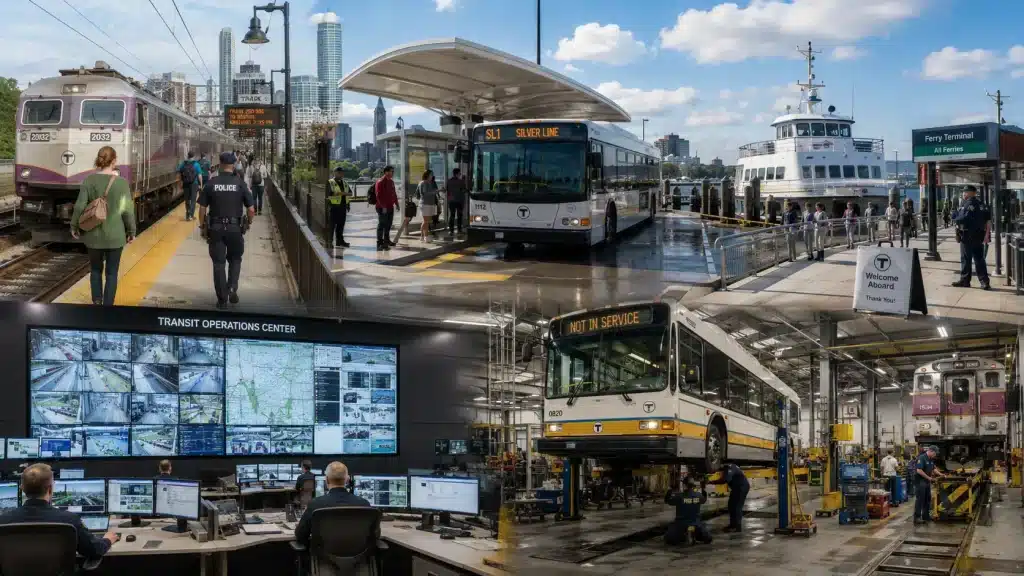
Eligibility for TSGP is determined by FEMA and DHS in the official NOFO. In recent cycles, the program has focused on eligible public transportation systems, including passenger rail, intra-city bus, ferry systems, and related transit operations serving high-risk areas.
Covered transit environments may include rail stations, bus terminals, passenger platforms, ferry facilities, transfer hubs, operations centers, maintenance facilities, and other critical assets that support the movement of the traveling public. Eligibility may depend on risk methodology, ridership, service area, asset criticality, and whether the agency or system is included in FEMA’s eligible applicant list.
Transit agencies should confirm eligibility as soon as the FY 2026 NOFO is released. They should also coordinate early with grants staff, finance teams, legal counsel, transit police, emergency managers, local law enforcement, and regional homeland security partners. If an agency must apply through a governmental sponsor, parent jurisdiction, or state administrative agency, that coordination should begin well before the grant opens.
What TSGP Funding Can Support
TSGP funding is designed to help transit agencies build, sustain, and improve security capabilities. The strongest projects are specific, risk-driven, and tied to operational needs. FEMA is more likely to view a project favorably when the applicant can explain exactly what risk exists, where the vulnerability is located, and how the proposed investment will improve prevention, protection, response, or recovery.
Typical allowable project areas include planning, security equipment, capital improvements, training, exercises, technology, cybersecurity, communications, and certain operational activities. Planning projects may include threat and vulnerability risk assessments, continuity plans, emergency operations plans, evacuation planning, and long-term security capital plans. Upgrades can take many forms, from new cameras and access control systems to physical barriers, sensors, and command-center improvements. Some projects focus on hardening infrastructure, while others bring in modern detection technologies to strengthen day-to-day operations.
Technology investments, including AI-enabled video analytics, visual gun detection, emergency notification platforms, interoperable communications, and incident management systems, may also be strong candidates when tied to a defined security need.
Training and exercises can round out these investments by helping frontline teams prepare, coordinate with first responders, and validate emergency procedures.
Preparing for the FY 2026 Application Window
The official FY 2026 application schedule will be set by FEMA, but agencies can start building their application materials now. A practical preparation process starts with reviewing previous applications, updating threat and vulnerability information, and identifying the highest-priority assets or capability gaps.
About three to four months before the anticipated NOFO release, agencies should confirm internal grant team roles, review prior FEMA feedback, and identify projects that are likely to align with TSGP priorities. About two to three months before the NOFO drops, agencies should start shaping their projects. That’s the time to outline clear project scopes, gather cost estimates, map out realistic implementation timelines, and double-check any procurement assumptions.
As the expected release date gets closer, the focus shifts to pulling the application pieces together. Agencies should begin drafting their Investment Justifications, organizing all supporting documents, and securing letters of support from law enforcement or emergency management partners.
Right before submitting, agencies should complete a final readiness check: SAM.gov registration, FEMA GO access, authorized representatives, budget details, sustainment plans, security assessments, procurement documentation, and partner coordination materials should all be current and ready to upload.
How to Build a Competitive TSGP Application
The Transit Security Grant Program is highly competitive, so agencies need more than a worthwhile project. They need a persuasive, well-documented application that clearly connects risk to action.
A strong application should answer four questions:
- What is the terrorism or targeted violence risk?
- Which transit assets, riders, employees, or operations are exposed?
- How will the proposed project reduce that risk?
- How will the agency sustain its capability after the grant period ends?
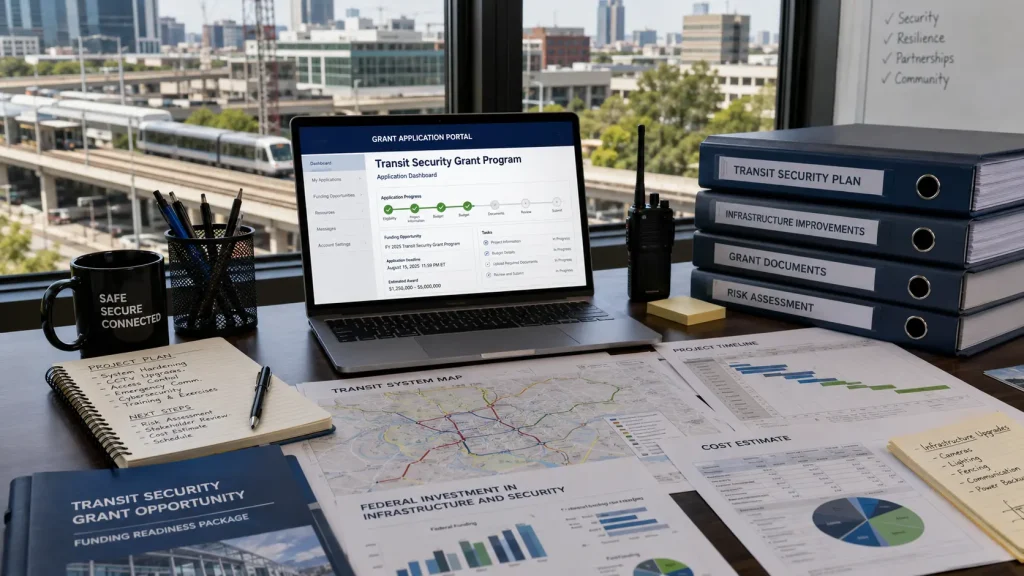
Strong applications typically include an Investment Justification, a detailed budget, a realistic project timeline, a threat and vulnerability risk assessment, a security or capital improvement plan, and evidence of coordination with relevant partners. When possible, agencies should also include ridership data, incident history, asset criticality, maps, diagrams, or other documentation that helps reviewers understand the importance of the project.
Applicants should avoid vague language such as “security upgrade” or “improved safety.” Instead, they should describe the specific vulnerability, the affected locations, the operational impact, and the expected outcome. For example, if an agency is proposing a detection technology, they should clearly explain how it will be used in the real world, where it will be installed, what specific threat it’s meant to address, how alerts will be reviewed, and who is responsible for responding. They should also describe how the technology will help shorten response times or improve situational awareness for their teams.
Using TSGP to Fund AI Gun Detection and Advanced Security Technologies

AI-powered gun detection is becoming increasingly important for transit agencies that want to spot threats earlier and move more quickly into emergency response. These systems use computer vision to watch existing video feeds for visible firearms and alert security personnel when something concerning appears on camera.
For transit environments, AI gun detection is most effective when it works as part of a larger security process. Alerts can reach security teams, dispatch centers, transit police, and local first responders, while also connecting with emergency notification systems, incident management platforms, digital signage, lockdown procedures, or other automated response actions.
AI gun detection projects may be well positioned for TSGP funding when they are tied to documented risks involving firearms, targeted violence, active shooter scenarios, or attacks on crowded transit environments. The strongest applications will explain how the technology fits into a layered security strategy that includes detection, verification, alerting, response coordination, training, and sustainment.
For AI gun detection projects, the narrative should explain where the system will be deployed, how alerts will be reviewed, how response teams will be notified, and what outcomes the agency expects to achieve, such as faster notification, better coverage of high-risk areas, and stronger coordination with first responders.
When paired with Omnilert’s emergency notification and response automation capabilities, AI gun detection can be framed as an enterprise-ready capability that supports prevention, protection, and response across stations, facilities, and operations teams.
Omnilert’s Grant Assistance Program for Transit Security Projects
Omnilert helps transit agencies identify and pursue security grant funding. For transit agencies preparing for TSGP, Omnilert’s grant assistance program can help reduce the burden of application development while improving the quality and competitiveness of the submission.
The process begins with understanding the agency’s security needs, transit environment, and funding goals. From there, Omnilert helps identify relevant grant opportunities, collect project details, develop risk-based narratives, support threat and vulnerability documentation, align budgets, and prepare application materials.
For agencies considering AI gun detection, Omnilert can help translate the technology into a grant-ready project narrative that clearly explains the operational need, expected security impact, and connection to TSGP priorities.
Related Homeland Security Funding Opportunities
TSGP is the primary FEMA grant program focused specifically on transit security, but it should not be the only funding source agencies consider. Large security initiatives often require a multi-year funding strategy that combines federal, state, local, and capital budget sources. The Homeland Security Grant Program, including the State Homeland Security Program and Urban Area Security Initiative, helps support regional preparedness, interoperable communications, planning, training, and exercises that involve transit agencies. The Port Security Grant Program may be relevant for ferry systems and maritime passenger facilities. The Intercity Bus Security Grant Program may support eligible intercity bus operators and related surface transportation infrastructure. The Nonprofit Security Grant Program helps at-risk organizations located near transit hubs or other public areas strengthen physical security.
Transit agencies should think strategically about how these programs can work together. A system-wide security initiative, such as AI gun detection, command center upgrades, emergency notification improvements, or interoperable communications, may be phased across multiple funding cycles.
Historical TSGP Funding Levels and Trends
Recent TSGP funding levels show continued federal support for transit security. Funding increased from $83.7 million in FY 2025 to $88.4 million in FY 2026, reinforcing the federal government’s continued focus on protecting surface transportation infrastructure.
Even with this increase, agencies should expect demand to remain high across eligible transit systems.
Prepare Now for FY 2026 TSGP Funding
The FY 2026 Transit Security Grant Program represents a major opportunity for transit agencies to strengthen security, improve emergency response, and protect the traveling public.
For agencies considering AI gun detection, emergency notification, or integrated response automation, the strongest path is to start with a clearly defined security need and build a project narrative around the risk, the operational gap, and the expected outcome.
Omnilert can help your agency turn that security need into a fundable, well-supported grant application.
Contact Omnilert to learn how our grant assistance program can help your agency prepare for the FY 2026 Transit Security Grant Program and related homeland security funding opportunities.
Frequently Asked Questions (FAQs)
Has the FY 2026 Transit Security Grant Program NOFO been released?
Transit agencies should monitor FEMA and Grants.gov for the official FY 2026 TSGP NOFO. While FY 2026 funding has been appropriated at $88.4 million, FEMA’s NOFO will provide the final application deadline, eligibility details, forms, and requirements.
How much funding is available for FY 2026 TSGP?
FY 2026 TSGP funding has been appropriated at $88.4 million. This is an increase from the FY 2025 level of $83.7 million
Who is eligible to apply for TSGP funding?
Eligibility is defined in the official NOFO. Recent cycles have focused on eligible public transportation systems, including passenger rail, intra-city bus, ferry systems, and related transit operations. Agencies should confirm their eligibility once FEMA releases the FY 2026 NOFO.
Can TSGP funds be used to purchase AI gun detection systems?
Yes, AI gun detection and related security technologies may be eligible when they are tied to documented terrorism, active shooter, or targeted violence risks and fit within allowable equipment or technology categories. The application should show how the technology helps reduce risk, improve situational awareness, and accelerate emergency response.
How long does it take to prepare a strong TSGP application?
Preparing a competitive TSGP application often takes several months, even if the official submission window is much shorter. Agencies should begin 60 to 120 days before the anticipated NOFO release to update risk assessments, define project scopes, collect cost estimates, prepare Investment Justifications, and secure internal approvals.
What makes a TSGP application competitive?
Competitive applications are risk-driven, specific, measurable, and feasible. They connect each proposed investment to a documented vulnerability and explain how the project will reduce risk to riders, employees, infrastructure, and operations. Strong applications also include realistic budgets, clear timelines, sustainment plans, and evidence of coordination with law enforcement and emergency management partners.
Where can transit agencies get help with the TSGP application process?
Transit agencies can use FEMA resources for program guidance and FEMA GO support. They can also work with experienced grant specialists to develop narratives, budgets, risk documentation, and Investment Justifications. Omnilert’s grant assistance program helps agencies identify relevant funding opportunities and position AI-powered gun detection and emergency response projects for TSGP and related grants