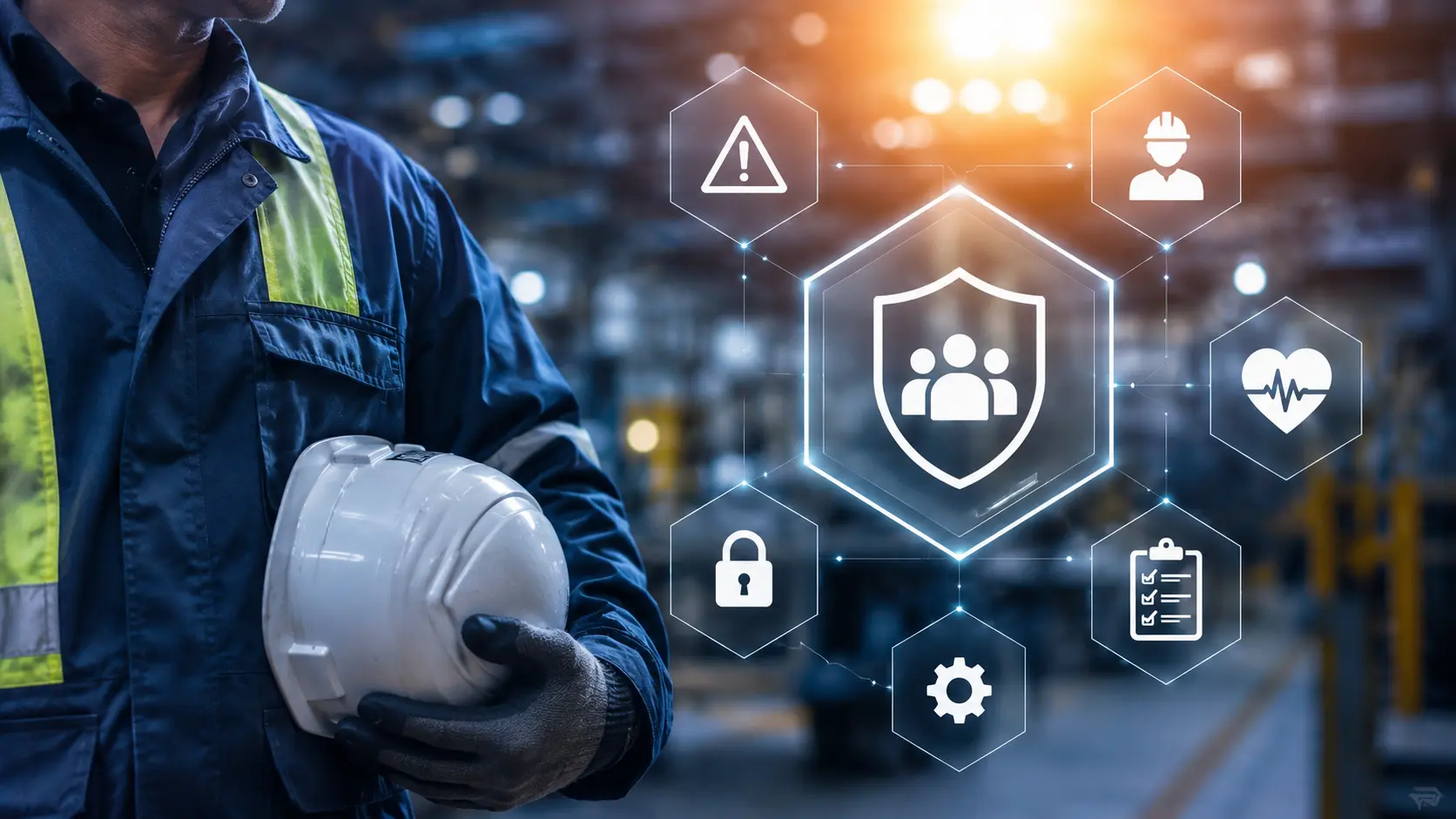
Ensuring employees can come in, work, and return home safely is the highest priority for employers. But even with the most comprehensive safety plan, each response strategy documented and secured away in a binder, an organization’s overall safety level will only be as strong as its safety culture.
This article provides practical advice on how to support a positive safety culture, starting with commitment from leadership. It covers best practices, sector-specific examples, and provides a roadmap any organization can use to assess and improve safety over time.
Key Takeaways
- An organization’s safety culture develops over time through changes in everyday behavior, and, when strong, it can reduce incidents, errors, and near misses.
- Modern tools like anonymous reporting channels, AI gun detection, and mass/emergency notification systems can support safety practices by building trust and promoting accountability across teams.
- Building safety culture is a long-term organizational improvement effort that touches hiring, onboarding, communication, management, compliance, and performance reviews.
Understanding Safety Culture

What is a Safety Culture?
A safety culture refers to the collective values, attitudes, and behaviors an organization holds regarding risk and well-being. In plain terms, beyond what a written safety plan says they should do, it’s how people actually act around safety concerns, potential risks, and unsafe conditions in the workplace.
It’s different from a safety climate or a safety program.
While climate describes a current picture of attitudes, like how staff feels about management’s commitment to safety in a given month, a safety culture encapsulates the pattern of beliefs, habits, and behaviors that remains over time. Research on the two often makes this distinction because organizations can improve climate quickly, while culture can take years to change.
Safety programs, on the other hand, are the actual written policies, procedures, training records, audits, and safety standards that a workplace or organization has. It’s all of the pieces of a safety strategy, taken at face value. Culture is deeper, and can be viewed as an evaluation of how well safety programs are received: it defines whether workers feel safe speaking up, whether leaders stop work when hazards appear, and whether employees follow safe practices even when no one is watching.
Why Having a Positive Safety Culture is Important
The need for a strong safety culture has grown throughout the last decade. The risk environment today is very different than it was even 15 years ago. There have been pandemic disruptions, staffing shortages, higher stress, remote and hybrid work, and rising workplace violence, which is especially prevalent in care sectors.
Having a positive safety culture doesn’t just protect your workforce. It can better it. Studies show that organizations with positive safety cultures see increases in productivity and operational efficiency. When everyone cares about safety, workplace incidents can be reduced and employee morale and retention are improved; a strong safety culture directly translates to safeguarding employee well-being, leading to reduced stress, improved mental health, and increased job satisfaction.
The Building Blocks of a Safety Culture
Every organization has its own challenges and strengths. The risks of a bank branch differ significantly from a construction site or a water treatment plant. Despite this, they share a common goal of getting their workers home safely.
There are some universal pieces that influence positive workplace safety attitudes: Commitment, Competence, and Communication.
Commitment: Having a strong culture of safety means that everyone is equally committed to treating safety as a non-negotiable. Safety needs to be visible everywhere, from budgets, meetings, schedules, and decisions to everyday conversations and interactions between coworkers.
Competence: Everybody should be trained, aware, and equipped to handle different threats and risks. While things like fires, shootings, and spills are unpredictable, they can be prepared for. When something does come up, they should be seen as learning moments without automatically blaming people. Close calls should always be taken seriously and treated as early warnings, not ignored because no one was hurt.
Communication: Safety information must be clear, timely, two-way, and accessible. Having communication channels allows everyone to receive clear information and raise concerns without fear. Data, feedback, audits, and observations are all important for improving processes over time.
Technology can support these efforts. Digital checklists, data analytics, AI-assisted tools, anonymous reporting systems, and mass notification platforms can help make safety work more visible and responsive.
Laying the Groundwork for Care
Leadership’s Commitment to Safety
Safety culture is established from the top down. If teams don’t feel like their leaders care or are committed to safety, they will be less willing to care themselves. When managers visibly prioritize safety, employees are more likely to follow their lead. Effective safety culture begins with leadership’s commitment, where leaders consistently prioritize safety through their words and actions, sending a powerful message that safety is non-negotiable.
When leaders bring safety values into their decision-making, the whole organization can feel it. So executives, boards, supervisors, and frontline managers should be willing to stop work for safety, approve time and budget for corrective actions and participate in safety walks during different shifts.
Leadership commitment is a critical element of a strong safety culture, as it sets the tone for safety practices throughout the organization. Concrete leadership behaviors matter. These include things such as:
- Opening meetings with short safety moments
- Reviewing incidents and near miss trends every month
- Personally following PPE rules and access control protocols
- Asking workers what is making the job harder or less safe
Promoting Reporting and Accountability
Safety culture is built on accountability; when leaders are accountable for safety failures, everyone values honesty and responsibility. Leadership goals should include leading indicators like near miss reporting rates, corrective action closure times, training quality, safety walk counts, and culture survey scores, not just lagging injury rates.
Anonymous reporting systems can help to build accountability and encourage engagement. They give employees a discreet way to report concerns about safety, harassment, security threats, and workplace violence without fear of retaliation.
Building Shared Ownership

A safety culture requires everybody (full-time employees, contractors, temps, and visitors where applicable) feel able to act on incidents. Employee engagement in safety practices can make them feel more ownership and commitment to workplace safety.
Empowerment can come in many forms:
- Stop work authority
- Active safety committees
- Peer observations
- Toolbox talks
- Participation in risk assessments
Having safety committees or pairing experienced staff with new staff helps build employee ownership of safety practices. When they feel like they are involved in shaping safety practices, they may be more willing to comply with and reinforce safety practices.
Examples vary by environment:
- A nurse escalating a medication error risk
- A forklift operator reporting a blind spot near a loading bay
- A hotel worker flagging faulty locks
- An office worker reporting ergonomic strain
Encourage open communication and listen to employee feedback to uncover risks that might otherwise go unnoticed.
Recognition should reward proactive behaviors. Celebrate near miss reporting, peer coaching, safety innovations and practical improvements… not just a certain number of days without an injury. Building a positive safety culture encourages collaboration and open communication among employees, which in turn builds their commitment to safety and leads to innovative solutions for safety challenges.
Learning From Incidents and Near Misses
Near misses are one of the best sources of safety information because they show where controls nearly failed. Encouraging near miss reporting signals to employees that the organization values learning from close calls before they result in injuries, which is a positive cultural indicator.
A good process is simple: report the event, triage the risk, do root cause analysis, assign corrective actions, and tell staff what changed. Forward-looking accountability is about preventing mistakes rather than assigning blame. That’s the heart of a just culture: human error, at-risk behavior, and reckless behavior are treated differently.
For example, imagine a warehouse near miss where a pallet falls from a rack and lands near a pedestrian walkway. A responsible response would not stop at telling workers to “be more careful”. The team would inspect racking, review load placement, update forklift traffic routes, refresh training, and share the lesson across shifts.
Data makes the learning stronger. If multiple events happen on the same shift, in the same unit, near the same contractor group, or after the same procedure change, the organization can see trends before a serious injury occurs. Digital tools can help automate trend analysis in real time, but management still needs to take visible actions and give feedback to staff.
Continuous Improvement: Communication, Training, and Everyday Best Practices
A strong safety culture is seen and heard every day. It shows up in briefings, signage, coaching conversations, shift handoffs, onboarding, emergency drills, and how leaders respond when people raise issues.
Communication is key to a strong safety culture, making sure employees are aware of safety risks and protocols. Procedures should be in plain language, multilingual where needed, and there should be two-way communication for questions and feedback. Workers should also be told about changes after reporting, audits or investigations.
Creating a safety culture requires ongoing training and education to empower employees to recognize and respond to potential threats. This keeps employees up to date on safety practices and gives them confidence to handle the unexpected. In 2026, the best training is often scenario-based:
- Active assailant and evacuation drills
- Hands-on practice
- Role-specific refreshers
- Realistic exercises
Everyday best practices are housekeeping, job safety analysis, lockout/tagout, lone worker protocols, safe lifting, access control, and offering behavioral observations with coaching, not punishment. Integrating safety into daily routines can be brief toolbox talks at the start of shifts and celebrating proactive safety behaviors.
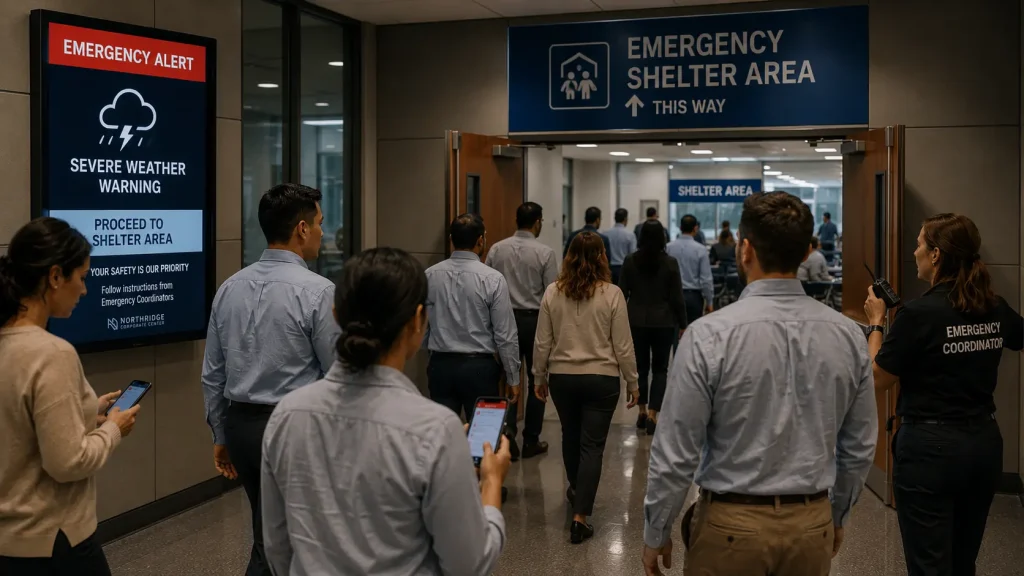
Training should also cover emergency communication. Staff need to know who can activate mass/emergency notification systems, what alerts will look like, how to confirm safety, and what to do during fires, severe weather, medical emergencies, chemical releases, or security threats.
Technology’s Role in Safety Culture
Technology can be a critical support for safety culture.
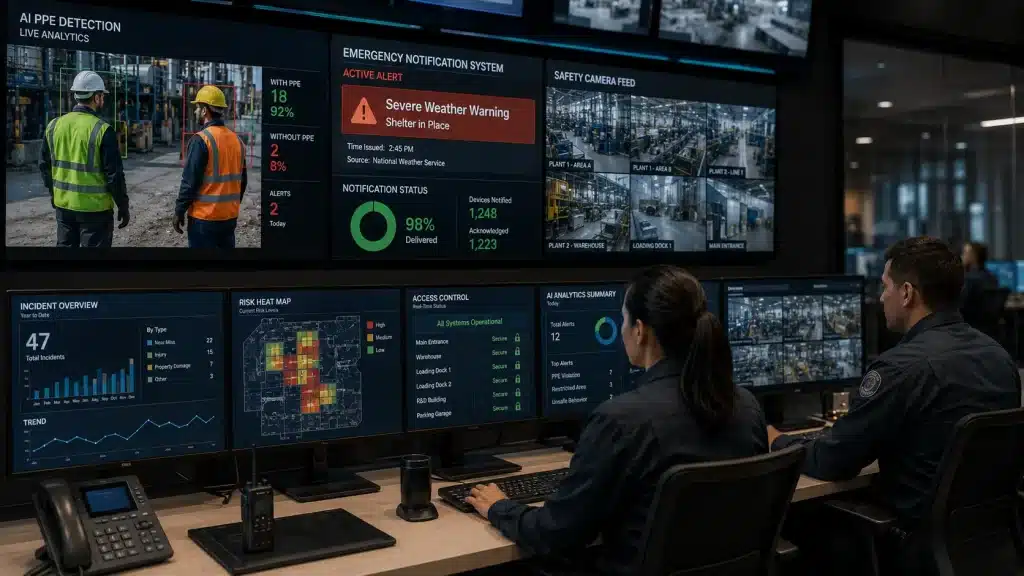
Useful tools include digital inspections systems, mobile checklists, sensor-based monitoring, lone worker apps, visitor management systems, CCTV where appropriate, and AI analytics that identify recurring hazards.
AI gun detection and other AI-assisted threat detection tools are emerging as part of broader violence prevention and physical security programs. These tools can help identify visible threats quickly and should have clear procedures, trained responders, privacy safeguards, and integration with emergency response plans.
Mass/emergency notification systems are important because they help organizations alert people quickly during fires, severe weather, security threats, or chemical releases. They are most effective when tested regularly and tied to clear roles, message templates, and drills.
Anonymous reporting tools should not operate in isolation. They should connect to investigative workflows, corrective action tracking and analytics so reported issues lead to visible action. That visible follow-through is what builds trust in the reporting system.
While tools can help people identify risks faster, communicate better and respond at scale, human judgement, values, and accountability are always central when using technology.
Safety in Different Industries

While the principles are universal, each industry has different risks, standards and regulatory requirements. A strong culture adapts to the actual hazards people face at work, not a generic checklist.
In manufacturing, priorities are machine guarding, lockout/tagout, ergonomics, forklift routes, and integrating quality and safety so production pressure doesn’t override controls. In construction, safety culture is all about permit-to-work systems, subcontractor alignment, fall protection, pre-task planning, and being willing to stop unsafe work.
Energy and mining organizations focus on confined spaces, process safety, major hazard management, emergency preparedness, and strict procedures. These industries need strong redundancy because one failure can have big consequences.
In healthcare, safety culture covers patient safety and worker safety at the same time: infection prevention, medication errors, workplace violence, staffing pressure and fatigue. Many healthcare organizations use culture surveys aligned to patient safety expectations, and the Joint Commission has long emphasised communication, accountability, and safety standards across care settings.
Hospitality and retail deal with guest safety, slips and falls, robbery and assault risks, faulty locks, crowd management, and emotionally charged customer interactions. Transport and logistics teams manage driver fatigue, load securement, yard safety, warehouse-road coordination, and mass-notification for route disruptions or critical incidents.
Offices and hybrid workplaces still need safety practices. Ergonomics, mental health, cybersecurity-safety overlaps, emergency communication, and inclusion of remote staff in training all matter. A safe office environment isn’t risk-free; it just has different risks.
Measuring and Improving Your Safety Culture Over Time
You can’t improve culture if you don’t measure it. This means assessing key indicators and analyzing metrics to drive continuous improvement.
Useful assessment tools are anonymous culture surveys, focus groups, interviews, safety audits, behavioral observations and analysis of incident and near-miss data. Using comprehensive assessment tools like surveys and audits helps organizations to measure where they are with their safety culture and get valuable insights into employee perceptions and behaviors around safety.
Tracking metrics like near misses, incident rates, and safety training attendance can help with measuring the success of current initiatives and look for trends and areas for improvement.
A simple annual cycle works well:
- Baseline assessment: Understand current risks, attitudes, and gaps
- Priority setting: Choose the most important issues to address first
- Action plan: Assign owners, timelines, and resources
- Midyear review: Check progress and remove barriers
- Year-end reassessment: Compare results and adjust the next plan
Transparent reporting back to workers matters. Share improvements, remaining gaps, and lessons learned. This keeps employees engaged and shows that management uses their feedback to make the workplace safer.
Crafting a Strong Safety Culture, Every Day
Building a strong safety culture is a long-term improvement process. Many organizations see early improvement in 6–12 months, but deeper organizational change can take years:
- In the first 3–6 months, start with leadership alignment. Hold a workshop to define safety values, run a quick culture pulse survey, review critical policies, identify obvious hazards, and establish or strengthen anonymous reporting channels.
- From 6–24 months, build the system. Roll out targeted training, coach supervisors, refresh safety committees, standardize incident and near-miss investigations, improve communication routines, and pilot supportive technologies such as digital checklists or mass notification enhancements.
- Beyond 24 months, sustain and refine. Embed safety into hiring, onboarding, promotion criteria, procurement, contractor management, business reviews, and strategic planning. Expand the focus to psychological safety, well-being, and resilience so people can speak up and recover from stress.
The goal isn’t perfection. The goal is steady improvement: better conversations, faster hazard correction, more honest reporting, and decisions that prove safety is valued every day.
Omnilert’s AI gun detection and mass/emergency notification systems support organizations across the country in improving their security posture and nurturing their overall safety culture. Learn how we can support the specific needs of your team.
Frequently Asked Questions (FAQs)
How long does it take to build a strong safety culture?
Culture change takes 3-5 years of consistent effort. Some improvements, like better near-miss reporting, stronger supervisor walkarounds, or clearer emergency communication, can show results in 6-12 months.
Leadership turnover, mergers, rapid hiring, or major operational changes can reset parts of the culture. That’s why safety culture should be treated as an ongoing management responsibility, not a project.
What’s the difference between a safety policy and a safety culture?
A safety policy is a written commitment and set of rules. Safety culture is how people think and behave when no one is watching. A simple test is this: if employees still follow safe practices under schedule pressure, during a difficult day or when supervisors are absent, the organization likely has a strong safety culture, not just good paperwork.
How can small organizations with limited budgets improve safety culture?
Small organizations can start with low-cost actions: frequent safety conversations, simple checklists, peer observations, clear stop-work authority and visible leadership participation. They can also use free or low-cost anonymous reporting forms, basic emergency communication tools, and training resources from regulators, insurers, and industry associations. The most important resource is time and commitment, not expensive software.
Should near misses be treated the same as actual incidents?
Near misses don’t always require the same level of investigation as a severe injury but they should be taken seriously because they reveal weaknesses in controls, procedures, or behaviors. The best approach is to thank employees for reporting near misses, investigate the root causes, fix the hazards, and share what changed. That way, employees learn not to be silent.
How do mass/emergency notification systems fit into safety culture?
Mass/emergency notification systems operationalize safety culture by enabling fast, coordinated communication during crises like fires, severe weather, medical emergencies, chemical releases or security threats.
These systems should be tested regularly, included in drills and supported by clear response expectations. When people know what an alert means and what to do next, emergency communication becomes part of everyday preparedness.