A Look Into Multifamily Residential Security
Multifamily residential security refers to the systems and strategies that protect apartment community, condo buildings and gated communities across the US. Millions of residents living in multifamily properties every year expect safe and convenient living and property managers are under pressure to deliver.
Multifamily residential security protects residents, visitors, property, and assets from everyday issues like burglary, package theft and vandalism and high-impact incidents like gun violence. Modern solutions like AI gun detection and integrated emergency notification platforms can often enhance what property managers already have without replacing everything, for comprehensive and efficient protection.
This article covers security systems for multifamily properties, including key technologies like security cameras, access control, AI analytics and emergency alert platforms and integration with existing infrastructure. Whether you manage a 50-unit community or a 500-unit high-rise, the fundamentals are the same.
Key Takeaways
- Multifamily security protects residents, visitors and property in shared living spaces by addressing challenges like unauthorized access, property theft and damage, and violent threats.
- Properties need a proactive and scalable approach to threat detection for faster and more adaptable responses.
- Maintenance and compliance are essential for the reliability and long-term use of security technologies.
- Investing in security can improve the property value of multifamily residential units and cause high resident retention.
Why Multifamily Residential Properties Have Unique Security Risks
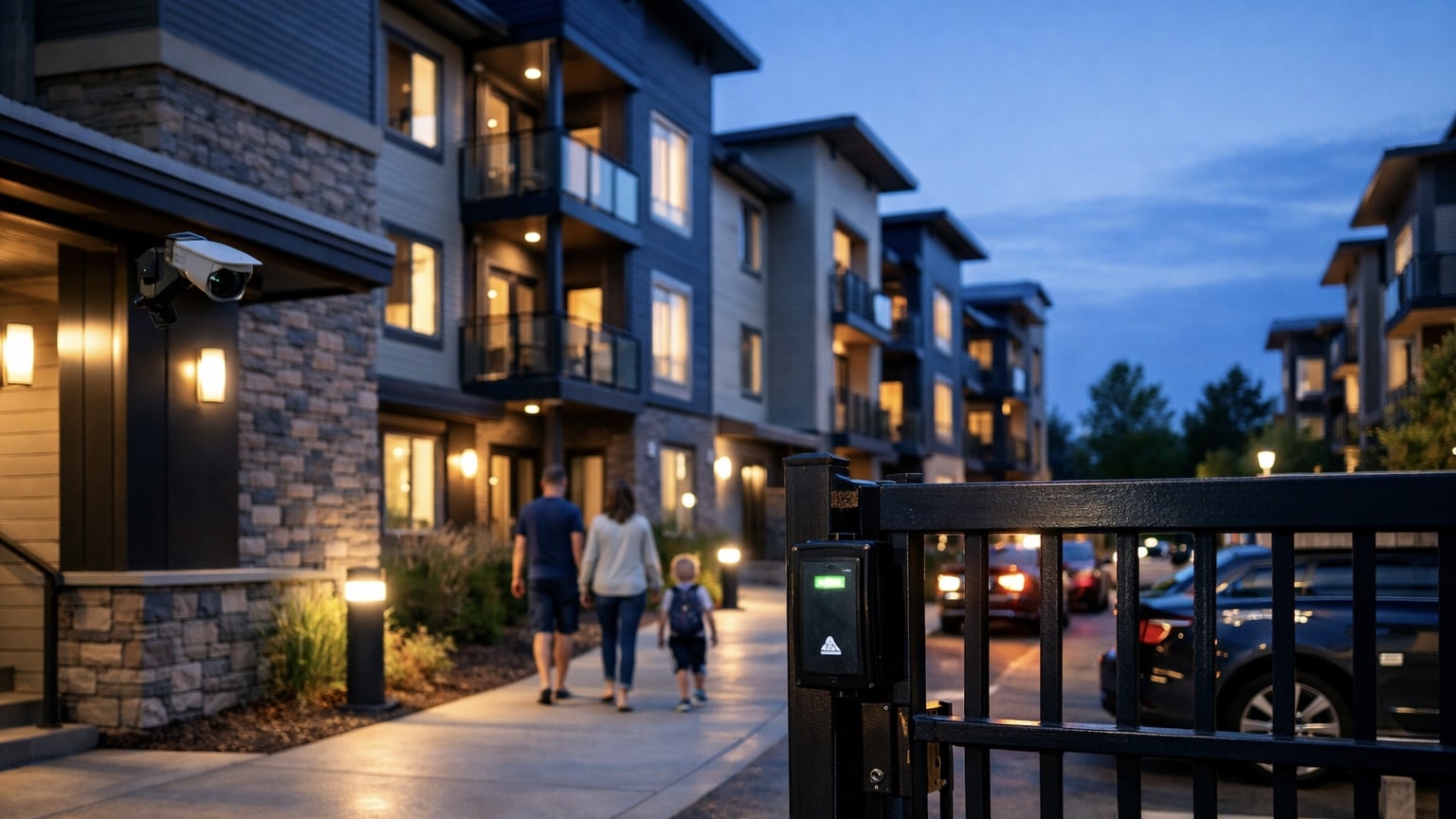
Density and shared spaces create unique security challenges not found in single-family homes. With hundreds of residents sharing entrances, hallways, parking garages and amenities, the risk surface is much larger. High turnover in large buildings makes access control harder. Frequent move-ins and move-outs require constant updates to credentials, making traditional lock and key systems impractical. Shared amenities like pools, mailrooms, and fitness centers are semi-public spaces that are harder to monitor. Balancing security with resident convenience is tough in these spaces.
The daily flow of residents, guests, delivery drivers and contractors adds complexity. Traditional guard-only models struggle to verify large numbers of people at the same time, especially during peak hours.
Common Security & Safety Challenges in Multifamily Communities
Property managers often face recurring issues that any good security plan must address. Knowing what those are is key to building your defenses.
Unauthorized entry and tailgating are ongoing problems at apartment and condo buildings. Residents may hold doors for others and unintentionally let in unauthorized people. This happens all the time at busy properties and is a security risk.
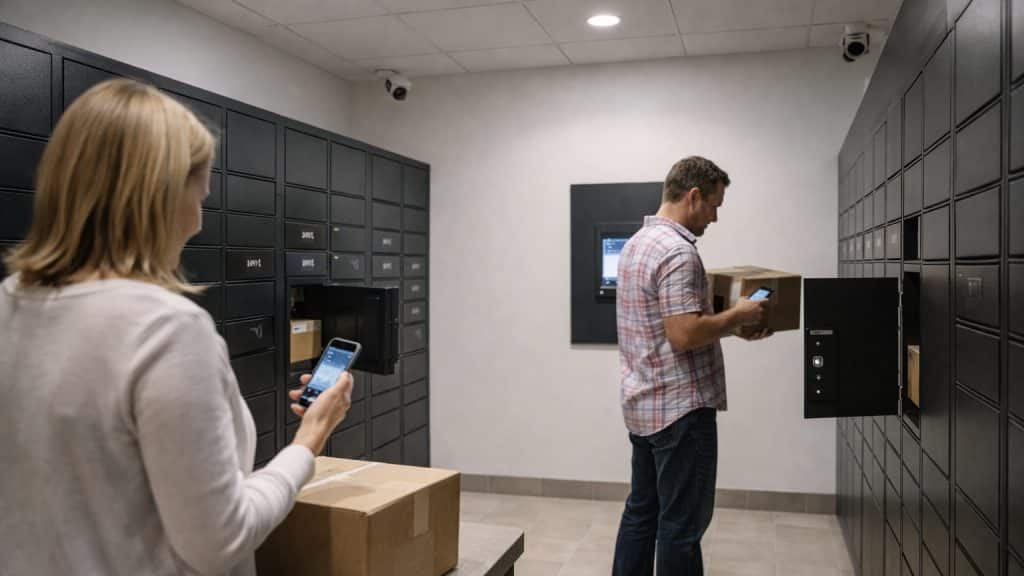
Property crimes are a common threat in multifamily residential properties. Burglary and vandalism typically target storage rooms, laundry facilities, bike racks and first-floor units. Cameras and good lighting are key to deterring criminals and preventing opportunistic theft. Package theft has skyrocketed since 2020 with online shopping. Unattended packages in vestibules and mailrooms are an easy target. Controlled access package rooms are a must for apartment security. Vehicle break-ins and catalytic converter theft can also affect surface lots and parking garages, often in dark or camera blind spots. Criminals act fast, and residents may not notice until later.
Life-safety hazards like fire, carbon monoxide and natural disasters require code-compliant alarm systems integrated with central monitoring and local emergency services for a coordinated response.
Violent threats like gun violence can have a big impact on residents’ trust and community safety. Deadly examples like this series of incidents at a Florida apartment community, this shooting at a Canadian condo building, or domestic disputes that escalate show how proactive security is key to preparing rather than reacting.
Core Components of a Modern Multifamily Residential Security System
A modern multifamily security system has 5 main components: video surveillance, access control, alarms and sensors, communication systems and unified management platforms. These work together to cover shared spaces like lobbies, mail rooms and amenities.
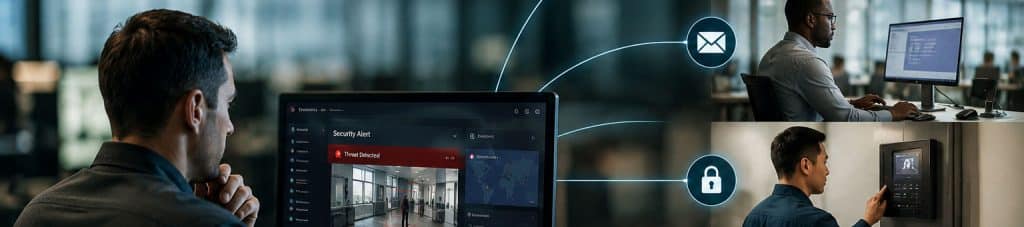
Unified security software puts all these systems into one dashboard so property managers can manage access, alarms and video feeds efficiently.
Video Surveillance and AI Analytics
Video is still the foundation of multifamily residential security in 2026, and it goes way beyond just recording. Older CCTV systems stored footage locally with no real-time alerts. New IP cameras have cloud connectivity, so security teams can monitor remotely and get instant notifications.
Cameras should match their environment:
- Dome or turret for interior hallways
- Vandal-resistant for exterior doors and parking
- Wide-angle or multi-sensor for large parking lots to reduce camera count while still getting coverage.
AI analytics can turn passive recording into active monitoring by classifying people and vehicles, detecting loitering and flagging unusual movement after hours. This helps security teams identify and respond to threats (like intrusion or theft) before they can escalate. Visual AI gun detection analyzes existing camera feeds to spot visible firearms so you can intervene earlier.
Combining video, access control and other data streams gives security teams a complete view for proactive incident management.
Access Control, Credentials, and Gate Security
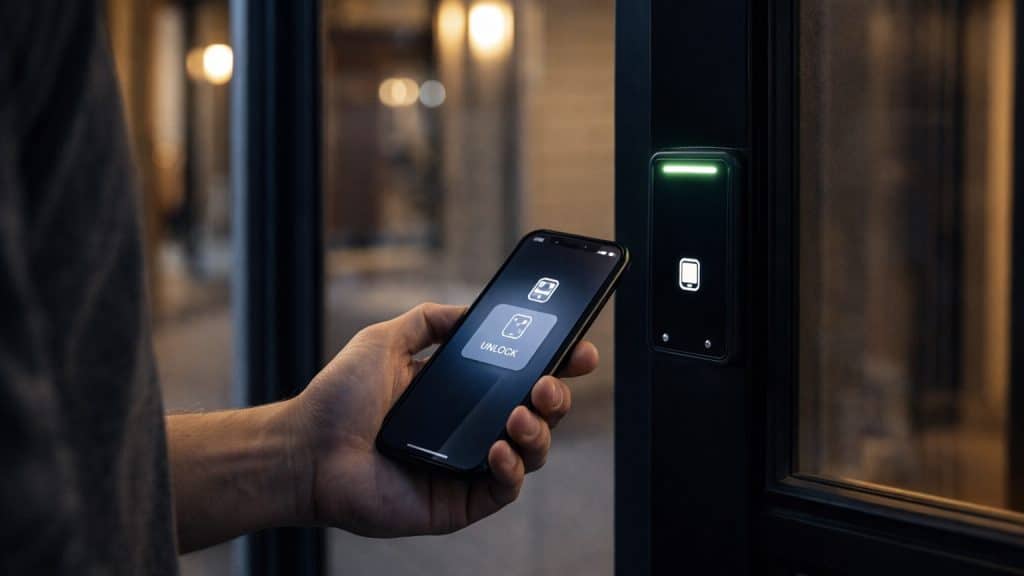
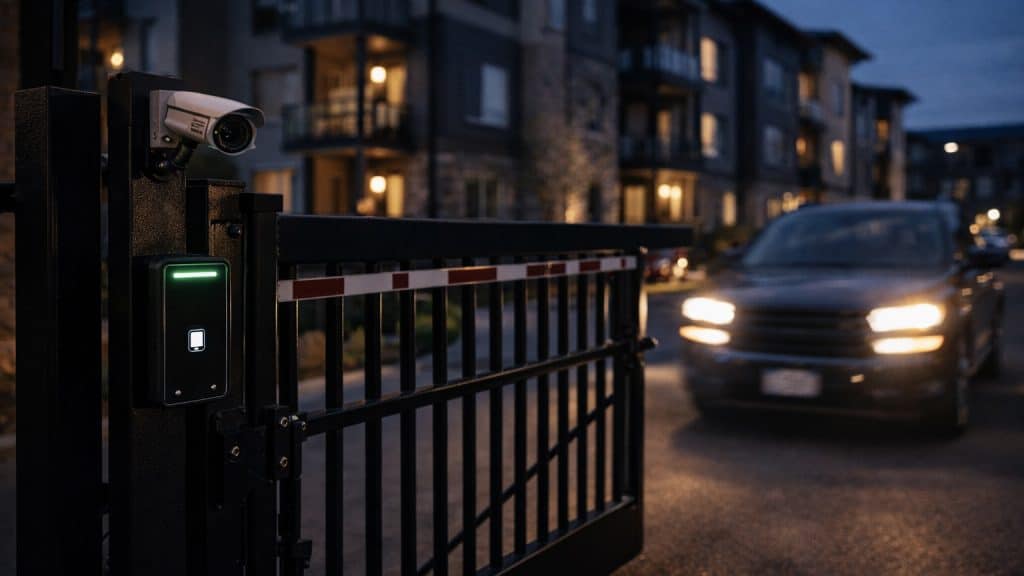
Controlling who can get into buildings, garages and amenities – and when – is key to multifamily property security. Access control balances safety with resident convenience. Systems designed for multifamily properties cover entries, package rooms, fitness centers and more, with user permissions by role and schedule. Mobile credentials and QR codes allow residents and guests to get in without physical keys, with audit trails for accountability.
Vehicle gate and garage controls, sometimes integrated with license plate recognition, secure parking areas from theft and unauthorized entry. The challenge is to be secure without creating bottlenecks during peak hours or emergencies. Integrating access control with video and fast credential reading keeps traffic moving while staying secure.
Alarms, Sensors and Life-Safety Systems
Intrusion, fire and environmental detection systems add to video and access control for layered security.
Door and window sensors, glass-break detectors and motion sensors monitor common areas after hours and alert security to any unexpected activity. Fire alarms, smoke detectors and CO detectors can integrate with central monitoring and first responders to enable a fast response and automatic emergency exit unlocking.
Smart sensors can add features such as vape detection, noise monitoring and temperature alerts to catch issues early. These sensors can trigger automated responses, like activating cameras, unlocking doors, or making audio announcements, to enhance resident safety and property protection.
Adding Proactive Threat Detection and Emergency Communications
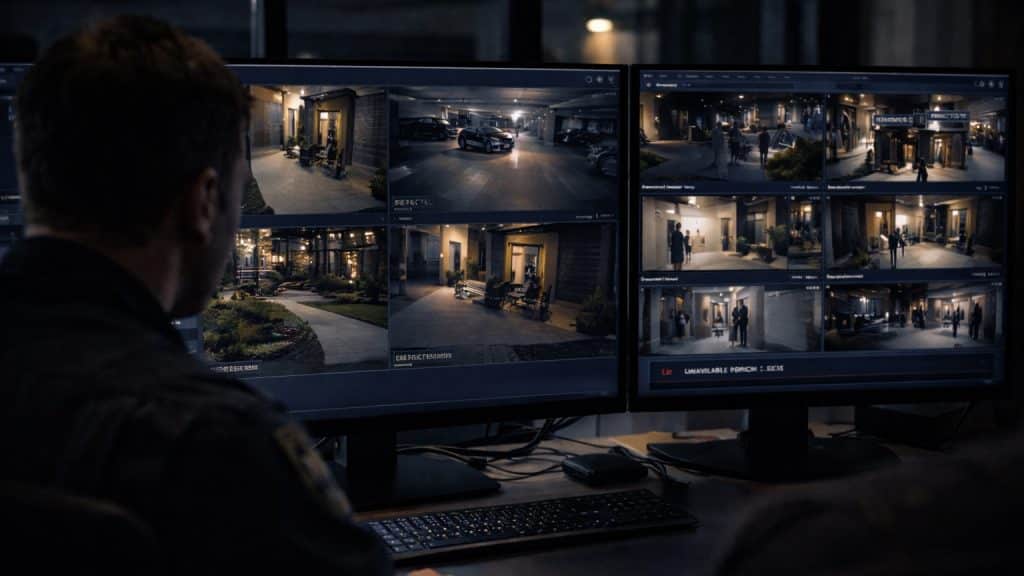
Traditional security systems are reactive; they record incidents and respond after something has happened. Modern multifamily security is all about early detection and coordinated response… shifting from reactive to proactive.
Proactive visual AI gun detection, emergency notifications and mass communication systems, paired with pre-defined protocols, are essential. When an incident occurs, tools should work together to respond in seconds – not minutes. A security incident response that takes 5 minutes to initiate can have the same impact as one that takes an hour; in emergencies, seconds count.
AI Gun Detection for Multifamily Properties
While rare, shootings at apartment communities have shown us we need specialized detection. Events in Henderson, Nevada (2020), Highlands Ranch, Colorado (2017), and Hialeah, Florida (2013) demonstrate the devastation of gun violence in residential communities.
Visual AI gun detection works by analyzing video feeds from existing security cameras to detect visible firearms (and not people or faces). Unlike acoustic gunshot detection, which activates after shots are fired, visual detection can detect threats the second they’re brandished and visible – when there’s still time to intervene.
This technology combines rapid machine detection with human verification. When the system detects a potential firearm, trained operators verify the alert before triggering emergency responses. This verification step reduces false positives dramatically while maintaining speed.
Once a potential gun is detected and verified, the system can automatically trigger an emergency response workflow for that specific property. This might include alerting onsite security, property managers, initiating lockdowns, sending alerts to residents in affected buildings and providing local law enforcement with real-time information.
The result is faster awareness, earlier action and quicker law enforcement engagement. For multifamily property owners concerned about budget and disruption, this approach saves cost, speeds deployment, and scales across multiple properties, from old condos to new high-rises. We can’t prevent all violence, but we can compress response times in ways that can save lives.
Automated Emergency Response and Resident Notification
Modern security tech can initiate automated workflows and notify onsite staff, property managers and residents instantly through multiple channels when threats are detected. These channels include SMS, email, app notifications, voice calls and PA announcements, making sure everyone gets the message.
Responses are scenario-specific: fire alarms might unlock exits and highlight evacuation routes, security threats could lock doors and send out notifications telling residents to shelter, and medical emergencies notify on-call staff. Alerts can be segmented to only the affected areas to prevent panic.
Mobile apps and dashboards allow staff to monitor incidents in real time, confirm responses, track acknowledgments and send updates. This way, residents can see that safety is being managed, not just monitored.
Balancing Security, Privacy, and Resident Experience
Residents expect strong safety measures that still respect privacy and convenience. Achieving this balance requires thoughtful system design and clear communication.
Cameras should cover common areas, entrances, and exterior spaces without invading private areas like unit doors or windows. Transparent communication about monitoring and footage use builds trust, aided by clear signage and resident portals.
Security policies must be consistent and non-discriminatory to avoid over-policing concerns. Well-designed systems become valued amenities (secure package rooms reduce theft anxiety, mobile access eliminates key fumbling, and guest management simplifies visits), enhancing both safety and convenience.
Security Awareness and Education for Residents
Educating residents is key to multifamily residential security. Property managers can create a culture of safety by sharing information on how to prevent package theft, secure personal belongings and recognize suspicious activity in the community.
Multifamily residential security tools like video surveillance and access control can be highlighted in resident communications to reinforce security protocols and show the property is committed to safety. Hosting security awareness programs, whether through newsletters, workshops or digital platforms, helps residents understand their part in keeping the community safe and encourages them to report incidents.
By educating residents on the features and benefits of the property’s security systems, property managers can get more compliance with access control and reduce the risk of incidents. This proactive approach not only makes it safer but also builds trust so residents become active partners in protecting multifamily properties.
Designing Security as an Amenity, Not an Obstacle
Modern access control makes life better by letting people unlock doors with their phone. Customizable guest passes let authorized visitors in without an escort and QR codes give delivery drivers temporary access to package rooms. Integration with apps gives people digital keys, gate entry, maintenance requests, and amenity reservations, and keeps tenants happy through convenience.
Thoughtful security design (e.g., good lighting, non-intrusive cameras, monitored package rooms, fast emergency response, etc.) shows management cares about their residents. Properties with strong security can have premium rent prices and lower vacancy. These features make a community people want to live in.
Planning and Implementing a Multifamily Security Strategy
Security planning should be a process: assess, design, integrate, refine. Skipping steps will expose gaps that incidents will find.
Start with a risk assessment and site survey, mapping buildings, entrances, stairwells, garages, and amenities. Identify blind spots without camera coverage or electronic access control. Document existing systems and capabilities. Get key stakeholders, like property managers, security staff, maintenance and resident reps, involved early to address operational, security and convenience concerns.
Design layered security for perimeter, building entry, common areas and unit approaches. Each layer should have the right controls: Gates and fencing at the perimeter; access control and cameras at entries; surveillance and sensors in common areas; and adequate lighting and sightlines near units.
Choose open, scalable solutions to be future-proof and avoid vendor lock-in. Pilot in select buildings or high-risk areas to test workflows, resident communication and integration before full rollout.
Key Technical and Operational Considerations
Power and networking need to be planned upfront. Power-over-Ethernet (PoE) makes camera and access control installation easier by delivering power and data over one cable. Network bandwidth needs to accommodate video transmission, especially for properties that store video in the cloud. Storage and retention policies need to be defined:
- How long will the video be retained?
- Where will it be stored… on-premises recorders, cloud, or hybrid?
- What are the bandwidth constraints for cloud upload?
- Are there regulatory requirements for retention?
Maintenance and lifecycle planning prevent degradation. Alarm systems need to be tested regularly. Cameras need firmware updates, cleaning and occasional repositioning. Access control credentials need to be audited periodically. Regular drills with local fire and police departments validate emergency procedures.
Training on-site staff turns technology into capability. Security staff need to know how to read alerts, escalate incidents and communicate with residents during events. Streamline management of these training requirements by documenting procedures and scheduling regular refreshers.
Working With Technology Partners and Integrators
Look for vendors and integrators with multifamily residential experience. Commercial or industrial experience doesn’t automatically translate to residential properties with their unique privacy concerns and resident expectations.
Evaluate partners on integration capability. Can they work with a building’s existing cameras and access control? Do they support open standards? What 24/7 support and monitoring options do they offer?
Documented incident-response playbooks and service-level agreements define expectations clearly. What happens when an alert triggers at 3 AM? Who responds within what timeframe? How are escalations handled?
Ask for references from similar properties. A vendor with 30-story urban high-rise experience may not have experience with 300-unit garden-style communities and vice versa. Multifamily communities vary widely and experience matters.
Benefits of a Well-Designed Multifamily Residential Security Program
A holistic security approach gives more than just fewer incidents. Comprehensive security reduces theft, vandalism and violence, and over time reduces direct losses and insurance costs. Insurers often reward well-secured properties with premium reductions. Resident retention improves as safety and convenience increase lease renewals. Security differentiates properties in a competitive market and supports premium pricing.
Clear records and documented emergency procedures reduce legal risk. Professional installation, regular testing, and response protocols give building managers liability coverage. Operational efficiency improves with fewer after-hours calls, streamlined delivery management, and better property usage insights, reduces management burden and improves service.
Security is a risk management must and an amenity. Properties that get it right protect residents, reduce costs and create great communities.
Regulatory Requirements and Long-Term Use
Compliance with regulations and industry standards is a top priority for multifamily property managers. Multifamily residential security solutions must meet requirements for access control, video surveillance and emergency response, which often include regular security audits and risk assessments.
Access control and video surveillance not only provide secure access and monitor common areas but also help properties document compliance and have evidence in the event of a security incident. Security teams should be aware of local, state and federal regulations and work closely with local law enforcement and regulatory agencies to stay up to date on all protocols.
By being compliant with security systems and working with authorities, property managers can increase residential security, reduce liability and protect their multifamily communities from security threats and regulatory fines.
Maintenance and Upkeep
Multifamily security systems only work in the long term when maintained and managed properly. Property managers should schedule regular inspections of security cameras, access control and alarm systems to make sure everything is working at its best. Security audits will help identify vulnerabilities like blind spots or outdated equipment so they can be upgraded and repaired in a timely manner.
Using multifamily residential security solutions like AI-powered cameras can further simplify maintenance by sending real-time alerts if a device goes down or detects unusual activity. Professional installation and ongoing support are key to making sure security systems provide complete coverage and are reliable over time.
By maintaining and investing in multifamily security systems, property managers can increase residential security, reduce the chance of system failure and keep their multifamily properties safe from threats.
The Future of Security at Multifamily Properties
Family residential security needs have changed a lot, and only properties that adapt will last. Today, layered security, seamless integration, proactive detection and emergency communication all work together to protect residents and property and streamline operations.
To create a safer and more secure community, do a full security assessment of all buildings, entrances and current systems. Identify gaps in camera coverage, access control and emergency communication and look into more advanced options like visual AI gun detection. Develop emergency communication plans with pre-defined protocols and consult with security experts to enhance existing systems rather than replace them entirely.
Property managers should address everyday issues, like burglary, package theft, vandalism, but also rare but serious threats like active shooters and major fires. A strategy that only addresses common incidents leaves vulnerabilities.
Technology and threats evolve, so future-ready, open-architecture solutions that can add new capabilities without full replacement are key. Investing in proactive multifamily residential security today will build safer communities for years to come.
Omnilert offers a number of security solutions for multifamily residential buildings, including visual AI gun detection and professional monitoring/verification services, mass and emergency notification systems, and workflow automation. To learn more about how you can protect your residents, click here.
Multifamily Residential Security FAQs
Can I integrate with existing security systems?
Yes, most modern multifamily residential security solutions can be integrated with existing cameras, access control systems and alarm platforms. A future-proof apartment communities approach reduces costs and downtime while increasing security.
How can multifamily residential security balance safety with resident privacy?
Systems focus on monitoring common areas, entrances and exterior spaces and not private unit interiors. Transparent communication, clear policies and discreet camera placement help to build trust and privacy.
How can multifamily security systems improve tenant retention?
Comprehensive and convenient security features enhance residents’ sense of safety and satisfaction. Features like mobile access, secure package handling, and quick incident response contribute to a positive living experience that encourages lease renewals.
Are multifamily security systems scalable for different property sizes?
Yes, these systems are designed to scale from small apartment buildings to large ones with hundreds of units. Cloud-connected platforms and modular components allow customization based on property size and security needs.
How do security systems help with compliance?
By documenting access, recording incidents and integrating with local emergency services, multifamily security systems help managers stay compliant with safety codes and legal requirements. It also helps reduce liability risks.