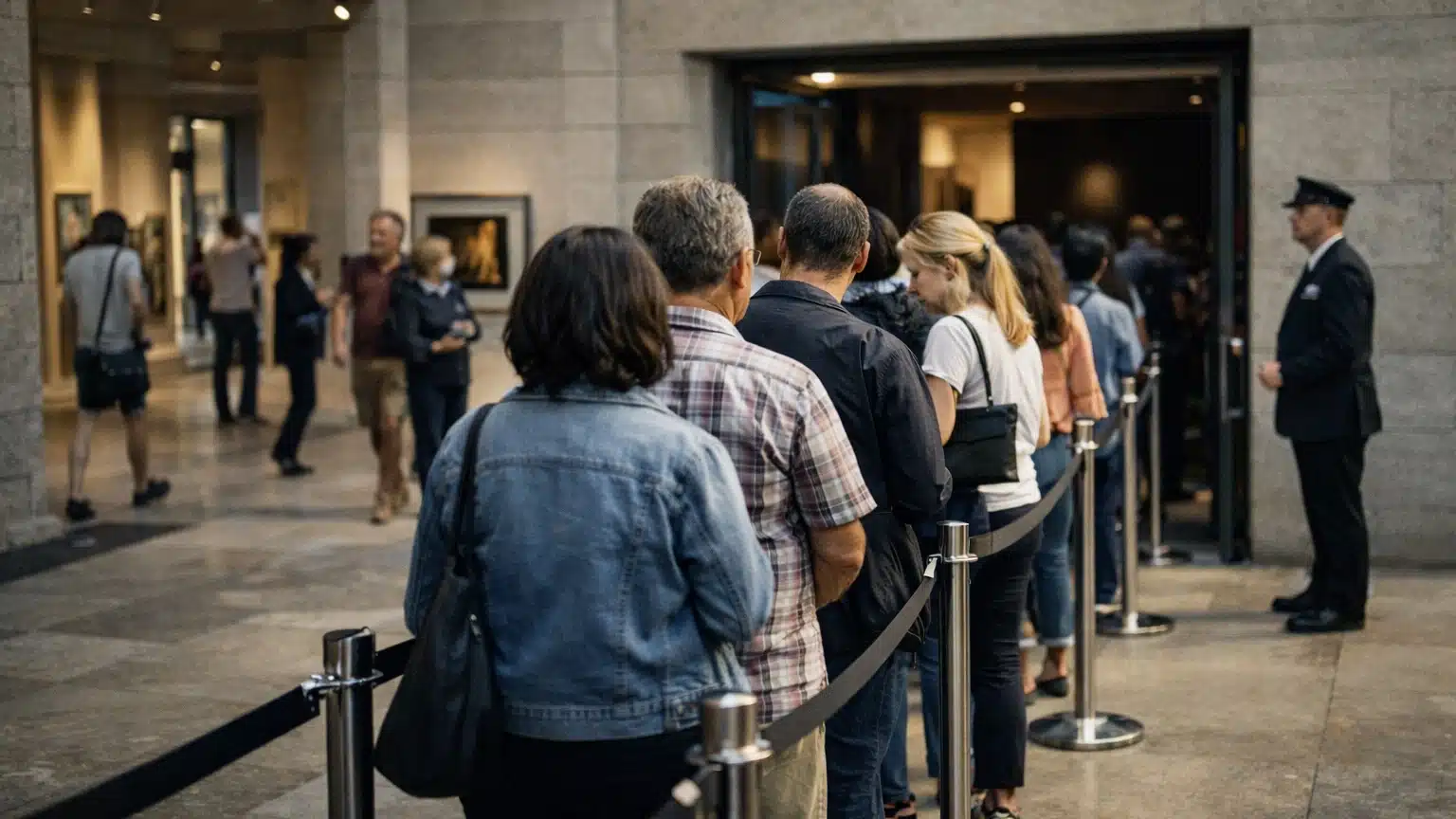
Museums are at the center of history and culture. They are places where people go to learn, admire and feel, surrounded by hundreds of years-old artifacts, science exhibits, one-of-a-kind artworks and immersive experiences. People go to them with an expectation of safety and comfort. In the end, that is what museum security is all about: keeping collections, buildings, staff and visitors safe while ensuring that galleries are open and welcoming.
Museums all over the world have similar security issues, and they need strong solutions to keep their valuable collections safe and make sure visitors have a good time. How can they do this? Installing a strong modern security system that includes physical barriers, trained staff and the latest monitoring technologies that work together to make several layers of protection. Good security plans help the organization by making its mission stronger and getting more people involved in the community.
This article dives into the challenges museums face today when it comes to security and how they can be addressed. Whether managing a national museum or a small community gallery, understanding these basics is essential.
Key Takeaways
- Museum security is a multi-layered approach that uses physical barriers, trained security personnel and advanced technology to protect valuable collections, keep visitors and staff safe, preserve cultural heritage and make sure that visitors have a good time.
- Risk assessments are essential to creating effective museum security. They help find threats like theft, vandalism, environmental hazards and violence, and can guide decisions about which security measures to prioritize and how to best use resources.
- Modern museum security combines technology with people. AI-enhanced CCTV analytics, intrusion detection, RFID tagging, environmental monitoring and well-trained security staff who focus on both protecting and engaging visitors all help to keep a balance between security and accessibility.
Understanding the Scope of Museum Security
Museums are special places due to the fact that they typically hold high volumes of valuable items, including artwork, historical artifacts, original documents, maps, scientific samples and more. Because of this, they’re at risk for things like theft, vandalism, accidental touching and environmental damage. A single incident can cause irreplaceable loss. At the same time, religious or cultural museums can be the target of hate-based violence.
Stopping theft is only one part of security. It serves multiple interconnected purposes: preserving cultural heritage, ensuring safety and maintaining public access. Museums can fulfill their missions of education and preservation at the same time when these goals are in line with each other:
Protecting Collections
Museum security’s job is to keep paintings, sculptures, archaeological objects and archives safe from theft, intentional damage or unintentional harm. Events like the 2025 heist at the Louvre in Paris show how even the most secure museums can still have exploitable vulnerabilities. Museums need to find a way to protect their collections while still giving visitors a good experience. This means putting up barriers between visitors and valuable exhibits that still let people interact with the art and artifacts on display.
Life Safety and the Visitor Experience

Museums must protect visitors and staff from fire, structural failures and emergencies, like the 2009 Holocaust Museum shooting. Crowd surges at blockbuster exhibitions, medical emergencies in galleries and evacuation scenarios all require planning to avoid disaster and reduce harm. In these situations, security staff often serve as first responders before emergency services arrive.
Preservation
Many of the pieces in museums are temperature-sensitive, separately stored or regularly worked on for their long-term preservation. Security is often responsible for controlling who can get into climate-controlled storage, limiting how fragile objects can be handled, and making sure that standards for conservation are met. There is always a chance of damage when someone opens a vault or handles an artwork, but security protocols lower that risk.
Reputation and Loans
Robust security is essential to secure high-profile loans from other institutions. Before lending a 16th-century masterpiece, art galleries and national museums will audit your security systems, insurance coverage and incident history. Poor security means no loans, which limits exhibition programming. A strong security strategy not only protects collections but also enhances the organization’s reputation and supports its community outreach initiatives.
What the Threat Landscape Looks Like Today
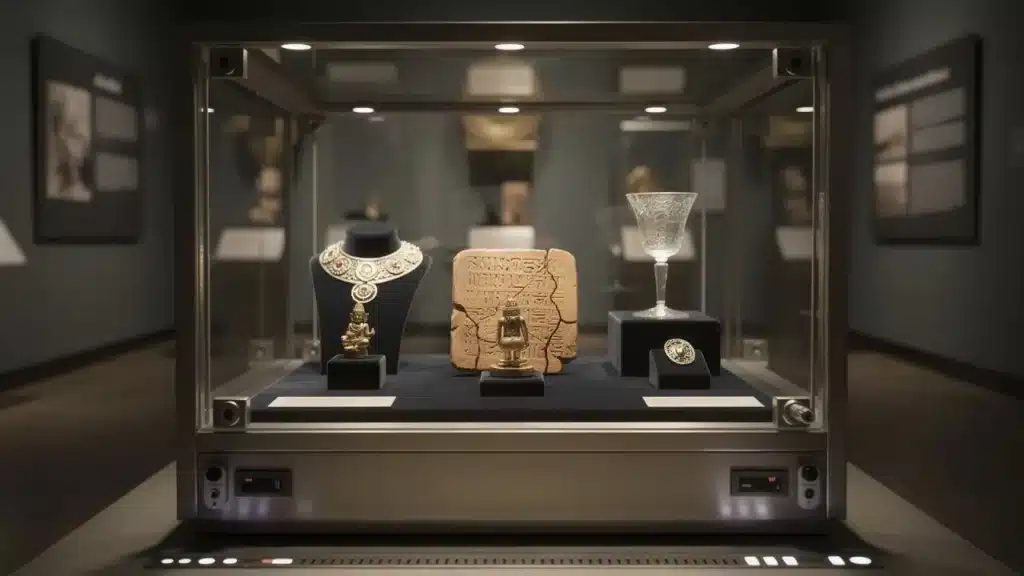
A risk assessment is the first step in creating a security system, before choosing any hardware or software. Without understanding what you’re protecting against, investments in cameras, alarms and guards may address the wrong threats entirely. What are these key risks and threats that museums face?
- Theft of small objects: Jewelry, coins, figures and small antiquities can be concealed and removed quickly.
- Vandalism of famous works: High-profile paintings attract attention from protestors and disturbed individuals.
- Internal theft from storage: Staff with access can remove objects over time without detection, like this incident at the British Museum that was uncovered in recent years.
- Cyber threats: Collection databases, donor records and digital archives contain valuable information vulnerable to attack.
- Violence: Museums showcasing a specific religion, culture or event in time may be at a higher risk of hate-motivated violence.
- Environmental and disaster risks: Depending on the specific location of a museum, there may be risks for earthquakes, wildfires, floods, hurricanes and other natural disasters.
Assessing Weaknesses
Another important part of risk assessment is identifying security vulnerabilities and weaknesses that could be exploited. Common vulnerabilities include unsecured side doors, blind spots in older CCTV systems installed decades ago, poorly supervised study rooms and outdated key control in buildings opened before 1970. Additionally, many museums occupy historic structures that were never designed for modern security requirements, so they lack many inherent security features that modern buildings have.
Evaluating Likelihood, Impact and Priority
Not every threat or vulnerability carries the same weight. Museums can rank risks using a simple framework evaluating likelihood, impact and priority. For example, a visitor touching artwork has a medium to high likelihood, a low to medium impact, but is of high priority. Organized theft, on the other hand, has a very low likelihood of happening but a very high impact, so it’s of high priority.
This matrix can be particularly helpful when budgets are limited because it can indicate which mitigations need to be prioritized.
Continuous Review
Risk assessments should be conducted annually or for each major exhibition. High-value loans often come with strict 24/7 monitoring requirements that may exceed your current capabilities. Review your threats before signing loan agreements.
Check out these guides from the National Park Service to find out more about how to do risk assessments at museums.
Physical Protection Measures
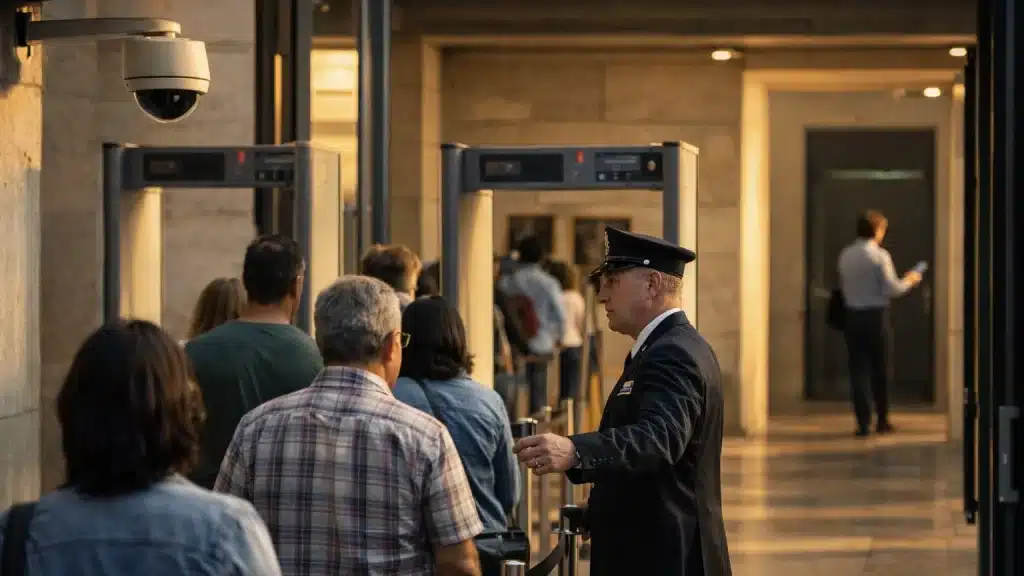
Physical security is the visible and structural backbone of any museum security program: it’s the doors, locks, barriers, cases and patrol patterns. These measures deter opportunistic threats and slow down determined ones. Surveillance systems enable security staff to watch over galleries and exhibits, providing continuous oversight.
Securing Entrances, Exits, Perimeters and Windows
Preventing unwanted visitors (like thieves or active shooters) from entering a building and carrying out their attack is a major priority for museum security. Museums can be high-traffic, with staff, students, guests and transport teams coming in and out daily.
On the outside of the building, all public and staff entrances need high-security locking hardware, door contacts that detect forced entry and cameras pointed at each entrance from at least two angles. Reinforced doors with locks that can’t be picked are the first line of defense in museums. Loading bays require separate security protocols since valuable shipments arrive and depart through these areas.
At main guest entrances, visitor screening, including things like bag checks and metal detectors, should be used to keep weapons and tools out of galleries. Visitor routes should be separated from service corridors so the public cannot easily follow staff into restricted areas. Clear signage and architectural design can create this separation without creating obtrusive barriers.
Windows and skylights in older galleries (especially large 19th-century windows in older buildings) are vulnerable entry points. Many historic thefts occurred through windows that seemed too small or too high to be practical entry points (for example, the 2015 International Boxing Hall of Fame burglary, the 2019 Green Vault heist, or the 2025 Louvre Heist. Laminated or security glass, window locks and intrusion sensors address these weaknesses.
Galleries and Display Cases
The goal of museum security is to make it hard for people to access sensitive spaces without permission, but not to make galleries feel like fortresses. High-security glass cases can be used to keep old works of art and fragile items safe. Pedestals with tamper-resistant fasteners can make it more difficult for thieves to get to pieces on display, and pressure-sensitive mounts can help notify security when something has been taken out of its spot.
Protecting Storage and Study Spaces
Storage rooms, conservation labs and reading rooms often hold high-value but less visible objects, like gold artifacts, crown jewels and irreplaceable manuscripts. These spaces may contain thousands of items never seen by the public, making theft detection slower.
Solid-core or steel doors with deadbolts or electronic strikes, restricted vault access and separation of high-value collections into inner rooms can all help to reduce risk of theft and damage. When paired with alarm systems, these can improve after-hours security.
Access lists must be strict: only essential people, like registrars, conservators and senior curators with clear justification, can access specific vaults. When an outsider, like a researcher, is handling things, they need to be watched and their visit needs to be recorded. Whenever possible, these areas should have CCTV cameras to hold people accountable and stop opportunistic theft.
Regular inventory checks reconcile database records with physical objects on shelves or racks. Discrepancies should be investigated immediately; objects don’t walk away on their own.
Key Control and Access
To manage who can get into which spaces in a museum, advanced access control systems and clear key policies should be established. Rather than simple door locks that can be opened with basic keys, more advanced locking and access systems should be used. In museums, this usually means electronic access cards that can log every entry into high-risk rooms. This helps keep people from breaking into secure areas and can help with investigations if someone does break in.
When museum staff leave the institution, their access must be revoked immediately… disgruntled former employees can become a significant threat.
Human Factors: Staff, Guards and Training
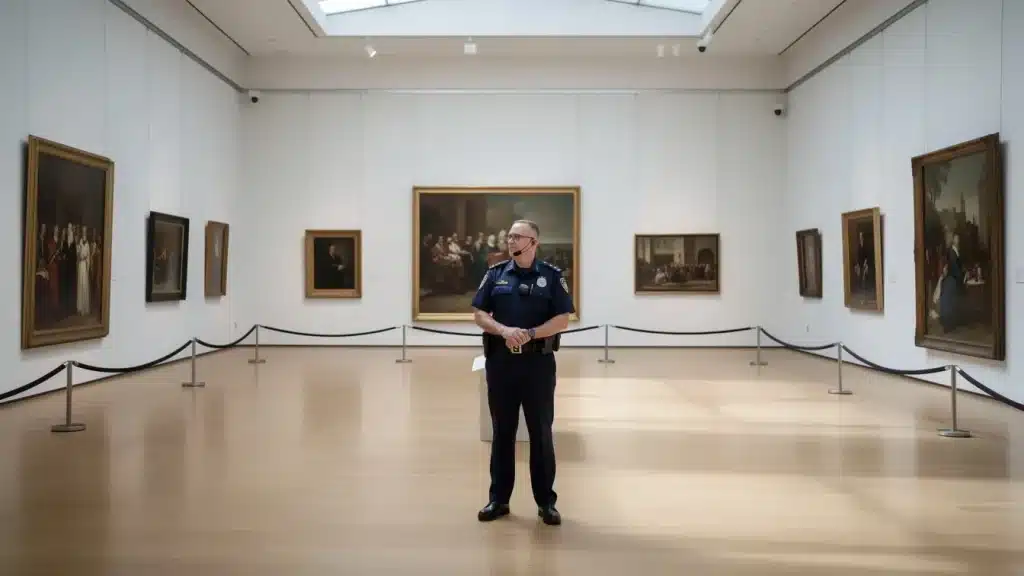
Even the best hardware fails without trained people who understand policies and visitor behavior. The security team is what makes or breaks your program in the end.
Roles and Responsibilities in Museum Security
There are many different jobs that museum staff can do, and each one needs a different set of skills:
- Gallery guards and control-room operators: Front-line observers who manage visitor interaction and monitor cameras, alarms and communications. Many museums look for individuals over the age of 21 with a security license or certification, first aid certifications, a high school diploma/GED and a clean background check.
- Conservators: Ensure handling protocols protect objects. They typically need to be educated with at least a master’s degree in conservation and have specialized skills.
- Front-of-house teams: Conduct bag checks, manage ticketing and initial visitor contact. Depending on the specific role within the team, these members can be volunteers or paid staff, usually with a background in security or customer service.
- Leadership: Set security culture and authorize policies. Leadership roles are usually filled by people who have significant administrative, academic and/or fundraising experience. A museum director will likely need to be educated to a master’s or PhD level and have several years of experience within a museum environment.
To learn more about the different types of jobs in museums, you can visit the Bureau of Labor Statistics website.
Improving Staff Confidence with Training
To build the most resilient staff, training needs to be comprehensive. This means covering visitor interaction, de-escalation techniques, recognizing suspicious behavior, emergency procedures and the correct responses when different alarms are triggered. A security guard who doesn’t know how to respond to a fire alarm or a violent patron is a liability, not an asset.
Training should include scenarios. For example: What do you do when a visitor is sketching too close to a painting? How do you respond to someone who refuses a bag check? Practicing these things can help to build confidence so that staff feel prepared when situations arise.
Promoting a Visitor-Friendly Approach
While security at museums is a very serious matter, guards must be approachable to visitors to ensure they feel welcome. They should be able to answer questions and act as informal guides while still enforcing “do not touch” rules. This creates a positive atmosphere rather than an intimidating one. Visitors who feel respected may be less likely to cause problems.
Incident Reporting and Support
Guards and other museum staff should feel comfortable reporting incidents; if they do not (either because they fear retribution, don’t feel like the concern will be deemed important enough or are unaware of how to), situations may go unresolved and potentially escalate.
Simple, standardized incident forms can be used to document incidents, from near misses to actual breaches. While a near-touch of a piece of artwork from 1850 might seem minor, patterns may actually reveal that certain objects need additional protection because they are frequently at risk.
At the same time that objects need to be protected, people do too. The stress of constant vigilance, night shifts and dealing with difficult visitors can take a toll on security staff. This can lead to exhaustion and missed threats. To help people avoid burnout and stay focused and at their best, give them regular shift changes, enough breaks and access to strong support resources.
Fire Safety and Disaster Preparedness
Fire and disaster planning directly determines collection survival. The 2004 Momart warehouse fire in London destroyed works by major artists, including Tracey Emin and the Chapman Brothers, demonstrating that fire protection extends beyond museum walls to storage facilities. Museums, galleries and storage facilities must take appropriate measures to protect their collections against disasters:
- Fire Detection and Suppression: Modern fire alarm systems are essential tools for detection, as they can provide security teams with specific location data and enable a quicker response. Smoke and heat detectors should have coverage across all spaces, including HVAC (heating, ventilation and air conditioning) ducts and ceiling voids. When a fire does break out, the right suppression system must be chosen to prevent further damage. Pre-action sprinklers minimize water damage from accidental discharge, while gas systems protect works on paper and canvases.
- Disaster Plans for Natural Hazards: Wildfires, floods, earthquakes, power outages and civil unrest pose existential threats to collections. For example, the 2018 fire at Brazil’s National Museum destroyed ~90% of its 20 million artifacts and was a catastrophic loss that reshaped how institutions worldwide approach fire protection. While disasters can be unpredictable, from a wildfire breaking out to a tornado sweeping through an area, they can be planned for to ensure the minimum damage possible when they do occur (through seismic isolation displays, strategic storage elevation, etc.).
- Salvage Priorities: Everything in a museum or gallery is valuable, but some things are more important to culture than others (for example, originals vs. replicas). During a disaster, there’s little to no time to decide what matters most. That decision must be made in advance. Up-to-date “grab lists” help to identify the top 50–100 objects to save first, with catalog numbers and exact locations. To learn more about salvaging different types of work, take a look at this guide by the Western Association for Art Conservation.
- Drills and Coordination: Separate but coordinated plans should address evacuating people first, then (if safe) relocating priority objects such as medieval icons or crown jewels. Human safety always comes before collections, but planning for both scenarios reduces losses. Regular joint exercises with local fire brigades and emergency services build relationships and identify problems. Precautionary walk-throughs in galleries built before 1900 with complex layouts help firefighters understand the building before an emergency.
Using Technology to Improve Physical Security
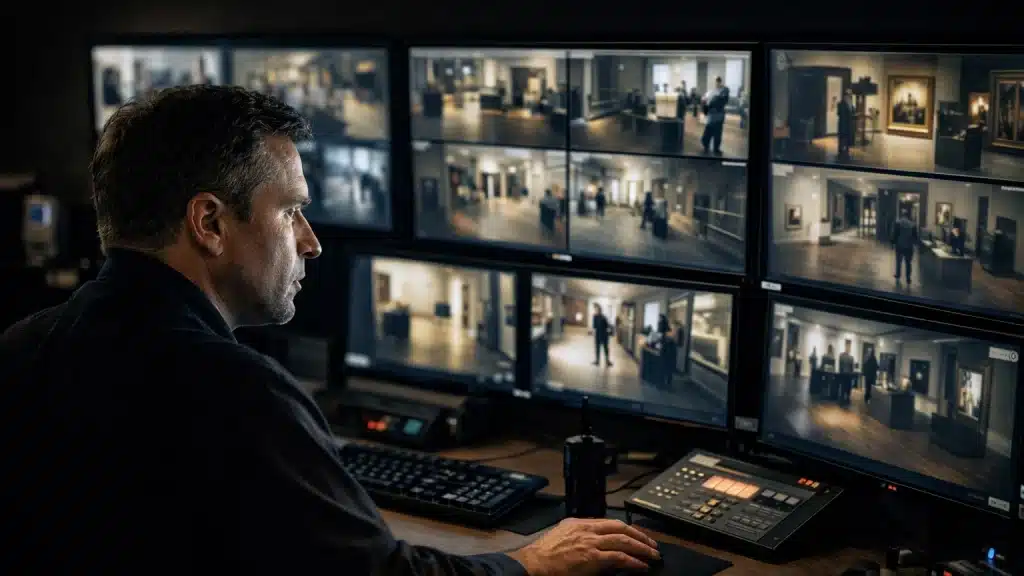
Electronic systems are a big part of museum security in the 21st century. They help museums find and deal with threats faster than people can on their own. Customized security solutions use the latest technologies to meet the specific needs of each museum. These systems protect collections and make the visitor experience better. Technology extends human capabilities, but it does not replace people.
An “onion model” is a layered defense strategy that can be used by museum security that combines physical barriers with advanced technology.
CCTV and AI-Enhanced Surveillance
CCTV cameras are essential to any and all security operations in museums. They are useful tools for monitoring spaces, identifying threats and investigating incidents. High-resolution cameras should be used to cover entrances, galleries, loading bays and other areas open to the public or sensitive areas without a reasonable expectation of privacy (like storage spaces).
Camera systems can be integrated to include analytics for motion, loitering, object removal and weapon detection. This is done using artificial intelligence surveillance that analyzes footage for anomalies, and it can help reduce response times compared to older systems reliant on manual patrols watching multiple screens.
Intrusion Detection
Another way museums can detect breaches, especially after-hours, is through intrusion detection systems. This includes using door contacts, glass-break sensors, vibration detectors on cases and motion sensors. These systems can be zoned to minimize nuisance alarms; a motion sensor in a busy gallery can trigger constantly, eroding staff trust in the system.
Object-Level Protection
On an individual level, discreet sensors, tags or invisible zones configured around separate artifacts can detect touch, movement or sudden removal. These systems provide the last line of defense when perimeter security and access control fail.
But not every incident is intentional or malicious. Many incidents involve visitors getting too close or touching artworks rather than full-scale theft. Proximity detection addresses this common problem. Protected zones can be defined by drawing digital boundaries around a piece, like a historic document sitting on a pedestal or a mounted painting. When approaching hands or feet cross the predefined line, a sensor is triggered. Visitor alerts can include audible warnings, such as beeps or gentle reminders from gallery guards to respect the boundary.
As mentioned previously, logs of each near-touch event can help to identify high-risk galleries or installations. If one painting triggers 50 alerts per day while others trigger none, additional signage or barriers may be needed.
RFID and Sensors
Many museums now attach discreet Radio Frequency Identification (RFID) tags or sensors directly to frames, plinths or crates. These serve both security and conservation purposes. Active RFID enables location tracking: tags on paintings can help track their movement from storage to the gallery or to a temporary exhibition abroad.
For items within galleries, vibration and tilt sensors can detect attempts to lift a painting off the wall or move a display case. These sensors can instantly alert security, possibly even before the object leaves its mount, so action can be taken.
Environmental Monitoring
Many items in museums are hundreds of years old or made of delicate materials, so the conditions in which they are stored (whether on a gallery wall or in a storage facility) are very important to how long they last.
Environmental monitoring is essential for tracking temperature, relative humidity and light levels around sensitive works on paper or textiles. Anomalies, like a sudden humidity change near a 15th-century manuscript, trigger alarms and are logged for conservators.
Integration Platforms
Security management systems can combine access control, alarms, video and analytics into a single interface. This seamless integration allows control room operators to see exactly what triggered an alarm and pull up camera footage instantly. They can also be configured to automate responses when a threat is detected. For example, if a firearm is brandished in a gallery and detected by a camera enhanced with visual AI gun detection technology, a lockdown can be initiated and mass notification systems can be used to inform staff and guests of the situation within minutes.
Data and Privacy
Managing stored footage and visitor data responsibly always requires compliance with local privacy regulations.
Balancing Security and the Visitor Experience
Museums exist for visitors. Security must be strong but not oppressive; an overly fortress-like atmosphere drives away the community you’re trying to serve. To do this, follow these principles:
- Non-Intrusive Systems: Invisible zones, discreet cameras and subtle signage help avoid barriers and ropes around every object. Visitors should feel welcome to explore, not surveilled at every turn. The best security systems are largely invisible to casual observation.
- Security as Part of Interpretation: Guards can serve as gallery guides, explaining why visitors cannot use flash photography or lean on pedestals. This transforms enforcement into education… visitors understand and accept rules when they know the reasons.
- Crowd Management: People-counting sensors and timed ticketing manage capacity for large shows. Major exhibitions can attract overwhelming crowds; controlling entry helps prevent dangerous overcrowding and protects both visitors and artworks.
- Accessibility and Inclusion: Security procedures must accommodate visitors with disabilities, families with children and school groups without making them feel targeted. Bag checks should be quick and respectful. Alternative screening for people who can’t stand in line keeps access open for everyone.
To ensure that everyone is on the same page, posting signs in multiple languages and providing information about bag rules and photography before the visit helps things go more smoothly at the entrance.
Implementing and Updating a Museum Security Program
People should think of security as a program that is always running, not something that is set up once. It needs to change with collections, buildings and threats.
Planning and Budgeting
Exhibition schedules and building projects should be considered in multi-year security plans. Phased hardware upgrades spread out the costs while steadily improving protection. For big shows with high-value loans, you might need to set aside money for temporary improvements that are only needed for that show.
Policy Development
Written policies on access, keys, incident response and use of force require approval from leadership and legal teams. These documents create accountability and consistency. Without written policies, staff make individual judgments that may not align with institutional priorities.
Collaboration with Other Organizations
Working with insurers, national museum associations and local police helps to benchmark standards and fulfill loan conditions. Police can conduct site assessments, identifying vulnerabilities that internal staff might overlook. These partnerships enhance your security resources.
Testing and Maintenance
Regular testing of alarms, cameras, locks and backup power can aid in identifying problems before they matter. Systems can fail without annual testing, so documented maintenance schedules and vendor support ensure reliability.
Review and Improvement
Annual reviews using incident data, near-miss reports and visitor feedback can help to refine training, staffing and technology deployments. What worked last year may not address next year’s threats. The improvement process should be based on evidence gained from the security challenges and strengths of each particular institution.
Creating Safer Museums for People and Collections
Effective museum security is multi-layered, combining risk assessment, physical measures, trained people and modern technology into a unified program. No single element—not locks, not cameras, not guards—provides adequate protection on its own.
Protecting collections is inseparable from offering a safe, enjoyable and accessible visitor experience. Security that alienates visitors fails just as surely as security that allows theft. The world’s best museums create environments where people feel both welcomed and confident that the artwork and artifacts around them are secure.
Security systems must keep getting better, and teams must learn from their mistakes and use the right technology to keep collections safe for future generations. As threats change, like digital attacks, natural disasters caused by climate change and social unrest, security plans need to change too. Data-driven decision-making, continuous training and community engagement will remain fundamental to the effective preservation of cultural heritage worldwide.
Omnilert has worked to develop security solutions for museums that will evolve alongside this threat landscape. Our visual AI Gun Detection technology can be integrated with museums’ existing security cameras and any cameras installed as facilities grow. When a threat is detected and verified, our system can work to automate security workflows, emergency response and mass or emergency notifications to allow for a swift response.
Frequently Asked Questions (FAQs)
What are the main components of an effective museum security system?
A good museum security system includes physical barriers, trained security staff, advanced technology like CCTV and intrusion detection, and clear rules. This multi-layered approach keeps both valuable collections and people safe and protects cultural heritage.
How can museum security keep people and collections safe while still making visitors feel welcome?
Museum security’s goal is to keep collections safe without putting up so many barriers that people feel unwanted. This can be done with discreet technology, security staff who are well-trained and friendly with visitors, and clear communication that encourages respectful behavior around the exhibits.
What do security guards do to keep museums safe?
Security teams watch over galleries, work to fix problems quickly, kindly enforce rules and provide guests with helpful information. All of these things make the environment safer and more inviting.
How important is risk assessment in museum security?
Risk assessments are the very first step in understanding what the vulnerabilities, threats and needs of a museum are. When these are identified, risk assessments can help determine how to use resources and put in place specific security measures.
What kinds of technology do modern museum security systems use?
Modern museum security uses a combination of CCTV, AI analytics, motion and intrusion detectors, RFID tagging, environmental monitoring sensors and access control systems. These technologies work together to send alerts in real time, stop theft and help with preservation efforts.