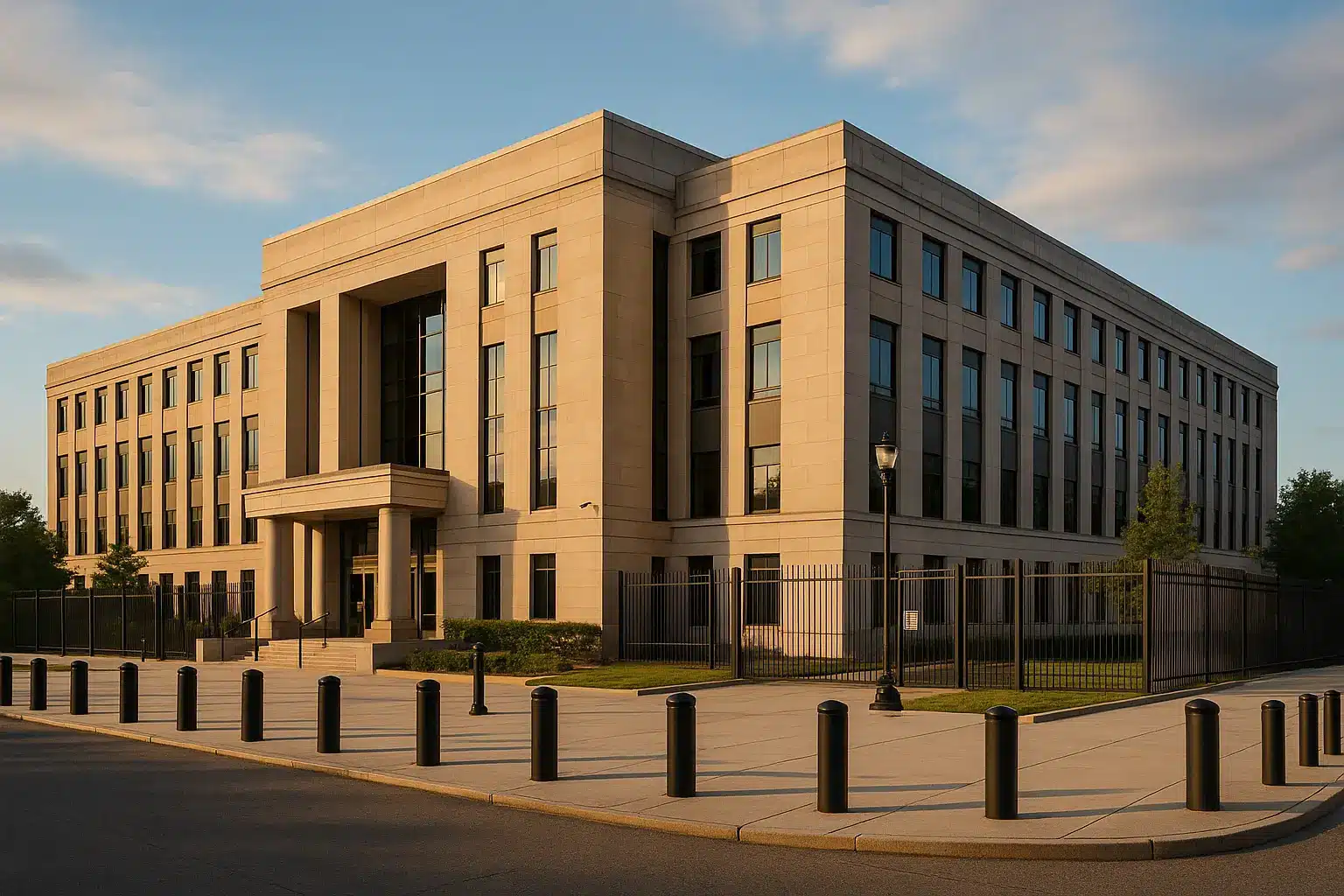
Government buildings are some of the most important and most vulnerable buildings in any community. From protecting sensitive data to public servants and visitors, these spaces need a balance of accessibility and security. As threats evolve, so must the strategies to counter them.
Good government building security is a combination of physical design, modern technology and thoughtful planning. This includes layered measures such as access control, surveillance systems and environmental design that naturally deter threats. Crime Prevention Through Environmental Design (CPTED) principles play a big role, using features like lighting, landscaping, and sightlines to create safer, more intuitive spaces. When done well, these enhancements provide security without creating a fortress-like atmosphere, welcoming the public while quietly strengthening security.
Physical barriers like fencing, reinforced entrances and vehicle mitigation systems are the outermost layer of defense. Together, these elements prevent unauthorized access and support a comprehensive security posture.
In this article, we will dive into the components of government building security, from risk assessments and specialized safety features to real-world case studies and new technologies that help prepare for today’s evolving threats.
Key Takeaways
- A multi-layered security system for government buildings is necessary. This includes physical access controls, surveillance, alarm systems and remote monitoring to secure and respond to threats.
- Advanced technology like AI gun detection systems improves threat detection and response, ensuring that security protocols are integrated with emergency response measures.
- Advanced surveillance uses high-definition CCTV cameras with AI behavioral analytics, enhancing monitoring and threat detection.
- Regular risk assessments, personnel training and infrastructure upgrades are necessary to maintain security in government facilities, allowing for an adaptive approach to evolving threats.
- Ballistic-grade or blast-resistant windows and doors can be used to reinforce buildings for an extra layer of protection against threats.
- Professional security guards provide on-site response and are a visible deterrent.
Government Building Security Components

A government facility security system is made up of multiple layers of protection that work together to boost safety, prevent unauthorized access and respond to emerging threats. These systems must meet strict guidelines set by agencies like the Interagency Security Committee, so the balance between public access and secure operations is a tough and necessary task. Thoughtful design elements – like clear sightlines, unobstructed circulation paths and intuitive layouts – help with this balance by increasing visibility and making spaces feel safe without feeling restrictive. Government buildings use a combination of active and passive security to achieve this balance.
Core components of a security system are physical access control, surveillance cameras, alarm systems and remote monitoring. Today’s systems integrate advanced technologies like biometric authentication, AI-powered surveillance and high-definition IP cameras that provide 24/7 coverage and sharper situational awareness. Access control often uses electronic keycards, biometric scanners and multi-factor authentication to ensure only authorized people can enter restricted areas. Together, these technologies support proactive threat detection and rapid response – both critical in government environments.
Understanding these components shows how each contributes to a secure yet welcoming facility. Designing government buildings requires blending protection with public access, creating spaces where safety and openness coexist. Government facilities benefit from a layered security approach that combines traditional security with advanced technology to address a wide range of threats.
Physical Access Control Systems
Physical access control systems (PACS) regulate who can enter secure areas in government buildings. These systems use technology like keycard readers and biometric scanners to manage authorized entry, so only people with the right credentials can access sensitive areas. Biometric verification methods like fingerprint or facial recognition provide an extra layer of security by preventing access credentials from getting lost or forged.
Physical access control systems also use security personnel and physical barriers to secure entry points. These combined efforts limit entry to authorized people, secure critical areas from unauthorized access and potential threats, and allow them to enter.
Surveillance Cameras
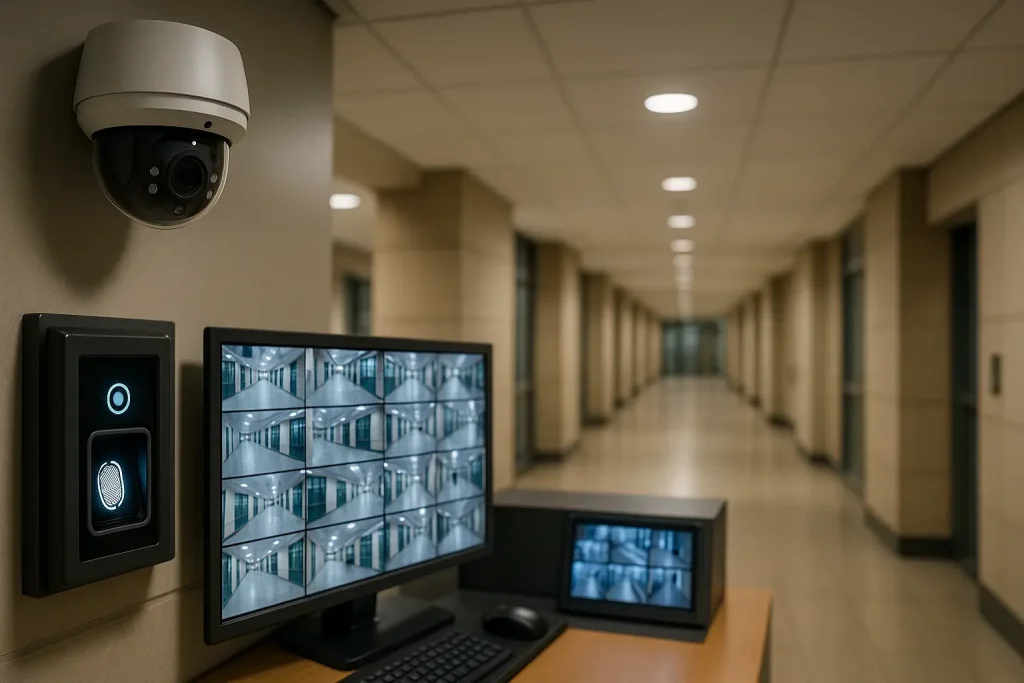
Surveillance cameras are essential in monitoring activities in government buildings. Their roles are:
- Real-time alerts
- Incident documentation
- Deterrent to potential criminals through strategic placement
- Evidence for investigations. These functions make them critical for the prevention and investigation of crimes.
Surveillance cameras provide continuous monitoring to detect and address unusual activities. This not only secures the facility but also the personnel and visitors by having constant watch over critical areas.
Alarm Systems
Alarm systems detect unauthorized access and send notifications to security personnel or law enforcement. These systems are critical for rapid response capabilities, which are necessary to mitigate threats before they escalate. Sensors in alarm systems can detect various forms of unauthorized entry, including breaches through doors, windows and other access points.
Remote Monitoring
Remote monitoring allows for continuous surveillance of government facilities, allowing operators to respond to incidents from a distance. This is useful for monitoring multiple locations at the same time, helping to ensure that any security threat is detected and addressed quickly. Operators can alert teams and notify authorities during incidents, which further enhances remote monitoring systems.
This continuous monitoring ensures government buildings are secure even when physical security personnel are not on site.
Advanced Technologies for Government Security
Advanced technologies are changing the landscape of government security, offering new solutions to both physical and cyber security. Effective security now blends traditional physical measures with cutting-edge cybersecurity to create a total defense strategy. Network protection includes firewalls, data encryption and network monitoring to protect against digital threats. This way, government buildings are protected against various internal and external threats.
New technologies like AI gun detection systems are changing the way government facilities detect and respond to threats. These solutions provide a proactive layer of protection by detecting firearms the moment they appear, often before a shot is fired, giving you more time to respond.
AI Gun Detection Systems
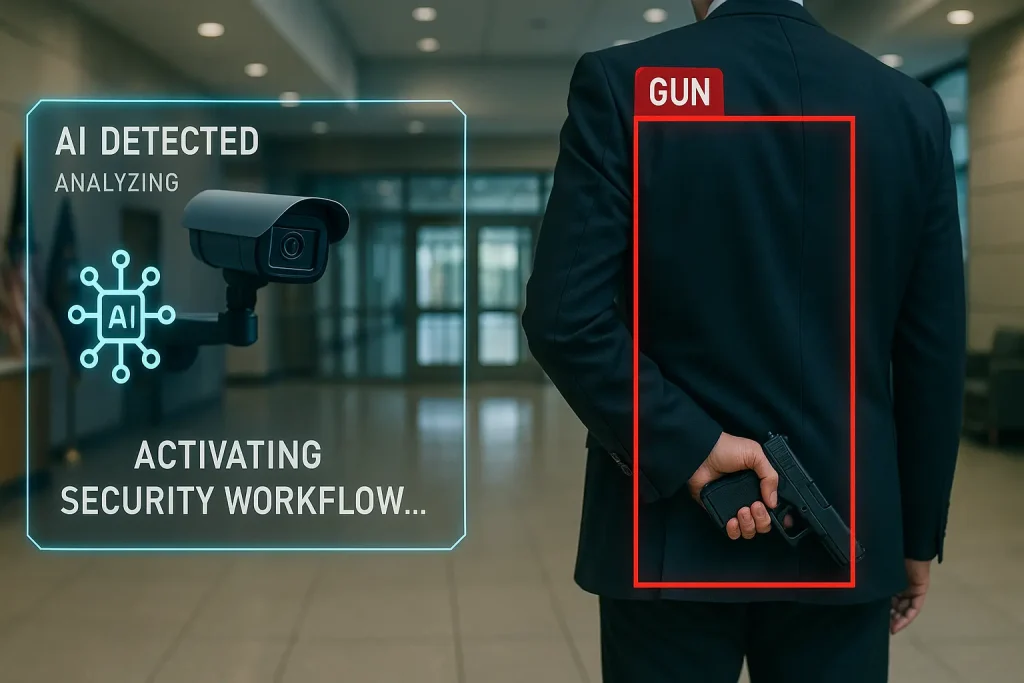
Omnilert’s AI gun detection platforms continuously analyze video feeds to spot visible firearms in real time. It can:
- Distinguish firearms from everyday objects.
- Identify weapons in seconds.
- Trigger automated response workflows across multiple connected technologies.
- Save lives by delivering instant, actionable intelligence.
By providing fast and accurate firearm detection, these systems provide a window of time to assess the situation, alert personnel, initiate a lockdown down and coordinate with first responders. This early detection can reduce response times and prevent incidents from escalating.
Integration with Emergency Protocols

Modern AI gun detection systems integrate with existing emergency response plans, so all actions taken during a crisis are consistent, coordinated and in line with current procedures. This includes real-time communication, automated alerts and synchronized activation of related security systems.
Omnilert’s solution fits into your existing plans without requiring you to rewrite your procedures. Once a weapon is detected, Omnilert can automatically lock down, send notifications, activate alarms and deliver step-by-step instructions, so every security component works together to protect lives and property.
This integration makes AI gun detection a powerful and efficient addition to any government building security strategy.
Specialized Security Features
Specialized security tools, like panic buttons, lockdown systems and emergency notification platforms, are key to protecting government facilities. These features enable a fast response when an emergency happens, so staff can protect people and secure the building in seconds.
Omnilert’s Emergency Notification System takes this protection to the next level by delivering instant, multi-channel alerts via SMS, email, voice, desktop and mobile. The platform can also integrate with existing security infrastructure to automate key response actions. When a panic button is pressed, or a threat is detected, Omnilert can trigger workflows that lock doors, sound alarms, notify staff and first responders and provide real-time instructions across the organization.
By combining panic devices, lockdown capabilities and an intelligent notification system, government agencies can add an extra layer of defense, boosting overall safety, readiness and resilience.
How to Implement Security Measures
Implementing security measures in government buildings requires a multi-layered approach that includes physical security, personnel training and technological integration. A total approach ensures all vulnerabilities are addressed, protecting personnel and property. The Federal Protective Service, a division of the Department of Homeland Security, provides law enforcement and security services to federally owned and leased facilities, ensuring compliance with federal security standards for government buildings.
A risk-based budgeting approach helps government agencies allocate resources efficiently, focusing on the most critical threats. Regular assessments and updates to security protocols are key to adapting to new threats and maintaining high security levels.
Risk Assessments
Regular risk assessments are key to keeping government facilities secure. These assessments help identify vulnerabilities, find weaknesses in physical and digital infrastructure and uncover gaps that would otherwise go unseen. By looking at everything from building layout and access control to cyber exposure and emergency response processes, agencies can get a true picture of their risk landscape.
Regular reassessments also help ensure security strategies can evolve with emerging threats. Whether it’s new technology, changing public access needs or shifting threat patterns, periodic reviews allow government teams to adjust their defenses. This proactive approach makes them more resilient and prevents outdated measures from putting people at risk.
In the end, effective risk assessment can lead to tailored, data-driven security strategies that make government buildings safer and more prepared. By understanding the risks and putting plans in place, agencies can create a more secure, coordinated working environment for staff and the public.
Personnel Training
Ongoing training for federal employees and security personnel ensures preparedness and an appropriate response to various security threats. Training programs should include emergency response techniques and updates on current security technologies.
Training enables staff to detect and respond to potential threats, ensuring all personnel can handle emergencies. This is a critical component of a total security strategy as well-trained personnel can improve overall safety.
Infrastructure Upgrades
Periodic upgrades to security infrastructure help adapt to new threats and technological advancements. Upgrades should be systematic to align with the latest security standards and technological advancements.
Regular updates to security infrastructure, technology upgrades and compliance checks help maintain safety in government buildings. By staying current with technological advancements, government facilities can be well protected against emerging threats.
Government Building Security Case Studies
Real-world case studies provide valuable insights into security measures in government facilities and businesses.
- The Killing of Two National Guard Members – On November 26, 2025, two National Guard members were ambushed near the White House while they were on duty. One was killed, the other seriously wounded.
- Dallas, Texas ICE Facility – In September of 2025, there was a shooting at an ICE facility in Dallas. No officers were hit, but it’s being investigated as a targeted attack.
- Prairieland ICE Detention Facility – On July 4, 2025, there was a coordinated attack on an immigration detention center. The group used fireworks as a distraction and then opened fire with rifles. One police officer was injured.
- Virginia Beach Shooting Incident – In 2019, a disgruntled city employee shot and killed 12 people and injured four others at a municipal building in Virginia Beach.
After the 2019 Virginia Beach shooting, significant changes were made to security protocols for municipal buildings.
These case studies highlight how important it is to continually adapt new strategies and technologies to respond to emerging threats.
Choosing the Right Security for Your Government Facility
Selecting the right security for government facilities requires customizing plans to address unique operational priorities and vulnerabilities. Tailoring security approaches ensures specific threats and operational needs are met.
Working with experienced security contractors allows government facilities to benefit from expert knowledge and best practices in security system design and implementation. Compliance with relevant laws and regulations, such as the General Services Administration (GSA), is key to the legality and effectiveness of security solutions and services.
Customized Security Plans
Customizing security planning is important because different government agencies have different needs and risks. Security plans should focus on the specific functions and threats of each facility, ensuring that systems are built to meet those needs.
By addressing the unique requirements and risks of each agency, customized security plans can provide better protection. This method makes sure that all security measures are tailored to the specific needs of the facility.
Working with Contractors
Working with a skilled security contractor can enhance security measures by leveraging their knowledge in designing and executing custom security solutions. Experienced contractors bring specialized knowledge to design security systems that enhance safety in government buildings. This collaboration ensures security systems are efficient and compliant with regulatory requirements.
Ensuring Compliance
Meeting compliance standards set by authorities like GSA ensures security systems are both effective and valid. Compliance with federal and state security standards is mandatory for government facilities and requires adherence to specific regulatory requirements.
Compliance with all security measures ensures the legal and operational integrity of the security solutions. Compliance is key to the overall effectiveness and legality of security measures in government buildings.
Conclusion
Securing government buildings requires a multi-layered approach that combines physical security, technology and planning. From robust physical access control systems and surveillance cameras to AI gun detection and seamless integration with emergency protocols, each piece plays a critical role in government facility security.
Real-world case studies like the Virginia Beach shooting show the importance of continuous improvement and adaptation in security strategies. By customizing security plans, working with expert contractors and complying with regulations, government agencies can create safer and more secure environments for their operations and personnel.
Compliance with federal security standards includes planning systems that meet current and future requirements. Government agencies and professionals establish mandatory design standards for security measures for federally owned buildings to have a consistent and effective approach to safety. Government building security is changing, but with the right strategies and solutions, it can be effective and sustainable.
Omnilert provides advanced detection, automated response, and multi-channel communication capabilities that help government agencies strengthen their security strategies to better protect their facilities, personnel, and communities.
Frequently Asked Questions (FAQs)
What are the four types of government building security?
The four types of security are physical security, cybersecurity, information security and operational security. Each type protects assets, data and operations from different threats.
What are the components of government building security?
The components of government building security are physical access control systems, surveillance cameras, alarm systems and remote monitoring, which together enhance safety and deter unauthorized access.
How do AI gun detection systems improve security in government buildings?
AI gun detection systems improve security in government buildings by detecting firearms in seconds and sending automated alerts, giving security personnel time to act and potentially prevent violence.
Why should security plans be customized for different government agencies?
Customizing security plans for different government agencies is important to address their unique operational priorities and vulnerabilities, resulting in more tailored and robust security measures. Working with security contractors can help government facilities as they bring specialized knowledge and best practices to design and execute custom security solutions.