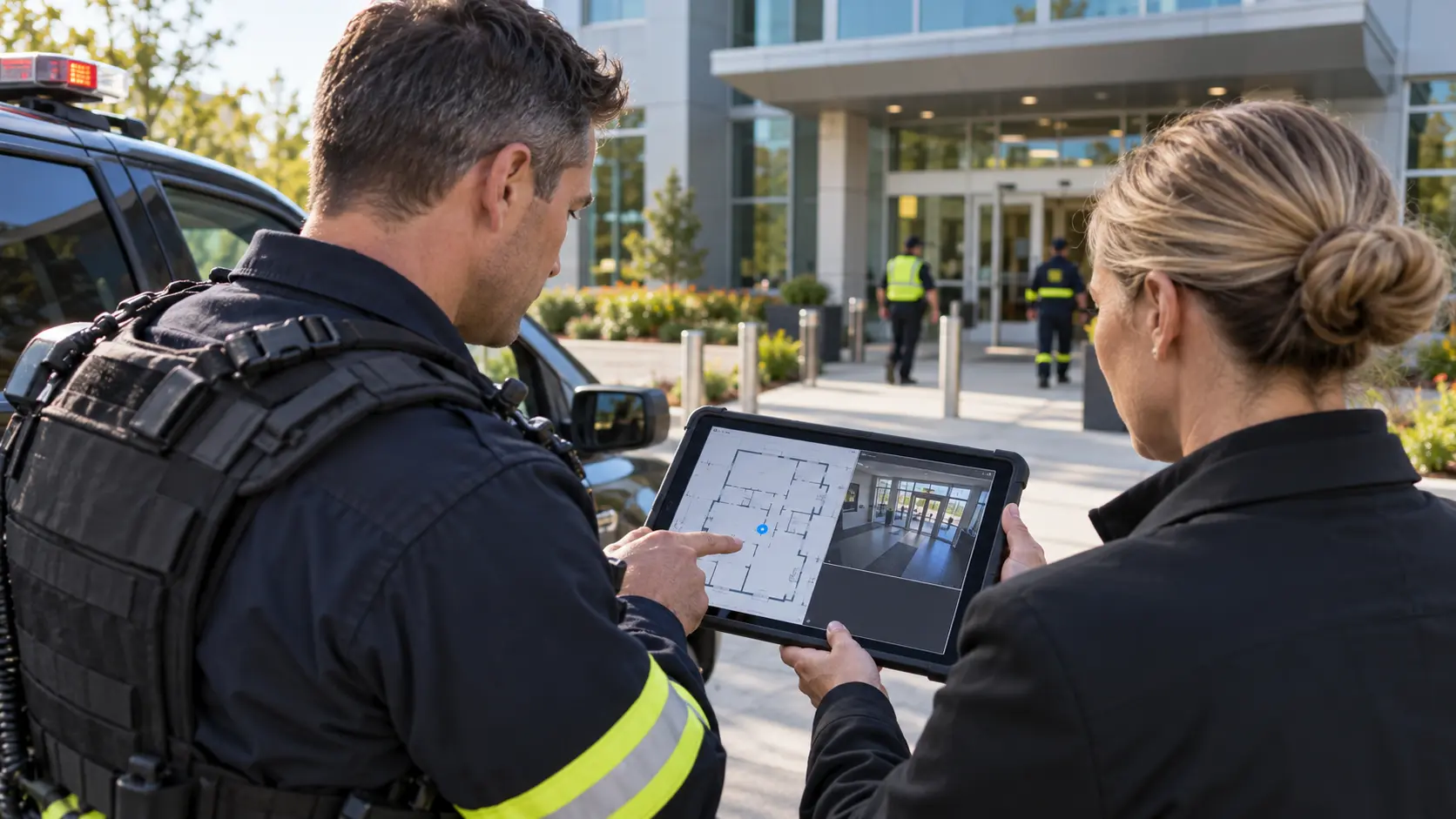
An officer responding to an alarm may know the building address but still need to find the right entrance, identify the affected floor, and determine what is happening inside. At the same time, the organization that reported the incident might already have camera footage and location information that could help. Getting those details to the officer before arrival can significantly impact how the response goes.
That challenge was central to our September 29 webinar, Intelligent Threat Detection to Modernized Emergency Response. Omnilert Co-Founder Ara Bagdasarian joined Eric Polovich, Omnilert’s Director of Product and Partner Enablement, and Jonathan Fischer, Chief Revenue Officer at SOS Technologies, to discuss how earlier threat detection can connect to a better-informed emergency response.
Drawing on Fischer’s experience as a first responder, the conversation examined where information gets delayed, how the Omnilert and SOS Technologies integration supports coordination, and which decisions need to remain with people.
Where Emergency Response Loses Time
Fischer identified three common sources of delay: finding information, relaying it, and establishing responsibility.
Finding information might mean searching camera feeds, locating an incident on a floor plan, or identifying a site contact. Relaying it introduces another challenge: details may pass through several people or systems before reaching the responding team, creating opportunities for information to be misunderstood or details to be left out.
Then there is ownership. An alert could reach several recipients without making clear who should assess it, initiate protective measures, or escalate the situation to outside responders. Each of those responsibilities needs to reflect the organization’s policies and the nature of the incident.
Polovich highlighted that these pain points that hinder action aren’t always big or dramatic: “They’re usually small gaps that accumulate.” A few moments spent finding video, making another call to confirm a location, or a pause to identify the decision-maker can all slow the response. Connecting those steps gives organizations an opportunity to preserve the information they already have and reduce the work required to pass it along.
What Responders Need to Know Before They Arrive
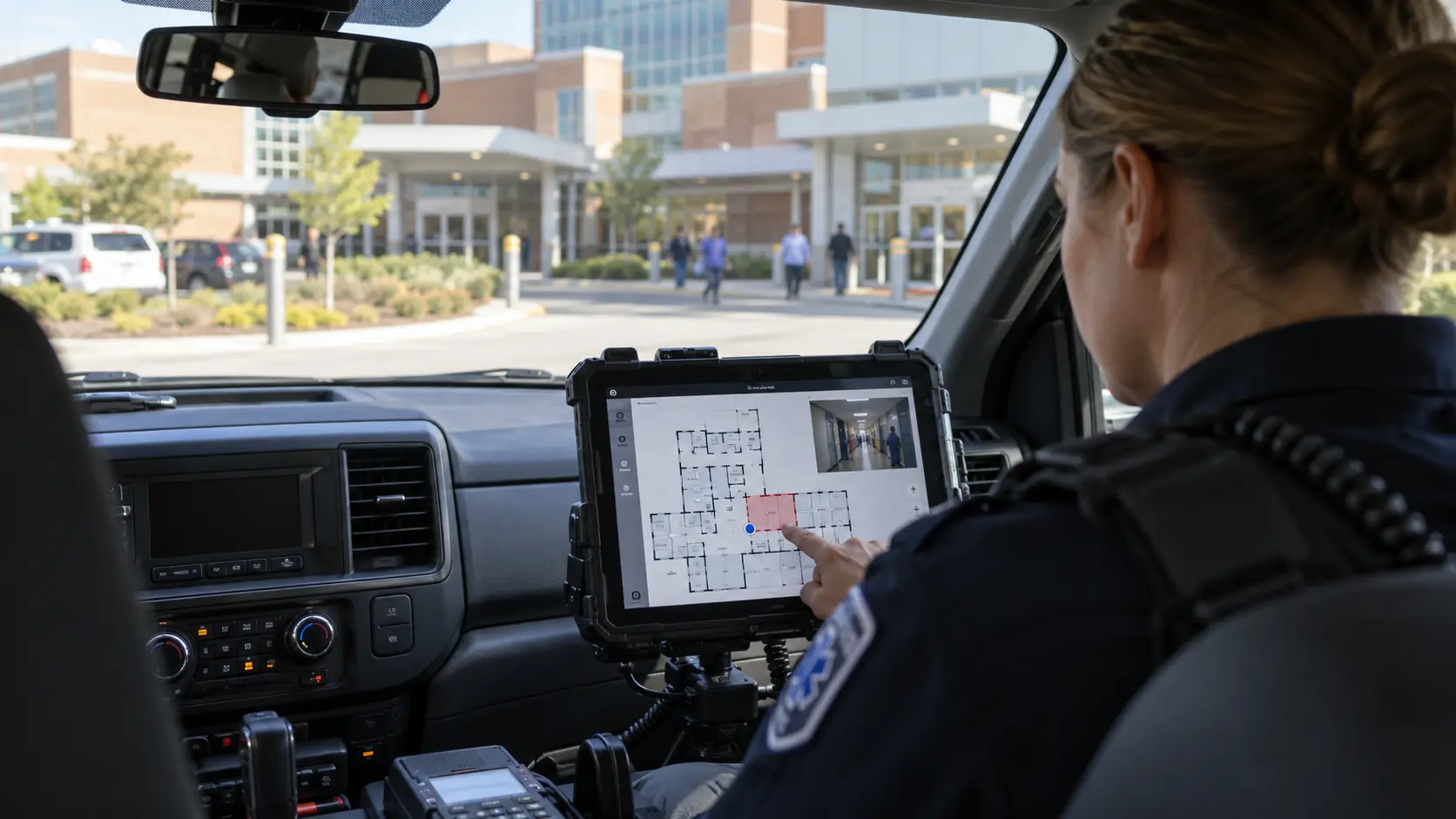
Pulling from his own experiences, Fischer explained that responders begin preparing while they are on the way to an incident. The details they receive can help them understand the situation and consider the resources they may need.
A general alarm provides limited guidance. For example, at a large hospital or college campus, knowing a building address may still leave responders searching across several floors or entrances. A verified event that’s paired with a specific location, relevant video, and facility information offers a more useful starting point.
However, sending every available detail can create its own problems. He emphasized that information overload is a real concern, particularly when different teams (i.e., security officers, firefighters, and medical responders) need different information.
The solution? The speakers described a response process that organizes information around those roles. Recipients should be able to understand what’s known, where the incident is happening, and what action falls within their responsibility. As additional details become available, that picture can be updated.
How Omnilert and SOS Technologies Bridge Detection and Response
The webinar provided a look into how Omnilert and SOS Technologies work together to do this, connecting an initial detection to a broader, more informed emergency response.
On the front end of an incident, Omnilert Gun Detect analyzes organizations’ connected camera streams for visible firearms and flags potential detections for human review. Depending on the organization’s configuration, Omnilert Monitoring, their own security operations center, or other designated personnel then assess the evidence and context to determine whether escalation is needed.
Once verified and authorized for response, the event’s details (location, time, source, and supporting imagery) can move into SOS Technologies’ workflow. Fischer highlighted the value of their camera-mapping capability, which links cameras to specific indoor locations, helping responders identify where an incident occurred within a building or campus.
With the integration, that combined information can quickly reach a local security team, security operations center, or connected 911 center, with acknowledgment and escalation handled according to the configured process. In parallel, the verified event can initiate predefined communications, access control actions, alarms, and other integrated responses, helping teams coordinate around shared incident information.
Turning Emergency Plans into Prepared Actions
The speakers repeatedly returned to the importance of deciding how a response should work before an emergency occurs.
An emergency operations plan might already describe who needs to be notified and which protective actions should follow, but staff may still have to carry out each step manually while managing an unfolding incident. Bagdasarian encouraged organizations to translate those plans into configured workflows so the initial actions are ready to launch.
Polovich discussed preparing notification templates, defining recipient groups, and using integrations to pass information between systems. That preparation can help reduce the number of separate tasks a person has to remember and perform under pressure.
The workflow also needs to fit the setting. A hospital security operations center, a school resource officer working away from a desk, and a corporate security team may require different verification and escalation arrangements. Fischer emphasized the need for flexibility in where decisions take place and how actionable information reaches the people responsible.
Communicate While the Situation Is Still Developing
While the webinar highlighted coordination with responders, the speakers also addressed communication with the wider community.
Bagdasarian cautioned that waiting for every detail can leave space for speculation, noting that after incidents, “you’re going to have a lot of anxiety, a lot of misinformation and disinformation that circulates.” In many instances, panicked employees, students, and parents begin sharing messages about an incident before the organization has issued an official update.
To best address this, he recommended preparing an initial holding statement that acknowledges the situation and tells recipients that more information will follow. Where appropriate, that message can also include an immediate instruction, such as avoiding an affected area.
Preparing templates in advance can also support the different audience groups who need information during crises; responders may need incident details and location information, while the broader community needs clear, relevant instructions. Planning for both audiences helps teams communicate without having to compose every message from scratch.
Keeping Human Judgment in the Workflow
During the Q&A, the speakers addressed a question that often accompanies discussions of AI and automation: how much should be automated, and what should stay human?
Bagdasarian clarified that, in the workflow discussed, a human initiates the automated response. When a potential firearm detection is presented for review by Omnilert’s technology, it is a trained person who determines whether action is required.
The value of human experience when information reaches a 911 center was emphasized by Fischer. He explained, “having a human in the middle… verifying that information, deciphering that information based on their experience and knowledge is absolutely critical.” The speakers agreed that while technology can be very helpful in organizing and delivering details, people should be there to interpret that information and apply their operational knowledge.
Starting with the Information Your Response Team Needs

For organizations reviewing their emergency response process, the webinar offers a practical starting point: trace an incident from the first indication of a problem through verification, communication, and responder handoff.
Consider where people still have to search for information, repeat details, or wait for someone else to act. Identify who owns each decision and what that person needs to receive. Then, assess which existing systems can support those steps through integration and prepared workflows.
Both Omnilert and SOS Technologies emphasized working within an open ecosystem to achieve interoperability. The aim is to be able to connect suitable existing tools around the organization’s response requirements, with compatibility and configuration evaluated for the deployment.
Earlier threat detection creates an opportunity to begin that process sooner. Carrying the location, evidence, and relevant context through the workflow can help security teams and first responders make better-informed decisions when they need to act.
To learn how Omnilert and SOS Technologies can support your organization’s emergency response workflows, contact our team for the joint solution brief or a discussion of your current environment, and watch the webinar here.