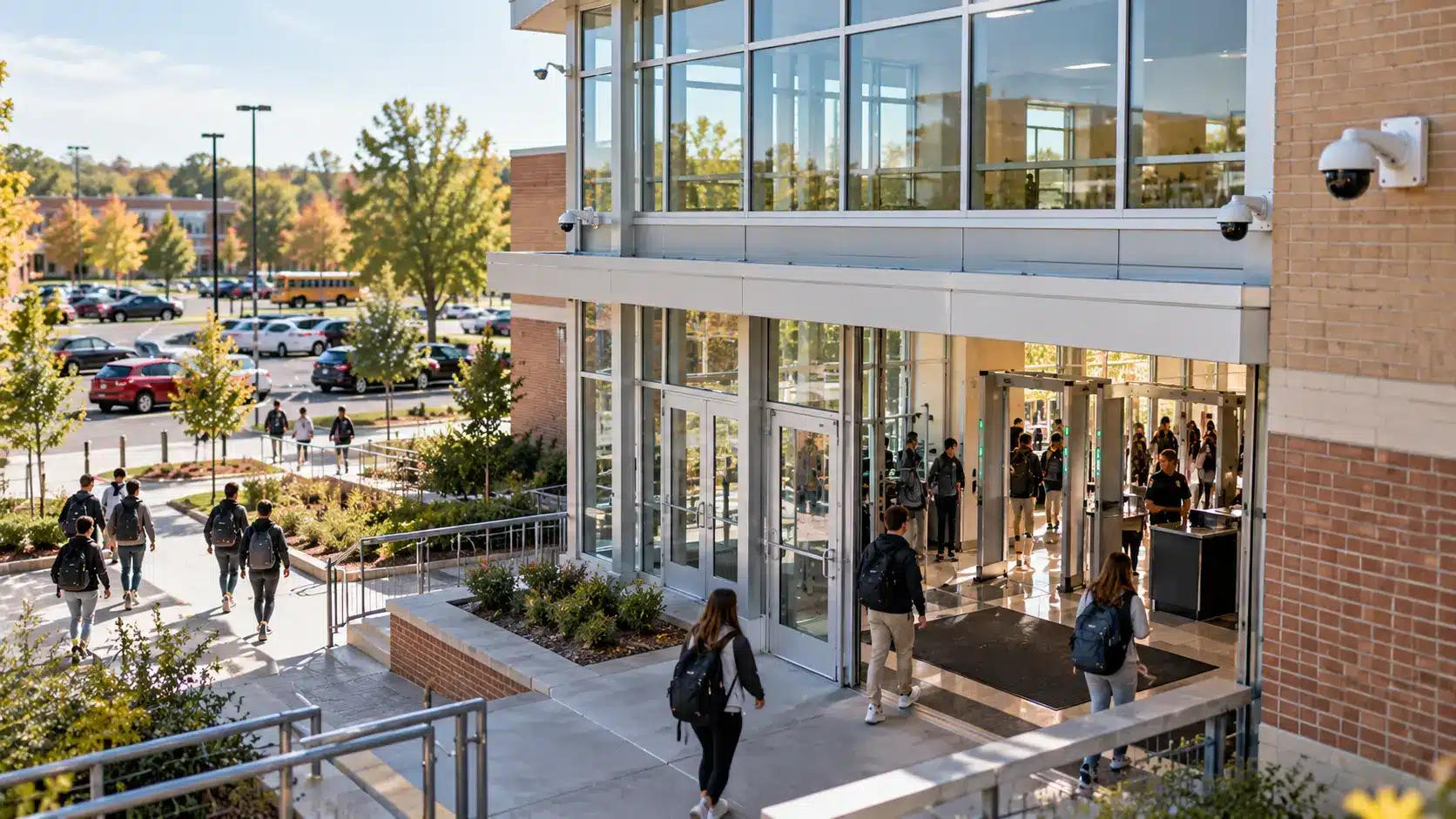
A metal detector at a building entrance and an AI weapon detection system monitoring security cameras might both be described as weapons detection technology. But they work in very different ways.
Weapons screening is designed to identify potentially concealed weapons as people pass through a checkpoint. Visual AI weapon detection, on the other hand, looks for firearms that become visible within a security camera’s view.
This difference is important when planning security for a school, hospital, stadium or other facility. A system designed to screen people entering a building won’t necessarily help security teams identify a threat emerging in the parking lot. At the same time, a camera-based system can’t detect a gun hidden inside someone’s backpack. Understanding what each technology can and can’t do is an important starting point for choosing the right combination of security measures.
In this article, we’ll break down how AI weapon detection technologies, including visual AI weapon detection and weapons screening, work, examine the key differences between them, and explore how organizations can decide which systems fit into their security strategy.
Key Takeaways
- “Weapons detection” is a blanket term for all of the technologies used to detect potential weapons, from entrance screening systems to visual gun detection.
- Different weapons detection approaches serve different purposes. Screening helps organizations identify prohibited weapons at controlled entrances, while camera-based AI weapon detection can extend monitoring to areas beyond those checkpoints.
- A layered security strategy might include both technologies, as well as access control, emergency communications, trained personnel and established response procedures.
- Every technology has limitations. AI weapon detection can’t see through backpacks; screening does not cover grounds outside the checkpoint. Knowing what each tool does and does not do prevents misaligned purchases and false confidence.
Understanding Key Terms and What They Usually Refer To
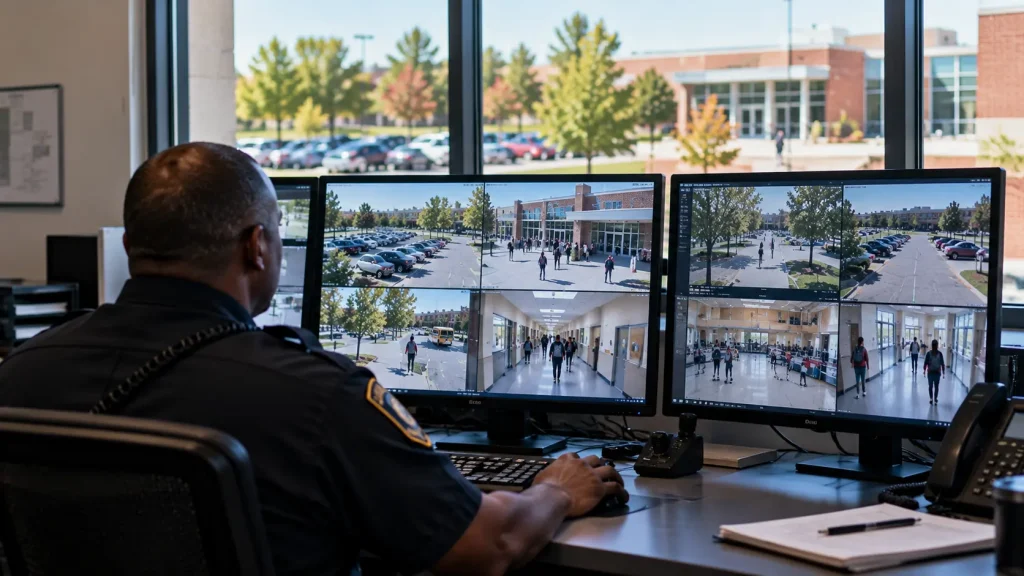
The terms weapons detection and weapons screening are often used interchangeably, but they don’t always describe the same technology or approach to security.
Weapons detection is a broad term that covers the range of technologies used to identify potential weapons. These include traditional concealed detection systems, AI weapon detection tools that use computer vision to identify visible firearms, and audible gunshot detection systems.
Weapons screening usually refers to checkpoint-style inspections that aim to detect concealed weapons. These systems use technologies like metal detection, X-ray imaging and other sensors to try and find potentially dangerous items in bags or on a person before they can enter a secure area. Weapons screening systems and technology tend to be located in one place and are often limited to main entrances.
Visual AI weapon detection, or just “visual gun detection”, uses security cameras and computer vision to spot visible firearms across monitored areas. Rather than requiring people to pass through a checkpoint, it can be used almost anywhere there are security cameras: throughout parking lots, inside stairwells, near loading docks and at side entrances.
Although weapons screening falls within the broader category of weapons detection, the two approaches examined in this article serve different purposes. Understanding those differences can help organizations determine how each technology fits into their overall security strategy.
How Visual AI Weapon Detection Works
Visual gun detection systems use trained computer vision models to recognize objects that share characteristics associated with firearms. When a potential firearm appears within a camera’s field of view, the system analyzes the frame and determines if the object meets the criteria for detection. Some systems, including Omnilert’s, involve human verification to confirm detections and escalate situations when necessary.
Because the technology relies on visual information, it cannot see firearms that remain fully concealed beneath clothing, inside bags or outside the camera’s view. It can, however, potentially identify increasingly seen ghost guns (homemade, self-assembled or otherwise untraceable guns) that traditional screening methods may miss, because AI weapon detection relies on visuals, not materials.
Continuous Monitoring Across Camera-Covered Areas
One of the biggest benefits of camera-based AI weapon detection is its ability to monitor multiple locations at once without requiring people to pass through designated checkpoints, which can create lines, cause frustration and make people feel uneasy.
Using these systems, organizations may utilize their compatible security cameras to monitor locations around their facility, including:
- Building entrances and exterior approaches
- Parking lots and garages
- School corridors and common areas
- Loading docks and service entrances
- Outdoor gathering spaces and campus perimeters
This can be especially helpful for properties with multiple buildings, large outdoor spaces or locations where it’s not practical to control every entrance.
Monitoring is limited to the cameras connected to the system and the areas those cameras can effectively observe, so organizations deploying gun detection technology on a budget should prioritize deployment based on risk and any other factors they deem relevant.
Enabling Quicker, More Coordinated Responses
Beyond alerting about potential firearms, visual gun detection can also help security teams act on that information.
Depending on the system, alerts might include the camera’s location and images or video clips for personnel to assess the situation. Integrating the system with existing security infrastructure such as emergency notification systems, access control and other security technologies can also be helpful with coordinated response procedures and predefined workflows after a verified detection.
This may help reduce the time between the identification of a potential threat and the initiation of a proper response, particularly for larger or more distributed facilities.
Limitations of Visual Gun Detection
Although visual gun detection can increase situational awareness throughout a facility, the effectiveness of the technology is dependent on the quality and coverage of the video being analyzed.
Factors that can affect this include:
- Visibility: The gun has to be visible enough within the camera’s field of view.
- Camera coverage: Blind spots, obstructions or areas that may not have compatible cameras could limit detection opportunities.
- Image quality: Poor lighting, glare, blur and low resolution may affect the ability to correctly identify objects.
- Detection accuracy: Like other AI technologies, and similar to humans, visual gun detection systems can occasionally misidentify a non-dangerous object that shares certain visual characteristics, underscoring the importance of keeping humans in the loop.
Organizations should assess camera readiness, detection performance, verification procedures and response protocols before deploying these systems to give them the best chance to work as intended.
How Weapons Screening Works
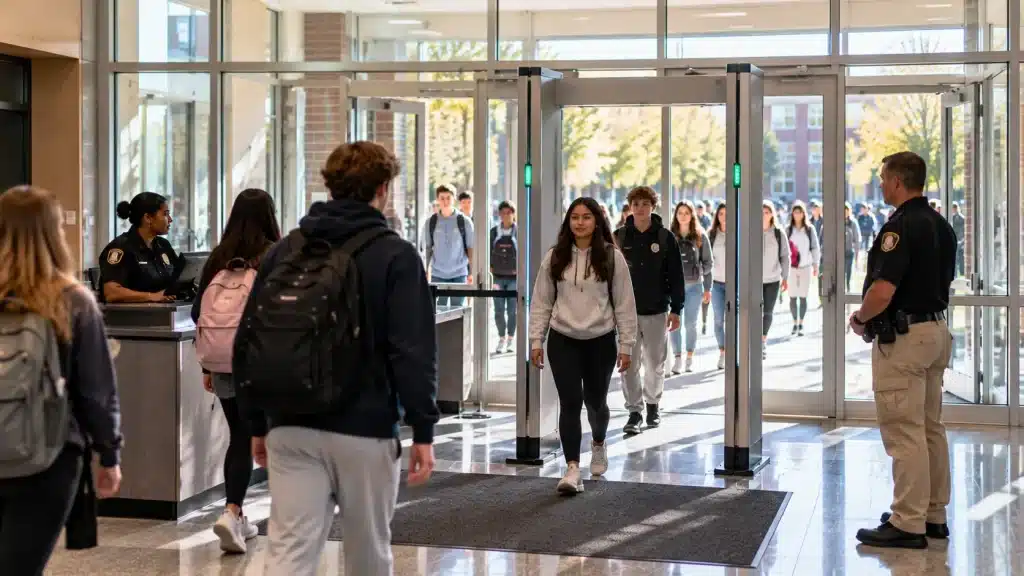
Weapons screening takes a different approach. Rather than monitoring a wider area for visible firearms, screening systems typically inspect people or their belongings as they pass through designated checkpoints.
They’re commonly used at schools, courthouses, government buildings, stadiums and other facilities where there may be a larger group of occupants flowing in, a high-risk profile or just a higher security need inside the space.
Different screening technologies have different detection methods, and their capabilities depend on the equipment and configuration.
Common Weapons Screening Technologies
There are several types of equipment that might be used as part of a weapons screening process. A few include:
- Walk-through metal detectors that help detect metal objects people bring through a checkpoint. They’re commonly used in airports, at government buildings, and other places to flag metallic items, but they aren’t able to tell what flagged items are or if they’re harmful on their own.
- X-ray baggage scanners that can create images of items inside bags and other belongings so operators can look for potentially prohibited objects, including guns. Some newer systems incorporate AI-assisted analysis to help point out suspicious items for review.
- Advanced screening portals that use magnetic sensing, millimeter-wave technology or other sensors to detect objects carried by individuals. Some systems use AI-assisted analysis to help distinguish potential threats from everyday personal items.
How a system identifies weapons, what types of weapons and materials it can identify, and how well it can do it varies by technology and vendor.
Operational Requirements and Limitations
Unlike camera-based AI weapon detection that can run in the background on cameras, weapons screening typically requires more active participation in the inspection process.
Organizations may want to consider:
- Staffing: Personnel are required to operate equipment, review alerts, conduct secondary inspections and manage entry lanes. Some systems need more people to do these things than other systems do.
- Visitor flow: Lines and bottlenecks may occur due to screening procedures, especially during peak arrival times or for large events.
- Checkpoint coverage: Screening is only used on people and belongings that pass through designated inspection points; anyone admitted through a side door, loading dock or other entrances could be missed.
- Equipment limitations: Different technologies have different capabilities to detect metallic, non-metallic and hidden objects.
- Facility layout: Buildings with multiple entrances or open public access may provide more opportunities for inconsistent screening.
Weapons screening can be an important part of controlling access to a facility, but it doesn’t provide ongoing coverage of the environment around the facility.
How Visual Gun Detection and Weapons Screening Work Together
Imagine a stadium gearing up for a big event. Visitors go through security screening at the gates, but thousands of people also move through parking areas, pedestrian walkways and other spaces outside those checkpoints.
Screening can help detect prohibited items before people enter the venue. In the meantime, security cameras with the ability to detect guns visually can look for visible guns in places where no screening is being conducted.
Together, these systems provide security teams with multiple ways to identify potential threats depending on where an incident occurs.
Where Each Technology Fits: Common Security Use Cases
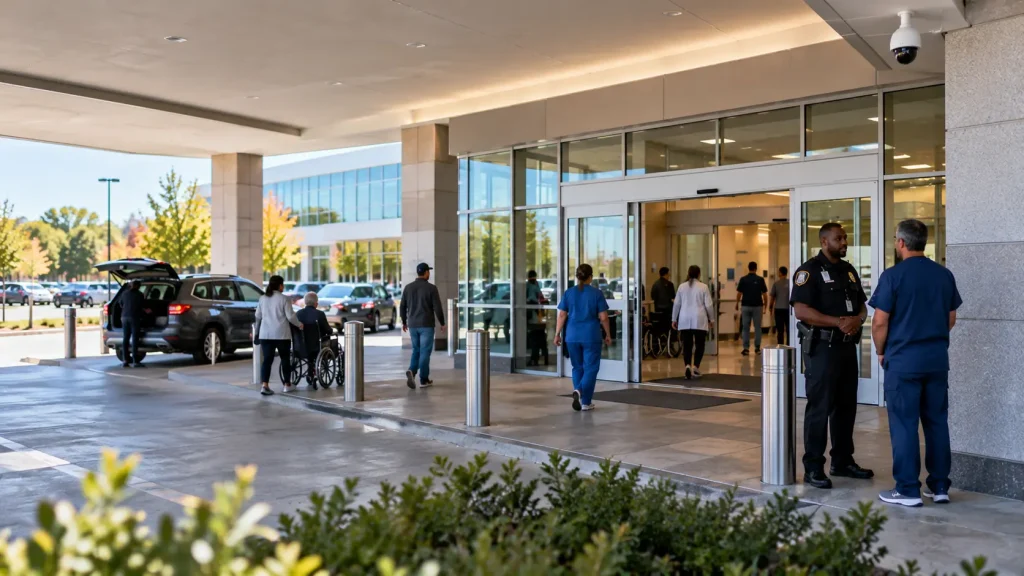
There is no one weapons detection method that works for every facility. For example, the security needs of a single-entrance courthouse are very different from those of a sprawling university campus.
Before choosing a system, it helps to look at how people actually use the property. Where do they enter? Which areas are open to the public? And what happens in locations where screening isn’t possible?
Schools and Universities
The size and openness of a campus can complicate school security. Students, staff and visitors move between classrooms, parking areas, athletic facilities and outdoor spaces throughout the day, often using multiple entrances.
At higher-risk schools, weapons screening might be suitable at designated school entrances, especially where access can be managed. But, screening every person entering a large campus isn’t always practical, especially during sporting events, after-school activities or other periods when people are coming and going. Research also suggests that highly visible security measures may negatively affect how students perceive their school environment.
AI weapon detection offers another way to monitor campus spaces without introducing additional checkpoints. Using compatible existing cameras and running “invisibly” in the background, schools can extend firearm detection to areas such as drop-off zones, parking lots, corridors and building exteriors, including outside regular school hours.
For schools, the decision should reflect the campus layout, the areas that need monitoring and how either technology fits into existing school emergency response plans.
Hospitals and Healthcare Facilities
An emergency department doesn’t always have control over who walks through the door, or when. Patients may need immediate attention, ambulances come and go and staff are constantly moving between public and restricted areas.
That makes screening more complex than perhaps at a courthouse or stadium, where visitors usually come through designated points of entry.
Hospitals may still choose to use weapons screening at certain entrances, but visual gun detection provides an alternative for monitoring areas like parking structures, approaches to the emergency department and waiting rooms without requiring everyone to go through a checkpoint.
Stadiums, Entertainment Venues, and Large Events
At stadiums and entertainment venues, large numbers of people often arrive within a short period, making crowd management an important part of security planning.
Weapons screening is commonly used at entry gates to check attendees and their belongings before admission. But security concerns aren’t limited to the gates themselves. Parking lots, pedestrian approaches, outdoor gathering areas and concourses also need attention, though, and particularly before and after events when crowds are moving through these spaces.
Visual gun detection can extend monitoring to these camera-covered locations, giving security teams another way to detect visible firearms outside screening checkpoints. Used together, the technologies can help venues address security concerns both at entrances and throughout the surrounding property.
Corporate Campuses and Government Facilities
Corporate offices and government buildings have different security requirements depending on their layout and access policies.
Weapons screening may be prioritized at controlled entrances to courthouses and other secure government facilities where visitors are subject to inspection. But larger corporate campuses often have multiple buildings, parking garages, loading docks and public-facing areas that are harder to control through checkpoints alone.
Visual gun detection can provide additional monitoring across these camera-covered spaces, while weapons screening remains an option for entrances or areas requiring tighter access controls.
How to Choose the Right Approach for Your Organization
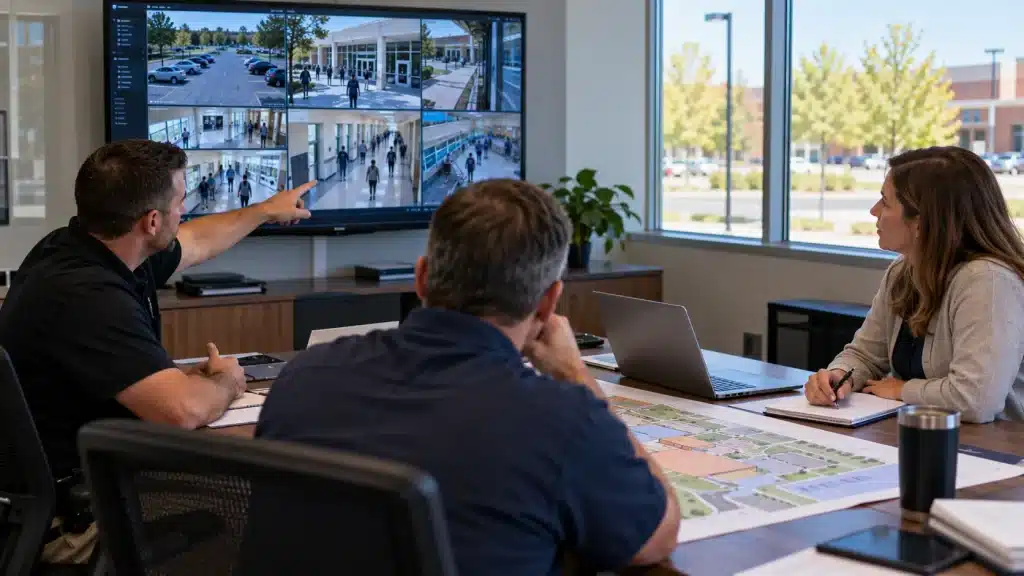
Before investing in AI weapon detection, weapons screening, or both, organizations should evaluate their current security infrastructure and determine what specific security gaps they’re trying to address.
There are a few things to bear in mind that can help guide that process.
1. Evaluate Your Facility’s Layout and Entry Points
Watch how people come in, go out and move around the facility. Are most visitors required to pass through a small number of controlled entrances? Or does the property have multiple buildings, open outdoor spaces and numerous access points?
Facilities with well-defined entrances may benefit from weapons screening, while larger or more open environments may benefit from additional camera-based monitoring.
Some organizations may need both approaches to address different areas.
2. Check Your Current Security Settings
Organizations considering visual gun detection should take stock of their existing security cameras, evaluating coverage, image quality, lighting and system compatibility.
A camera might be up and running, but the images it captures may not be suitable for reliable AI analysis. Detection performance may be affected by obstructions, blur, poor lighting and changes in field of view. Regular checks on the camera’s health can help to highlight image quality problems that could need fixing or adjustment.
When conducting weapons screening, organizations need to think about the available entry space, electrical and network needs, staffing capacity and the potential effect on the flow of visitors
3. Define Detection and Response Requirements
The alerts that different technologies generate lead to different operational responses:
- For visual gun detection, organizations should determine how potential firearm detections will be verified, who receives alerts and what actions should follow a confirmed detection.
- For weapons screening, procedures should address secondary inspections, prohibited items, checkpoint staffing and escalation protocols.
Both approaches should be incorporated into broader emergency response plans, including coordination with security personnel, administrators and local emergency responders.
4. Consider Privacy, Transparency and Community Expectations
Security technology deployments should also account for privacy requirements and stakeholder concerns.
Camera-based gun detection may raise questions about video monitoring, data retention, access to footage and how automated alerts are evaluated. Weapons screening may involve different considerations, including physical inspections, personal belongings, accessibility and the management of screening procedures.
Organizations should establish clear policies governing how these technologies are used, who can access collected information and how security decisions are made.
Communicating these policies to employees, students, visitors or community members can help establish expectations and build confidence in the deployment.
5. Test Performance Before Expanding Deployment
Whether evaluating visual gun detection or weapons screening, organizations should request evidence of performance under conditions relevant to their environment.
For camera-based detection, this may include testing with existing camera feeds and evaluating performance across different lighting conditions, distances and locations. For screening equipment, testing should consider the types of prohibited items the system is designed to identify, expected visitor volumes and the need for secondary inspections.
A limited pilot can help organizations identify operational challenges, establish procedures and make informed decisions before expanding deployment.
Linking Detection to Emergency Response
Effective security responses start with detecting a threat. But after? Organizations also need to have processes in place to verify alerts, to communicate with the right people and to initiate an appropriate response.
Visual gun detection systems can aid this process by providing context to security teams: location information, visuals, etc. When used in conjunction with other security technologies, a confirmed firearm detection can trigger predetermined workflows such as:
- Alerting security personnel
- Sharing relevant camera footage or incident information
- Activating emergency communication procedures
- Initiating access control actions
- Supporting communication with responding law enforcement personnel
All of these actions should be outlined in security policies, with appropriate verification and safeguards to reduce unnecessary escalation. The people who operate or manage the weapons detection system should be included in emergency response planning to help coordinate procedures across the facility.
By connecting the technologies with communication and response systems, organizations can strengthen situational awareness and support more timely, coordinated action during potential security incidents.
Conclusion: Different Technologies, Complementary Security Roles
AI weapon detection and weapons screening have different, but complementary, purposes. Screening helps flag potentially concealed weapons at controlled entrances. Camera-based AI can monitor for visible firearms across a wider range of locations.
Choosing the right approach depends on a facility’s layout, existing infrastructure and security priorities. For some organizations, combining both technologies with established emergency response procedures can help strengthen situational awareness, improve coverage and support a more coordinated response to potential threats.
Looking to strengthen your organization’s security strategy? Contact Omnilert to learn how AI-powered gun detection can work with your existing security infrastructure to help identify potential threats and support faster, more coordinated emergency response.
Frequently Asked Questions
Is weapons detection the same as weapons screening?
Not exactly. Weapons detection is a broad term that includes technologies designed to identify potential weapons. Weapons screening is a specific approach that generally involves inspecting people or belongings at designated checkpoints. Visual gun detection is another form of weapons detection that uses security camera footage to identify visible firearms in monitored areas.
Can visual gun detection identify concealed weapons?
No. Camera-based gun detection focuses on what is visible; it isn’t able to see through clothing, backpacks or other opaque objects. It relies on firearms being sufficiently visible within a camera’s field of view. Weapons screening systems use different sensing technologies to identify potentially concealed items, although what they’re able to detect can vary by system.
Can visual gun detection work with existing security cameras?
Many visual gun detection platforms are designed so they can integrate with most existing security cameras, which potentially reduces the need for new surveillance hardware. That being said, things like camera resolution, placement, lighting, network infrastructure and other technical factors can impact performance. Organizations should assess their existing camera systems and make sure they’re compatible before deployment.
Can weapons screening detect non-metallic firearms?
Whether a system can detect non-metallic firearms or not depends on the specific technology. Traditional metal detectors face limitations when detecting weapons with little metal content. Other technologies that use different sensing methods might be able to detect other types of objects. Organizations should look at which threats technologies detect and choose systems based on their needs.
Do organizations need both weapons screening and visual gun detection?
What an organization needs should be dependent on their facility’s layout, risk profile, budget, staffing and existing infrastructure. For example, buildings that have strictly controlled entrances and a higher risk of violence (like a courthouse) may benefit from both weapons screening at the doors and visual gun detection monitoring in camera-covered areas throughout and around the facility. A low-risk elementary school that wants to prioritize safety without scaring children may just opt for visual gun detection.